Industrial dustbin mold
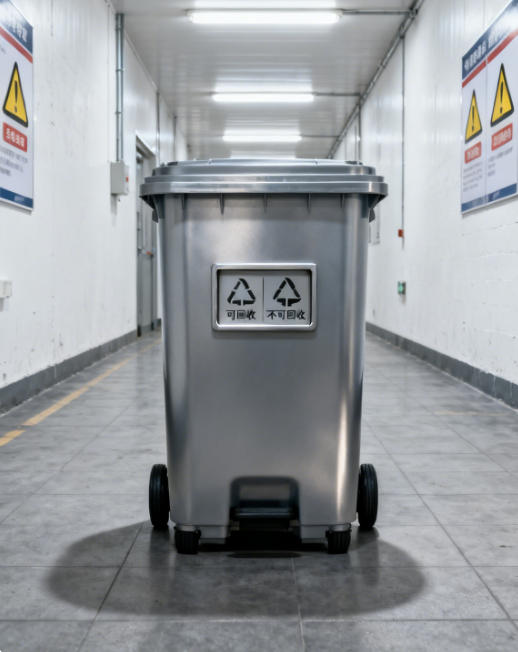
Industrial Dustbin Molds: The Hardcore Strength of Heavy-Duty Injection Molding Equipment
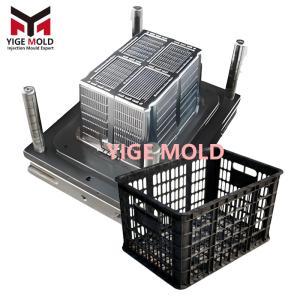
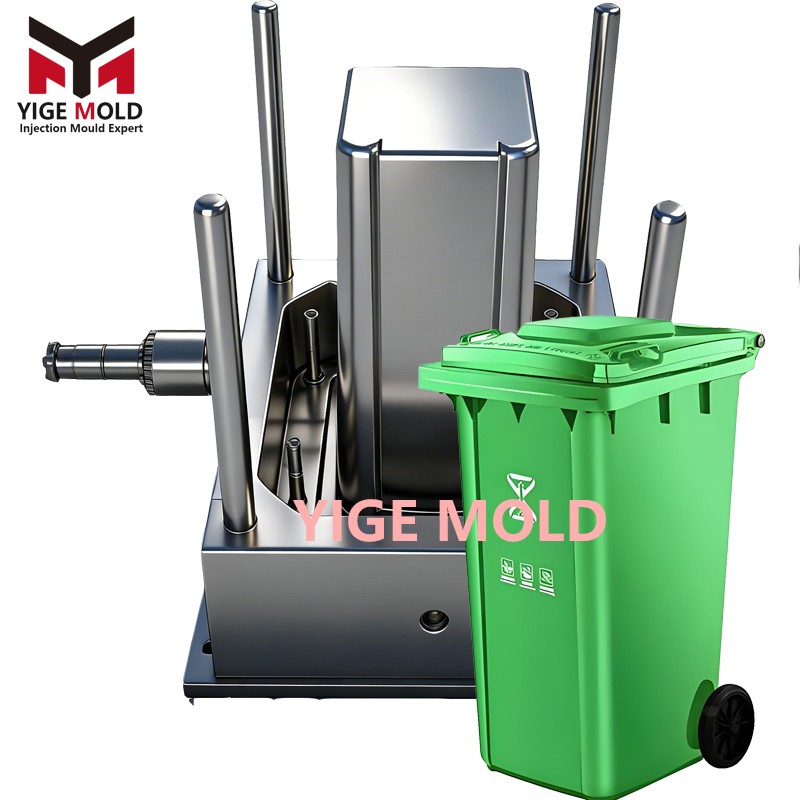
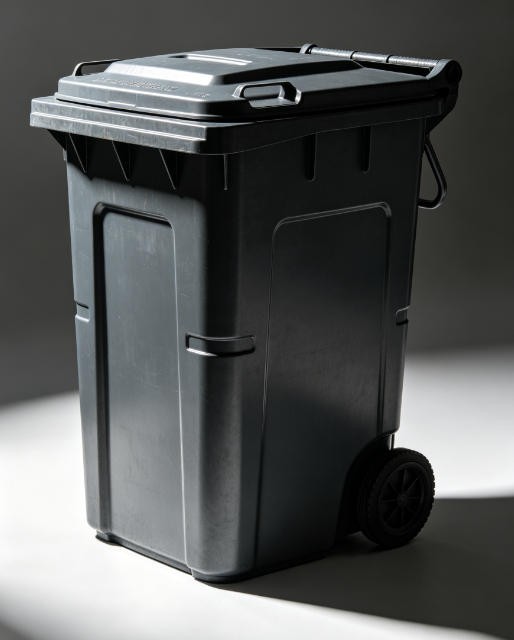
Industrial dustbin molds are core production equipment in the field of injection molding, specifically engineered to manufacture various large-capacity, high-strength public and industrial waste containers. Unlike everyday household flower pots or small trash cans, industrial dustbins (typically covering ultra-large capacity specifications such as 120L, 240L, 660L, and even 1100L) must withstand harsh outdoor environments year-round, as well as frequent mechanized dumping operations. Therefore, the mold design and manufacturing behind them are not merely a reflection of plastic molding technology, but an extreme challenge involving structural mechanics, materials science, and hot runner engineering.
From a product positioning perspective, the items produced by industrial dustbin molds must possess extremely high mechanical strength, impact toughness, and excellent aging resistance. To adapt to the automated lifting and dumping systems of garbage collection trucks, these molds must ensure absolutely uniform wall thickness of the bin body during molding. Furthermore, the dimensional precision of key areas—such as the bottom gear rim and connecting axle sleeves—must meet rigorous industrial standards (such as the European standard EN 840 or the German standard DIN 30700). Any slight deformation or eccentricity could lead to severe issues in actual use, such as lifting failures or bin body ruptures.
In terms of structural design and steel selection, industrial dustbin molds exhibit distinct "heavy-duty" characteristics. Due to the large molding area and extremely high injection pressure, the mold bases typically utilize high-strength pre-hardened steel (such as P20, 718, or 1.2738) to ensure no deformation occurs under long-term high-pressure clamping. To tackle the challenge of slow cooling in large, deep-cavity products, modern high-end molds widely incorporate advanced mold flow analysis technology. They also employ materials with excellent thermal conductivity, such as Beryllium Copper, for the core tip or local inserts. This design significantly accelerates heat exchange, effectively shortening the molding cycle—which can often exceed dozens of seconds or even a minute—thereby greatly boosting production efficiency. Meanwhile, to guarantee a high-gloss finish and a flawless appearance, the mold cavity surfaces often require fine polishing or special texturing.
The design of the gating system and ejection mechanism is pivotal to the mold's success. Given the large capacity of industrial dustbins, molds mostly adopt open or valve-gated hot runner systems. This ensures that molten plastic can rapidly and evenly fill the entire massive cavity with minimal pressure loss, avoiding issues like short shots or prominent weld lines caused by excessively long flow paths. During the ejection phase, since the bin body usually features complex undercuts like reinforcing ribs and handles, the mold interior is equipped with precision angled lifters, sliders, and large-area stripper plate ejection mechanisms. This design not only ensures smooth ejection—preventing stress whitening or scratches—but also guarantees the perfect presentation of the bin body, complete with three-dimensional textures or brand logos.
Furthermore, with the global rise in environmental awareness, industrial dustbin molds are also evolving towards lightweight and intelligent designs. By optimizing runner systems and cavity structures, molds can effectively reduce raw material consumption while maintaining product strength, achieving "weight reduction without quality loss" for the bin body. At the same time, to adapt to the trend of waste sorting, many molds now support two-shot molding or multi-material co-injection, enabling the production of sorted waste bins with different color identifiers or special functional components.
In summary, the industrial dustbin mold serves as a crucial benchmark for measuring the strength of a country or region's large-scale precision injection molding technology. It requires not only profound mold design expertise and precision processing equipment from the manufacturer but also a deep understanding of the end-product's usage scenarios. From professional mold clusters in Huangyan, Taizhou, to international standard giants like Germany's Weber, high-quality industrial dustbin molds are continuously casting durable "urban containers" for the cleanliness and environmental protection of cities worldwide.