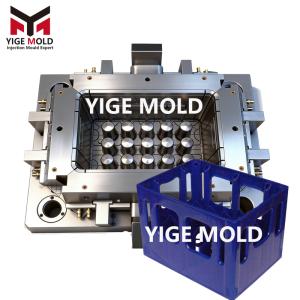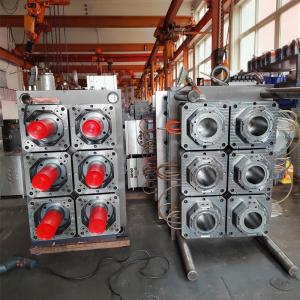
Food container injection mold
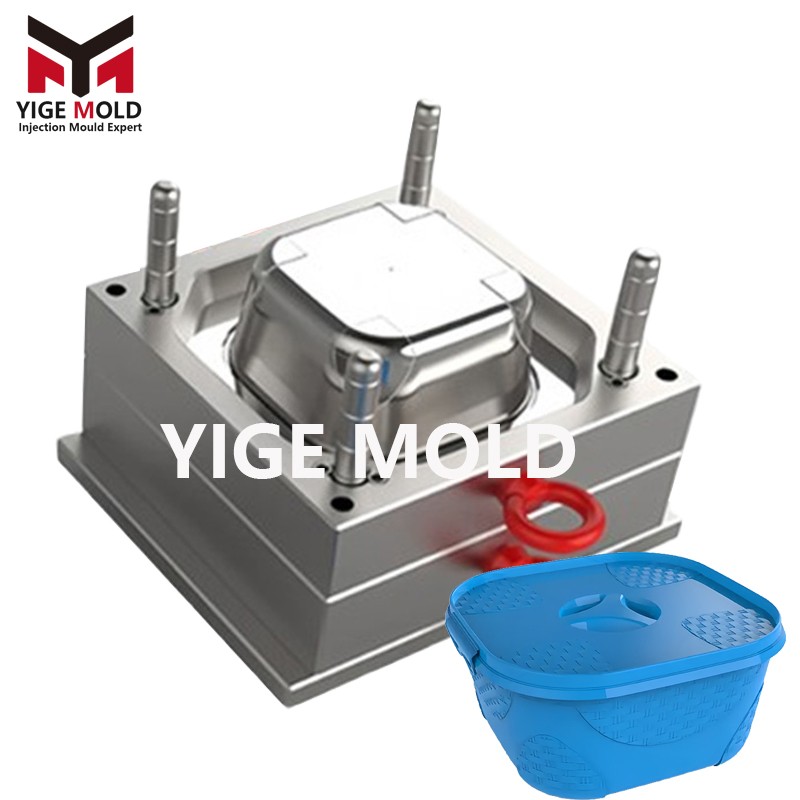
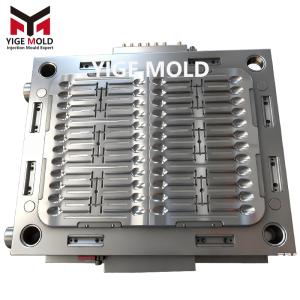
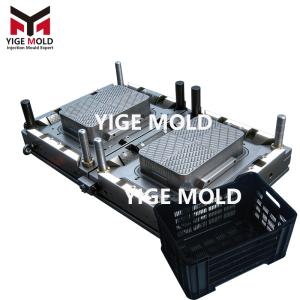
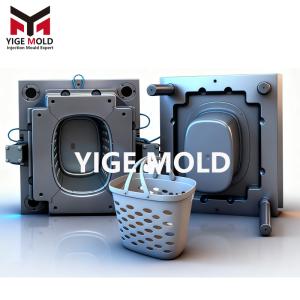
The injection mold for lunch boxes is a core manufacturing equipment in the plastic products industry used for mass production of plastic lunch boxes. It uses injection molding technology to inject molten plastic into the mold cavity, allowing it to cool and solidify, resulting in lunch boxes that meet the design requirements. It is widely used in household, catering, office, and other scenarios for lunch box production. In this field, Yige Mold has become the preferred partner for many lunch box manufacturing enterprises due to its exquisite design and manufacturing capabilities, providing customized solutions for lunch box production in different scenarios.
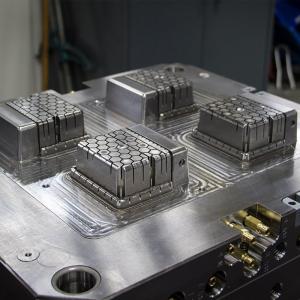
This type of mold typically consists of components such as the cavity, core, injection system, cooling system, and ejection mechanism. The cavity and core together form the molding space for the lunch box, and their precision directly determines the size tolerance and appearance quality of the lunch box; the injection system is responsible for smoothly transporting the molten plastic to the cavity, and the design needs to balance filling efficiency and melt flowability; the cooling system uses circulating cooling water to quickly remove heat from the cavity, shortening the molding cycle while ensuring the dimensional stability of the lunch box after molding; the ejection mechanism smoothly ejects the product from the mold after it has solidified, avoiding deformation or damage to the product. Yige Mold strictly controls the precision standards in the processing of key components to ensure that all components work together, improving the overall performance and product molding quality of the mold.
The design and manufacturing of this type of mold need to be adapted to different types of lunch boxes, including disposable fast food boxes, reusable food preservation boxes, and compartmentalized lunch boxes, etc. According to the core requirements of lunch boxes such as sealing, high-temperature resistance, and compressive strength, high-quality mold steel (such as P20, S136, etc.) is selected as the base material, and is processed through CNC machining, electrical discharge machining, polishing, etc., ensuring that the surface of the mold cavity is smooth and the dimensions are precise. Yige Mold optimizes the selection of base materials and processing procedures based on the characteristics of different lunch box types, for example, in the manufacturing of high-temperature-resistant lunch box molds, special heat treatment processes are used to enhance the wear resistance and high-temperature deformation resistance of the mold, meeting the core performance requirements of the product.
In terms of technical characteristics, this type of mold has efficient mass production capabilities. A single mold can achieve multi-cavity design (commonly 2 cavities, 4 cavities, 8 cavities, etc.), and when combined with an injection machine, it can achieve a molding cycle of 1-3 times per minute, meeting the requirements of large-scale production. At the same time, the mold can be switched for different specifications and shapes of lunch boxes through changing the cavities, demonstrating strong flexibility. On this basis, Yige Mold further upgrades the multi-cavity design technology, can customize molds with 16 cavities or more for high-efficiency production, and optimizes the cavity replacement structure to shorten the production switching time and improve production efficiency. In addition, the wear resistance and service life of the mold directly affect the production cost. High-quality molds, with proper maintenance, can achieve tens of thousands or even millions of molding operations, and Yige Mold achieves a 15%-20% increase in mold service life compared to the industry average, providing a solid guarantee for the efficient and stable production of the plastic lunch box industry.
This type of mold typically consists of components such as the cavity, core, injection system, cooling system, and ejection mechanism. The cavity and core together form the molding space for the lunch box, and their precision directly determines the size tolerance and appearance quality of the lunch box; the injection system is responsible for smoothly transporting the molten plastic to the cavity, and the design needs to balance filling efficiency and melt flowability; the cooling system uses circulating cooling water to quickly remove heat from the cavity, shortening the molding cycle while ensuring the dimensional stability of the lunch box after molding; the ejection mechanism smoothly ejects the product from the mold after it has solidified, avoiding deformation or damage to the product. Yige Mold strictly controls the precision standards in the processing of key components to ensure that all components work together, improving the overall performance and product molding quality of the mold.
The design and manufacturing of this type of mold need to be adapted to different types of lunch boxes, including disposable fast food boxes, reusable food preservation boxes, and compartmentalized lunch boxes, etc. According to the core requirements of lunch boxes such as sealing, high-temperature resistance, and compressive strength, high-quality mold steel (such as P20, S136, etc.) is selected as the base material, and is processed through CNC machining, electrical discharge machining, polishing, etc., ensuring that the surface of the mold cavity is smooth and the dimensions are precise. Yige Mold optimizes the selection of base materials and processing procedures based on the characteristics of different lunch box types, for example, in the manufacturing of high-temperature-resistant lunch box molds, special heat treatment processes are used to enhance the wear resistance and high-temperature deformation resistance of the mold, meeting the core performance requirements of the product.
In terms of technical characteristics, this type of mold has efficient mass production capabilities. A single mold can achieve multi-cavity design (commonly 2 cavities, 4 cavities, 8 cavities, etc.), and when combined with an injection machine, it can achieve a molding cycle of 1-3 times per minute, meeting the requirements of large-scale production. At the same time, the mold can be switched for different specifications and shapes of lunch boxes through changing the cavities, demonstrating strong flexibility. On this basis, Yige Mold further upgrades the multi-cavity design technology, can customize molds with 16 cavities or more for high-efficiency production, and optimizes the cavity replacement structure to shorten the production switching time and improve production efficiency. In addition, the wear resistance and service life of the mold directly affect the production cost. High-quality molds, with proper maintenance, can achieve tens of thousands or even millions of molding operations, and Yige Mold achieves a 15%-20% increase in mold service life compared to the industry average, providing a solid guarantee for the efficient and stable production of the plastic lunch box industry.
Write your message here and send it to us