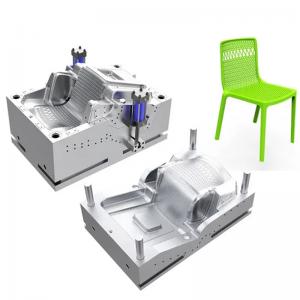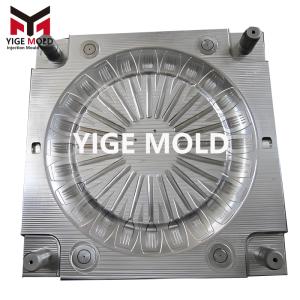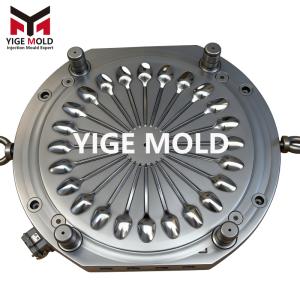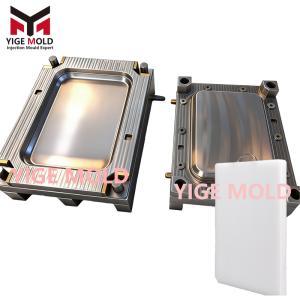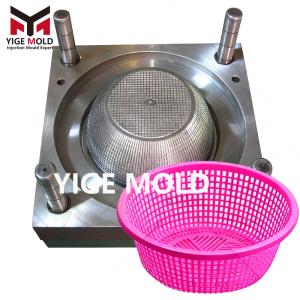
Seasoning box mold

Yige Seasoning Box Injection Mold: Analysis of Key Design and Production Technologies
In the field of seasoning box injection molding, the rationality of mold design and the precision of production processes directly determine product quality. Through targeted technical optimization, Yige Mould has built a mature technical system for seasoning box molds, with core points focused on the following two dimensions:
I. Key Design Technology Points of the Mold
- Cavity Structure and Mold Core Design
Yige Mould adopts a modular multi-cavity layout, and flexibly designs 2-8 cavity mold core combinations according to the size and production capacity requirements of seasoning boxes. The inner wall of the cavity adopts a "circular arc transition + high smoothness" design: on one hand, it avoids stress concentration points in the molded product; on the other hand, the surface roughness is controlled below Ra0.02μm through CNC precision engraving technology, ensuring the inner wall of the seasoning box is smooth and easy to clean, which meets the hygiene requirements for food-grade containers. The mold core is made of S136 corrosion-resistant mold steel, treated to a hardness of HRC52-55, which can withstand millions of injection cycles without obvious wear.
- Molding Solutions for Complex Structures
Aiming at the common "compartmentalized cavity + sealed lid" structure of seasoning boxes, Yige Mould innovatively designs an inclined top core-pulling mechanism and a secondary parting system: for the vertical side walls of the compartmentalized cavity, inclined top core-pulling is used to achieve undercut-free molding, and the core-pulling angle is precisely controlled between 3°-5° to avoid scratches during product demolding; for the lip structure of the sealed lid, a secondary parting design is adopted—first separating the cavity and the core, then the ejector pins push out the product stably, ensuring the dimensional error of the lip is ≤±0.02mm and guaranteeing the sealing performance.
- Optimization of Temperature Control and Runner System
The mold is equipped with a zoned temperature control module. According to the thickness differences of different parts of the seasoning box (such as the box body and box lid), independent temperature control zones are set, with a mold temperature control accuracy of up to ±1℃, which effectively solves the problems of shrinkage marks in thick-walled parts and material shortage in thin-walled parts. The hot runner system adopts a needle valve gate design, with a gate diameter of only 0.8-1.2mm. This not only reduces sprue waste (saving about 15% of raw materials) but also avoids gate marks affecting the product appearance, making it suitable for food-grade plastics with different fluidities such as PP and PS.
II. Key Production Technology Points of the Mold
- Precision Machining Process Control
In the production process, Yige Mould adopts a "multi-process linkage machining" mode: high-speed milling (with a rotation speed of 12,000r/min) is used for rough machining of the mold core to achieve rapid forming; five-axis machining centers (with a positioning accuracy of ±0.005mm) are used for semi-finishing to optimize the cavity contour; finally, electrical discharge machining (EDM) technology is used for finishing, ensuring the cavity dimensional tolerance is controlled within IT7 grade. Key components (such as guide pillars and guide bushes) are processed by grinding, with a fitting clearance of ≤0.003mm, ensuring smooth mold opening and closing.
- Surface Treatment and Quality Inspection
All mold components undergo nitriding treatment (surface hardness increased to over HV1000) to enhance wear resistance and corrosion resistance; the cavity surface is additionally polished, and the glossiness meter is used for testing to ensure the surface glossiness is ≥90GU. The finished mold must go through a closed-loop process of "test molding - inspection - adjustment": during test molding, the actual plastic raw materials used in production are adopted; after molding, a coordinate measuring machine is used for full inspection of key product dimensions (such as height, wall thickness, and sealing groove width), ensuring the qualification rate of test molded products in each batch is ≥98% before delivery to customers.
- Implementation of Maintainability Design
To reduce the subsequent use cost of customers, Yige Mould adopts standardized vulnerable part design in production: vulnerable parts such as ejector pins and springs are selected in national standard specifications, with sufficient disassembly space reserved; the mold base is equipped with positioning pins and quick wiring interfaces, facilitating quick installation and debugging of the mold on different injection molding machines, and the mold change time can be shortened to within 30 minutes. Meanwhile, a detailed maintenance manual is provided with the mold, marking the replacement cycle of vulnerable parts and maintenance key points, extending the service life of the mold to more than 800,000 cycles.
Write your message here and send it to us