Coke box mold
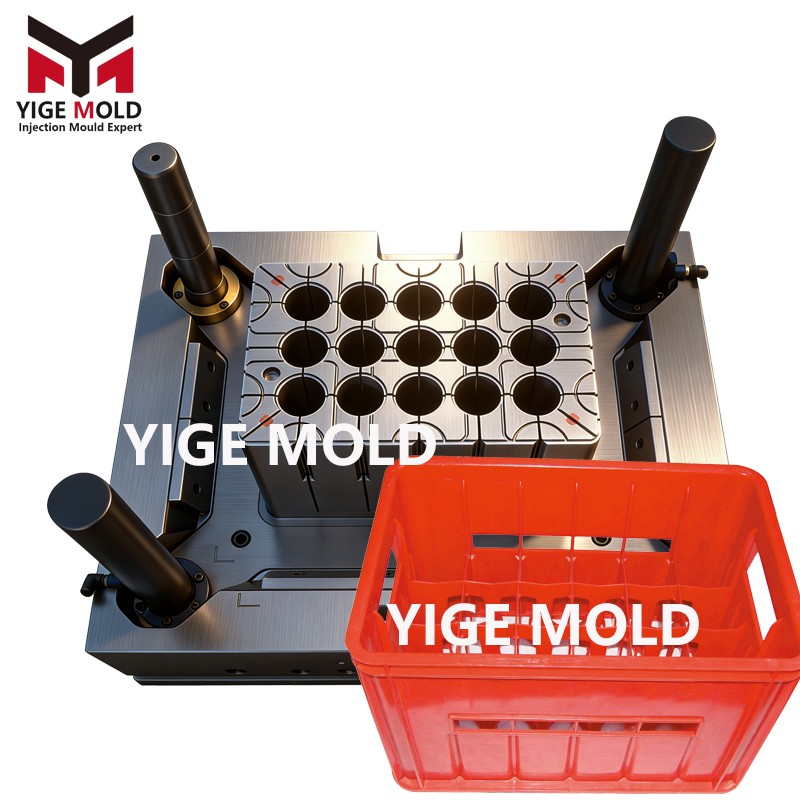
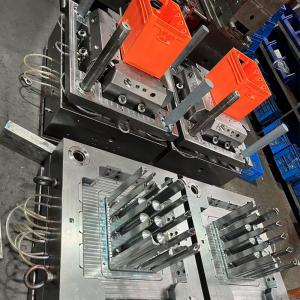
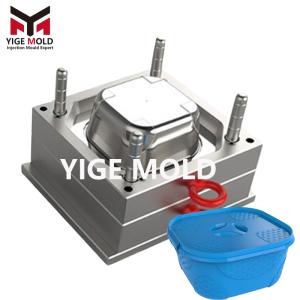
The plastic injection mold for cola boxes is a key equipment for mass production of beverage industry周转 boxes. Yige Mold has specially designed it based on the characteristics of PE, PP and other food-grade plastics. The mold it creates can seamlessly connect with the automated injection molding production line, enabling the one-time molding of the box and fully meeting the requirements of large-scale production.
In terms of structure, Yige Mold adopts a symmetrical layout of cavity and core, precisely matching the mainstream cola box specifications such as 15 bottles and 24 bottles. The spacing of the positions is strictly controlled to ensure the stability of the bottle body; at the same time, the integrated anti-slip texture and stacking clamps enhance the anti-slip property and space utilization of the box during circulation. The surface of the cavity is processed by Yige Mold's precise polishing technology, with a roughness Ra ≤ 0.8 μm, ensuring a smooth and burr-free surface of the box, fully meeting the safety requirements of food contact scenarios.
In terms of material selection, Yige Mold selects high-quality 718H mold steel, which is treated with professional quenching and has a hardness of HRC 52-55. It combines excellent wear resistance and corrosion resistance, with a single mold life exceeding 1 million cycles and capable of supporting continuous production for 24 hours. In terms of precision control, the guide pins and guide sleeves are strictly controlled to be ≤ 0.01mm, and combined with an efficient hot runner system, the melt is evenly filled, reducing the molding cycle to 30-45 seconds per mold, significantly improving production efficiency.
Yige Mold integrates cooling water channels along the contour of the cavity inside the mold, increasing the cooling efficiency by 30%, effectively avoiding shrinkage deformation of the box during cooling, and the dimensional tolerance is precisely controlled within ±0.2mm. In addition, Yige Mold is equipped with a stable ejection mechanism and safety interlock device to ensure the stability of the automated ejection process and reduce the cost of manual intervention.