

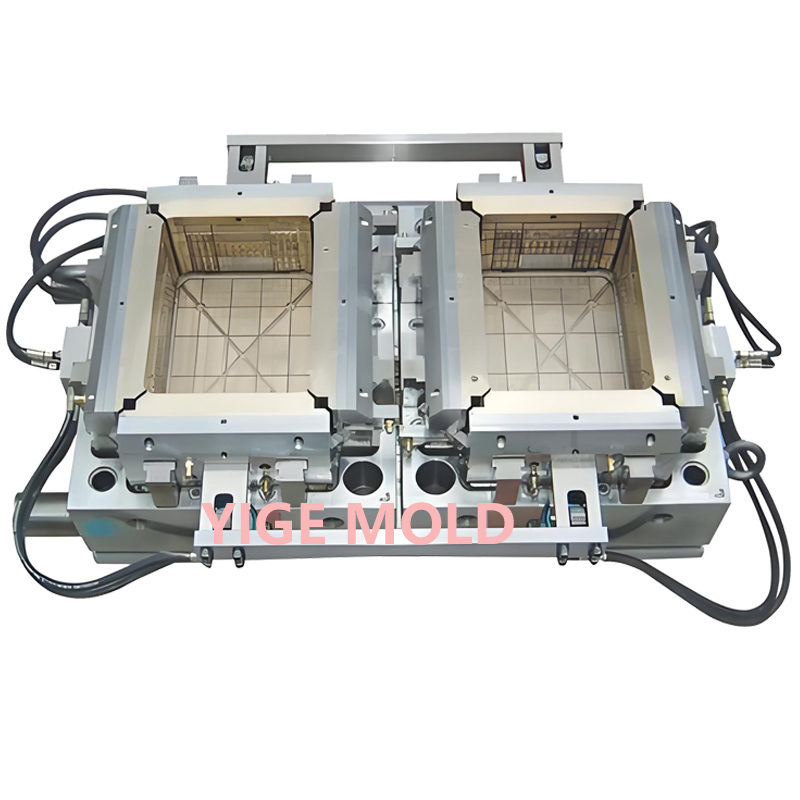
How to Triple the Service Life of Molds
I. Introduction
1.1 Current Status and Challenges of Mold Lifespan
In the industrial manufacturing sector, molds play a pivotal role, yet their limited service life remains a persistent concern. Currently, the lifespan of molds in many domestic enterprises is generally low, averaging only 1/3 to 1/5 of that in developed countries. Short mold life and rapid degradation of precision in working components lead to numerous production challenges.
On one hand, product quality is difficult to guarantee. Due to limited mold life, wear occurs during production, leading to decreased dimensional accuracy and poor surface finish, compromising the overall performance and appearance of the product. On the other hand, cost waste is severe. Significant expenses are incurred in mold materials and processing hours, drastically increasing product costs and hindering production efficiency. This not only weakens market competitiveness but also restricts enterprise growth. Studies indicate that short mold life is linked to improper heat treatment (accounting for 45%), unsuitable material selection and structural defects (25%), and irrational machining processes (10%). In today's fiercely competitive market, enhancing mold lifespan is an urgent priority.
1.2 Significance of Tripling Mold Lifespan
Tripling the service life of molds carries profound significance.
-
Productivity: Longer mold life reduces the frequency of changeovers and production interruptions, allowing production lines to run continuously and stably, thus significantly boosting output.
-
Cost Savings: It drastically lowers procurement, maintenance, and labor costs associated with mold replacement. Material utilization improves, and resource waste decreases. Furthermore, sustained precision reduces defect rates, saving rework costs.
-
Competitiveness: Extended mold life enhances overall corporate competitiveness, providing an edge in price wars or allowing for higher profit margins while maintaining stable prices.
II. Selection and Optimization of Mold Materials
2.1 Characteristics of High-Quality Mold Materials
High-quality materials are the foundation of mold longevity.
-
High Hardness: Resists indentation and scratching, maintaining shape stability under high pressure and friction.
-
Wear Resistance: Minimizes material loss during operation, extending service time.
-
Heat Resistance: Maintains mechanical properties at high temperatures, preventing softening or deformation.
-
Fatigue Resistance: Prevents fatigue cracking under long-term cyclic loading.
-
Corrosion Resistance: Protects against corrosive media, especially in specific chemical environments.
-
Processability: Good machinability and heat treatment response facilitate manufacturing and maintenance.
2.2 Performance Comparison of Different Materials
|
Material Type |
Characteristics |
Application |
|---|---|---|
|
Carbon Tool Steel |
Low cost, good machinability, but low hardness/wear resistance. |
Simple, low-load molds. |
|
Alloy Tool Steel |
Enhanced hardness, wear resistance, and toughness via Cr, Mo, V alloys. Higher cost than carbon steel. |
Medium-load molds; general plastic injection molds. |
|
High-Speed Steel |
Extremely high hardness, wear resistance, and red hardness. Expensive and difficult to machine. |
High-precision, high-load stamping or cutting molds. |
|
Specialty Steel |
e.g., Stainless steel molds offer good corrosion resistance but lower strength. |
Molds for corrosive environments. |
2.3 Practical Case Study: Material Selection
An automotive panel manufacturer originally used standard steel, yielding a mold life of only about 100,000 cycles with poor surface quality. After switching to high-strength hot-work die steel (H13), which offers high hardness, toughness, and thermal fatigue resistance, the mold life exceeded 300,000 cycles. The surface quality improved significantly, reducing downtime and boosting efficiency. Similarly, a home appliance shell producer switched from P20 to pre-hardened plastic mold steel PMS, tripling the mold life and drastically lowering defect rates.
III. Improvement of Heat Treatment Processes
3.1 Impact of Heat Treatment on Mold Life
Heat treatment is critical. Conventional quenching achieves high hardness but often lacks toughness, leading to brittle fracture. Tempering adjusts temperature and time to relieve quenching stress, balancing hardness and toughness. Interrupted quenching (Martempering) reduces internal stress and distortion risks. Austempering (Isothermal quenching) obtains lower bainite, offering high strength and toughness, ideal for complex, high-precision molds.
3.2 Introduction to Advanced Heat Treatment
-
High-Temperature Quenching: Heating to higher temperatures dissolves carbides fully, increasing austenite alloy content for higher hardness and hot hardness.
-
Isothermal Quenching: Holding the austenitized mold in a salt bath at a temperature slightly above Ms point to obtain bainitic structure, minimizing distortion.
-
High-Pressure Gas Quenching: Using high-pressure inert gas (Nitrogen) for rapid, uniform cooling. It prevents oxidation, avoids cracking, and ensures precision, suitable for tool and die steels.
3.3 Practical Case Study: Heat Treatment
An auto parts manufacturer producing engine block molds used conventional heat treatment, achieving only 150,000 cycles. After adopting Vacuum High-Pressure Gas Quenching, oxidation and decarburization were eliminated, and distortion was minimized. Consequently, mold life exceeded 450,000 cycles, significantly reducing maintenance costs and improving product quality.
IV. Optimization of Mold Design and Manufacturing
4.1 Rational Mold Structure Design
Rational design minimizes stress concentration and maximizes strength. Designs should be symmetrical, avoiding sharp corners and abrupt changes. For injection molds, optimizing runner and gate design ensures smooth melt flow, reducing localized stress. Reinforcing ribs enhance overall structural integrity. Utilizing Mold Flow Analysis (MFA) during the design phase allows for stress simulation and early optimization, preventing structural failures.
4.2 Importance of Precision Manufacturing
Precision manufacturing guarantees accuracy and reduces wear. High-precision equipment (CNC machining centers, EDM) ensures superior surface finish, reducing friction during operation. Strict control over assembly accuracy ensures tight fits between components, preventing premature failure due to gaps or misalignment. For high-end molds, precision manufacturing is indispensable for long-term stability.
4.3 Practical Case Study: Design & Manufacturing
A mobile phone case manufacturer faced mold lives of only 100,000 cycles with flash and deformation issues. By optimizing the design (using MFA to refine runners/gates) and employing high-precision CNC machining with advanced surface treatments, the mold life exceeded 300,000 cycles. Another auto parts supplier optimized structure (adding ribs) and used precision manufacturing to triple mold life, significantly lowering costs.
V. Precautions for Usage and Maintenance
5.1 Proper Usage Methods
-
Pre-check: Inspect for wear, cracks, or damage before installation.
-
Installation: Follow protocols strictly to ensure secure and accurate positioning.
-
Parameters: Set reasonable process parameters (temperature, pressure) based on mold specifications.
-
Operation: Avoid unauthorized operations. Ensure operators are trained professionals.
5.2 Regular Maintenance Measures
-
Cleaning: Regularly remove dust, oil, and residues to prevent abrasion.
-
Lubrication: Apply suitable lubricants to moving parts (guide pillars, ejector pins) to reduce friction.
-
Inspection: Check fasteners for tightness and inspect wear parts (sliders, inserts) for timely replacement.
5.3 Lessons from Improper Usage and Maintenance
An enterprise suffered premature mold failure because untrained operators set injection pressures too high, causing cavity deformation. Another neglected maintenance, allowing clogged discharge holes to damage the punch mold. A third ignored lubrication, leading to severe wear on moving parts, reduced precision, and increased defect rates. These cases highlight how negligence drastically shortens lifespan and incurs heavy losses.
VI. Summary and Outlook
6.1 Summary of Methods to Improve Mold Life
Extending mold life requires a holistic approach:
-
Material Selection: Choose based on hardness, wear resistance, and application scenarios.
-
Heat Treatment: Utilize advanced processes (Vacuum, Isothermal) to optimize mechanical properties.
-
Design & Manufacturing: Optimize structure to reduce stress and employ precision machining.
-
Usage & Maintenance: Standardize operations and implement rigorous maintenance schedules.
By comprehensively applying these interconnected methods, it is feasible to triple the service life of molds, substantially reducing production costs and enhancing the core competitiveness of the enterprise.
Post time:2026-06-15