

What is Mold Flow Analysis? How Does It Help Your Mold Avoid Detours?
In the mold manufacturing industry, we often hear customers complain: "We've modified the mold three or five times, but the product still has sink marks," "Warpage and deformation can't be solved no matter how we adjust the machine," or "The design seemed reasonable, so why is it still short of filling?" Behind these problems often lies a crucial link that is overlooked—Mold Flow Analysis. Today, let's talk about this "shortcut-avoiding artifact" for mold development and see how it mitigates risks from the source, reducing costs and increasing efficiency for your project.
What is Mold Flow Analysis? What Problems Can It Solve?
Simply put, Mold Flow Analysis is like conducting a "virtual trial run" for a mold. It uses computer software to simulate the entire process of plastic melt flowing, filling, packing, and cooling within the mold cavity, predicting potential defects in advance, such as short shots, air traps, weld lines, sink marks, and warpage.
Imagine this: before a single piece of steel is machined for the mold, you can see on your computer how the plastic flows into the cavity—where it fills first, where it might lack material, where air bubbles might form, and even how much the product will deform after cooling. This ability to "predict the future" allows designers to optimize the plan before mold opening, avoiding the high costs of repeated trial runs and mold modifications later.
Four Core Roles of Mold Flow Analysis in Mold Design
-
Predicting Product Filling, Packing, and Cooling Processes
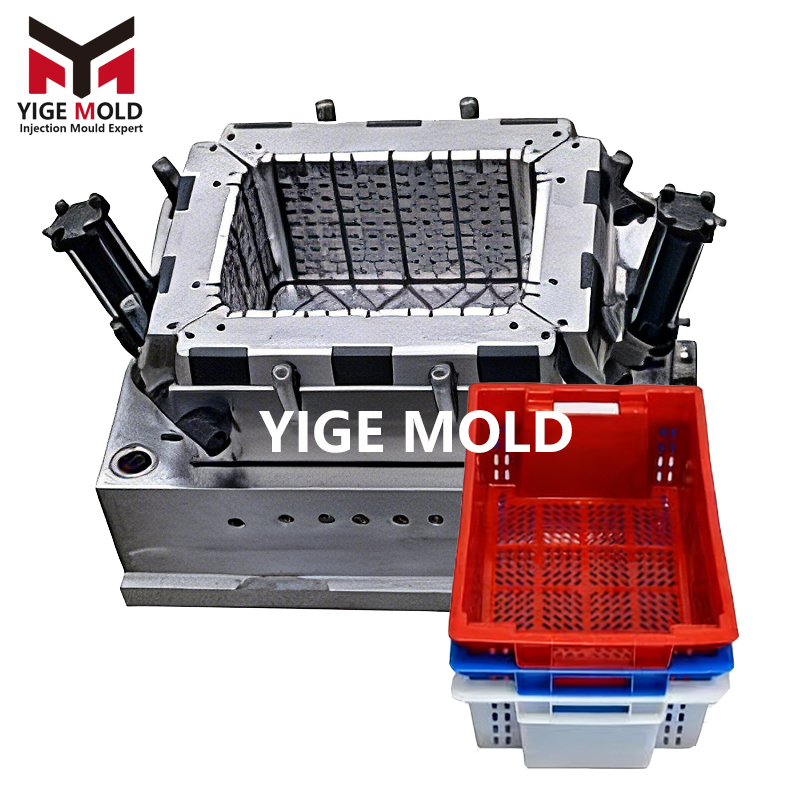
Mold flow analysis can precisely simulate the flow trajectory of the plastic melt after it enters the cavity from the gate, including key parameters like filling time, pressure distribution, and temperature changes. For instance, for large turnover boxes with thin walls, the analysis software can determine if the melt can smoothly reach the end of the cavity and whether injection speed or pressure needs adjustment. During the packing phase, it predicts which areas might suffer from sink marks due to insufficient shrinkage compensation, guiding designers to optimize packing time and pressure curves. Cooling process analysis helps determine if the cooling channel layout is reasonable, preventing product deformation or internal stress concentration caused by uneven cooling. -
Early Detection of Defects like Warpage, Sink Marks, and Bubbles
Warpage is one of the most common defects in injection molded products, especially for large items like turnover boxes and pallets. Mold flow analysis predicts deformation trends in different parts of the product by calculating shrinkage rate differences during the plastic cooling process. For example, if the analysis shows that the product edges cool too quickly leading to uneven shrinkage, the designer can add cooling channels or adjust the gate position on the mold to reduce warpage risk from the source. Similarly, sink marks often appear in thicker wall areas; mold flow analysis can pinpoint these "hot spots," guiding designers to solve them by reducing wall thickness, adding ribs, or optimizing packing parameters. As for bubbles, the software simulates the venting path during melt flow, identifying potential air trap locations in advance, allowing for the addition of venting slots or gate adjustments. -
Optimizing Gate Location and Cooling Channel Design
The gate is the "entrance" for plastic entering the cavity, and its position directly affects the filling effect and appearance quality. Mold flow analysis can find the optimal solution by simulating filling effects with different gate locations. For products like turnover boxes where appearance requirements are not strict, gates can be placed on the bottom or sides, but it must be ensured that the melt fills the entire cavity uniformly. Through mold flow analysis, designers can quickly compare multiple plans, avoiding issues like short shots or obvious weld lines caused by improper gate placement. Cooling channel design is equally critical. Mold flow analysis simulates cooling water flow and heat transfer, helping designers optimize the waterway layout to ensure uniform cooling across all mold parts. For example, for rib areas on turnover boxes, which have thicker walls and slower cooling, designers can add cooling channels in corresponding positions to prevent local overheating that leads to sink marks or deformation. -
Evaluating Cycle Time and Clamping Force Requirements
Mold flow analysis not only predicts product defects but also helps evaluate production efficiency. By analyzing parameters like filling time and cooling time, designers can estimate the product's molding cycle, providing customers with capacity references. Additionally, the software calculates the maximum clamping force required during injection, helping customers select suitable injection molding machines and avoiding production issues caused by insufficient machine tonnage.
Case Study: Turnover Box Mold Gate Optimization, from "Short Shot" to "First Trial Success"
Last year, Taizhou Yige Mold received an order for a large turnover box mold. The customer's initial design placed a pinpoint gate in the center of the top, but trial runs showed that the bottom corners were always short of filling, even after increasing injection pressure and speed. When the customer came to us, they had already modified the mold twice, incurring significant time and cost.
After taking over, we first conducted a mold flow analysis on the customer's 3D model. The results showed: due to the large size of the turnover box (600mm length × 400mm width), the flow path from the top central gate was too long, causing pressure to drop significantly by the time it reached the bottom corners, leading to short shots. Additionally, the analysis found that the top gate position would cause weld lines to appear on the front face, affecting appearance.
Based on these results, we suggested adjusting the gate location to the center of the long side on the side of the turnover box, using a side gate design. The modified mold flow analysis showed: with the melt flowing in from the side, the flow path was shortened, pressure distribution was more uniform, the bottom corner filling issue was resolved, and weld lines were moved to the non-appearance side.
The customer adopted our suggestion, modified the mold, and conducted a new trial run. This time, the product was fully filled with no obvious weld lines, achieving success on the first trial. The customer feedback indicated that this single optimization saved them at least 20,000 RMB in mold modification costs and two weeks of development time.
Our Service: Free Mold Flow Analysis Reports for All Mold Projects
At Taizhou Yige Mold, we deeply understand the importance of mold flow analysis for mold development. Therefore, we promise: to provide free mold flow analysis reports for all mold projects. From project initiation, our engineers conduct detailed mold flow analysis based on the customer's product 3D drawings, predict potential issues, and offer optimization suggestions. Whether it's gate location, cooling channel design, or molding process parameters, we let the data speak to ensure the mold design is right the first time, helping customers avoid detours and reduce costs while increasing efficiency.
If you are troubled by defect problems in mold development or want to avoid risks in advance, please contact us. Let us use our professional mold flow analysis technology to protect your mold project!
Post time:2026-04-29