Industrial Plastic Floor Mold
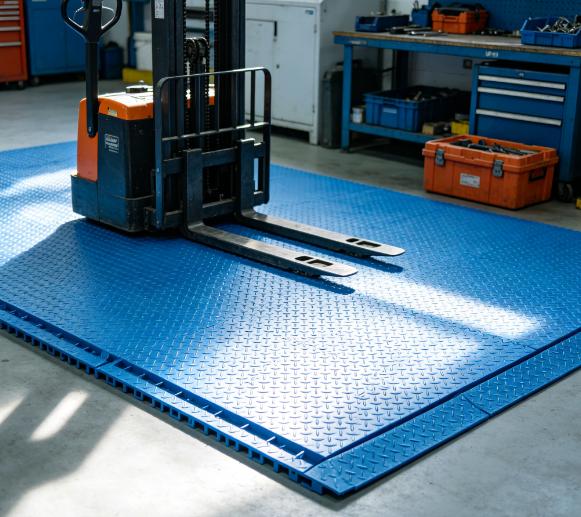
Introduction to Industrial Plastic Flooring Molds
I. Overview of Industrial Plastic Flooring Molds
1.1 Definition of Industrial Plastic Flooring Molds
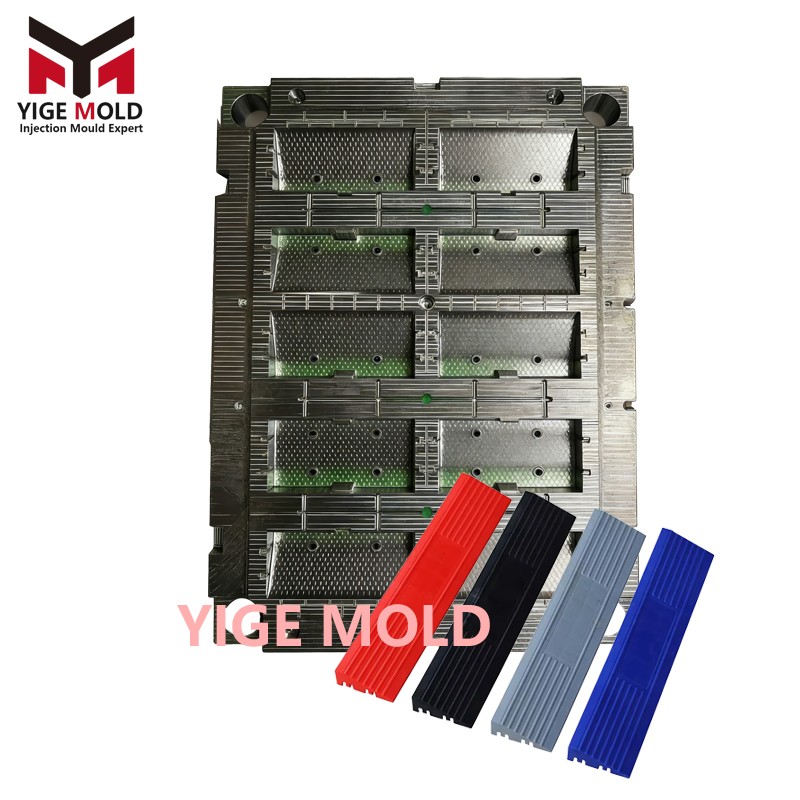
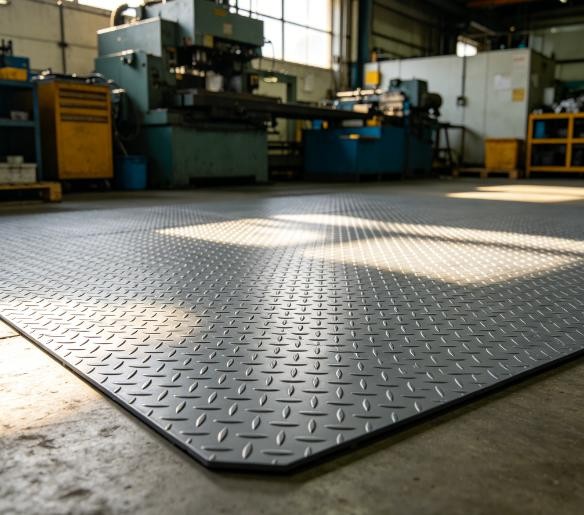
Industrial plastic flooring molds are specialized tools designed for the construction of industrial floors. The industrial sector has specific requirements regarding the material and performance of flooring, which is where these molds come into play. Made from specific plastic materials—typically characterized by excellent wear resistance, corrosion resistance, and pressure resistance—they meet the high standards required for industrial environments. Using these molds, manufacturers can produce plastic flooring with smooth surfaces, precise dimensions, and superior performance. These molds play a pivotal role in industrial floor construction. The resulting floors are widely used in factories, workshops, warehouses, parking lots, and other industrial settings, providing a solid and stable foundation for various industrial activities while significantly enhancing the quality, safety, and operational efficiency of the production environment.
1.2 Classification of Industrial Plastic Flooring Molds
Industrial plastic flooring molds can be classified according to multiple criteria.
-
By Material: Common types include Polypropylene (PP) molds, which offer good chemical resistance and mechanical properties at a relatively low cost; and Polyvinyl Chloride (PVC) molds, known for their flexibility and weather resistance, making them suitable for special environments.
-
By Structure: There are integral molds, which are robust but costly to manufacture; and modular/assembled molds, which are flexible and convenient, allowing for adjustments in size and shape based on actual needs.
-
By Application: Molds are available for standard industrial flooring (requiring wear and compression resistance for daily operations) and for functional flooring such as anti-static or anti-slip floors. These specialized molds are indispensable in specific industries, offering diverse solutions for industrial flooring construction.
II. Characteristics of Industrial Plastic Flooring Molds
2.1 High Abrasion Resistance
Industrial plastic flooring molds exhibit exceptional abrasion resistance. The plastic materials used (such as PP) have high surface hardness and stable molecular structures, enabling them to effectively withstand the friction and impact of raw materials like concrete during construction. Even in later stages of use, they resist wear and tear from long-term rolling by heavy equipment (like forklifts) and impacts from falling hard objects. This ensures that the produced flooring remains flat and aesthetically pleasing over time, reducing maintenance costs and downtime while providing a stable ground environment for industrial production.
2.2 Excellent Corrosion Resistance
These molds possess superior corrosion resistance. In sectors like chemicals and pharmaceuticals, floors are frequently exposed to strong corrosive substances such as acids and alkalis. Plastics like Polypropylene and Polyvinyl Chloride have stable chemical properties and do not react easily with such substances. Even in harsh environments, the molds remain uncorroded, maintaining structural integrity and ensuring normal construction progress. This allows the molds to perform stably in complex industrial scenarios, significantly extending the service life of the flooring and safeguarding continuous production safety.
2.3 Lightweight and Easy Handling
Compared to metal molds, industrial plastic flooring molds are remarkably lightweight. Taking PP as an example, its density is far lower than that of metals. This characteristic drastically reduces transportation costs and facilitates easier road transport and lifting operations. On-site, workers can easily carry and install the molds without the need for large cranes, speeding up the laying process and improving construction efficiency. Furthermore, their light weight makes storage more convenient, requiring less space and simplifying management.
2.4 High Customizability
Customizability is a major highlight of these molds. Different industrial sites have diverse requirements for floor specifications and shapes. Manufacturers can provide tailored solutions based on client demands—whether it involves irregular sizes, specific shapes, or reserved holes and patterns. This high degree of customization allows industrial plastic flooring molds to adapt to complex scenarios, meeting personalized customer needs and offering greater possibilities for industrial flooring projects.
III. Application Fields of Industrial Plastic Flooring Molds
3.1 Industrial Plants
In various industrial plants, these molds play a vital role. In machinery manufacturing plants, the floors must endure frequent equipment operation and heavy loads. In chemical plants, the floors face corrosive substances. In food processing facilities, hygiene is paramount, requiring smooth and easy-to-clean surfaces. The molds produce flooring that is wear-resistant, anti-slip, and corrosion-resistant, providing a solid foundation, extending the plant's lifespan, lowering maintenance costs, and creating a safe, efficient production environment.
3.2 Warehousing and Logistics
Warehouses and logistics centers are hubs for goods distribution, demanding high floor load-bearing capacity. Floors made using these molds can withstand stacking and handling pressures. Whether dealing with short-term storage of heavy goods or frequent forklift traffic, the floors remain stable without settlement or damage. In large logistics warehouses, high-load-bearing floors ensure storage safety and maximize space utilization; in distribution centers, they support rapid turnover, minimizing the risk of cargo damage due to floor failure.
3.3 Parking Lots
In parking lot construction, these molds are widely used. With frequent vehicle traffic, floors require high wear and compression resistance, which these molds provide. The resulting floors remain level under long-term vehicle pressure without cracking. Through specific processes, anti-slip surfaces can be created to enhance driving and parking safety. For underground parking lots, the floors offer good water resistance against groundwater erosion; for open-air lots, they provide weather resistance against sunlight and rain, enhancing the overall image and lifespan of the facility.
3.4 Other Fields
The applications extend even further. In stadiums, the molds create sports flooring with good elasticity and wear resistance. In schools, they produce colorful floors that beautify the campus. In hospitals, they create easy-to-clean, non-slip surfaces essential for sterile environments. The versatility and customizability of these molds allow them to meet the varied demands of numerous industries.
IV. Production Process of Industrial Plastic Flooring Molds
4.1 Raw Material Selection
Raw material selection is critical. Polypropylene (PP) is a common choice due to its high mechanical strength, heat resistance, and chemical stability, fulfilling requirements for strength and corrosion resistance. Polyethylene (PE) offers better flexibility and low-temperature resistance, suitable for molds requiring high toughness. Polyvinyl Chloride (PVC) provides excellent weather resistance and flame retardancy for special environments. The choice depends strictly on the application scenario and performance requirements.
4.2 Injection Molding
Injection molding is a key production stage. First, selected plastic raw materials are fed into the injection molding machine hopper. Heated to a molten state, the material is injected into the pre-designed mold cavity under specific pressure and speed. Parameters such as injection pressure, temperature, and time must be precisely controlled to ensure uniform filling. A holding pressure phase follows to prevent defects like shrinkage or dents. During the cooling phase, the mold is cooled via internal systems until the plastic solidifies. Finally, the finished mold is ejected. This process determines the dimensional accuracy and performance of the final product.
4.3 Post-Processing
After molding, the molds undergo post-processing. Trimming involves removing flash and burrs to ensure smooth surfaces and improve quality. Inspection includes checking dimensional accuracy, shape precision, and surface roughness against design standards. If defects (such as dimensional deviations or cracks) are found, analysis and repair measures are taken promptly. Only through strict post-processing can the quality of industrial plastic flooring molds be guaranteed, ensuring they work efficiently on-site to produce qualified industrial floors.
V. Market Prospects for Industrial Plastic Flooring Molds
5.1 Growing Market Demand
With the continuous expansion and upgrading of global industry, requirements for industrial flooring performance are becoming increasingly stringent, with wear and corrosion resistance being key. In corrosive industries like chemicals and pharmaceuticals, expanding production scales drive demand for corrosion-resistant flooring. In logistics and machinery manufacturing, automation and heavy goods handling drive demand for wear-resistant flooring. Industrial plastic flooring molds meet these precise needs perfectly, leading to rapid market expansion. Numerous industrial projects are adopting plastic flooring to improve environments and efficiency, bringing huge growth potential to the mold market, which is expected to maintain strong momentum in the coming years.