Outdoor Beach Chair Mold
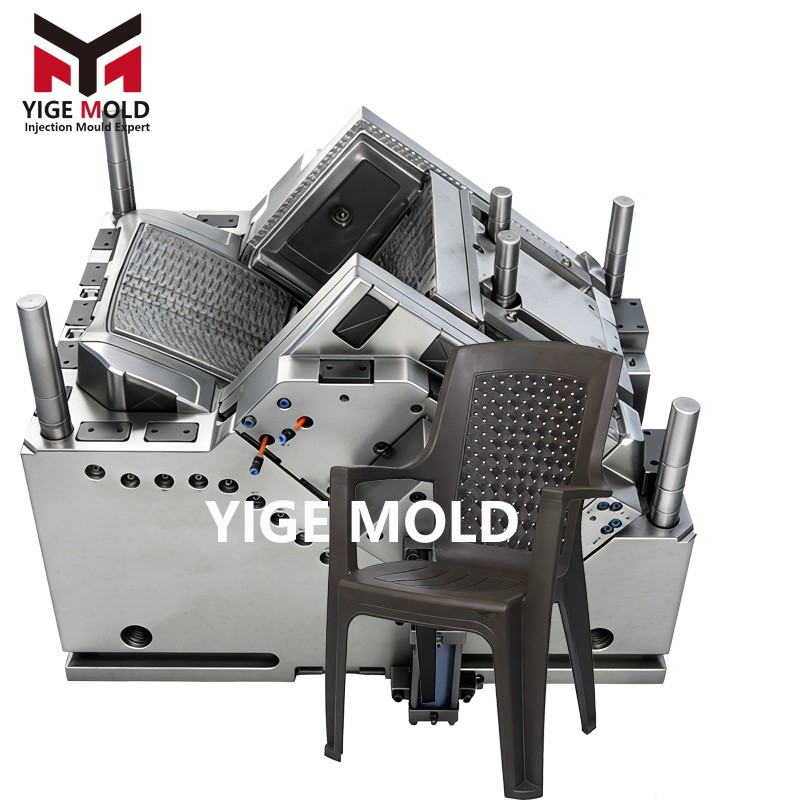
Outdoor Beach Chair Mold: A Precision Skeleton Forged for Harsh Environments
The Outdoor Beach Chair Mold represents a highly specialized niche within the injection molding domain. Its core mission is not merely to produce a seat, but to mass-manufacture the fundamental skeleton of an outdoor durable good, engineered to maintain structural integrity and functionality under prolonged exposure to salt spray, UV radiation, sand abrasion, seawater, dynamic loads, and frequent folding. Compared to molds for standard chairs, it demands a more profound integration of materials engineering, structural mechanics, and precision machinery to address its unique challenges.
I. Core Design Philosophy: Countering Environment and Stress
The primary design goal of a beach chair mold is to ensure product durability in harsh conditions, which fundamentally dictates its technical focus.
-
Complex Internal Architecture for Strength:
To handle unstable sandy ground and dynamic user loads (e.g., reclining), the mold must form internal structures far more reinforced than those of ordinary chairs. This is evident in:
-
Dense Rib Networks: Inside large areas like the seatback and seat pan, the mold must create a crisscrossing "skeleton" of reinforcing ribs. The design of these ribs (draft angles, root radii) requires precise calculation to ensure easy release and uniform stress distribution, preventing cracks. This demands extremely high precision in machining the mold core, especially for the EDM (Electrical Discharge Machining) of rib slots.
-
Localized Reinforcement at Critical Stress Points: In high-stress concentration areas like folding hinges and leg joints, the mold achieves localized material buildup through gradual wall thickness variation. This requires exceptionally precise control over plastic flow paths and packing pressure to ensure these thicker sections are fully compacted without sink marks.
-
-
Specialized Surfaces for Longevity:
-
Anti-Aging Texture Application: To combat UV-induced gloss degradation, discoloration, and micro-cracking, beach chairs commonly feature matte or specially textured surfaces. This necessitates fine texturing (etching) or sandblasting of the mold cavity to create a uniform, adherent micro-texture. This texture also helps conceal scratches and provides a non-slip feel.
-
The Challenge of Extreme Draft Angles: To achieve the sharp aesthetic lines of some modern designs, molds may require very low or even zero draft angles on near-vertical surfaces. This often must be paired with specific grain patterns to aid release, placing stringent demands on the polishability and hardness of the mold steel, as well as the balance of the ejection system.
-
II. Function Realization: Integral Molding of Precision Mechanisms
The foldable and adjustable nature of beach chairs requires the mold to directly form intricate mechanical connecting parts.
-
Integrated Living Hinges and Bushings:
The folding mechanism of high-end beach chairs often relies on integrally molded plastic living hinges, geared latches, or snap-fits. This means the mold interior must incorporate numerous precise micro-sliders, lifters, and unscrewing mechanisms. The machining tolerances, fit, and movement timing of these mechanisms must be flawless to ensure the final product opens/closes smoothly, locks securely, and withstands tens of thousands of cycles without failure.
-
Multi-Position Adjustment Structures:
The detents for backrest angle adjustment and the locking notches for telescoping legs are formed directly by intricate "internal core pulls" and "side-actions" within the mold. To ensure these locking features resist wear and slippage over long-term use, molds often employ high-hardness wear inserts in moving parts, with a hardness far exceeding the base mold steel to endure repeated friction.
III. Demanding Material and Process Adaptation
-
The Challenge of Adapting to Specialty Materials:
Outdoor beach chairs predominantly use copolymer PP, UV-stabilized modified PP, or HDPE. These materials often contain UV absorbers and anti-oxidants, which can alter melt flow or create mild corrosive byproducts. Furthermore, the addition of glass fibers or mineral fillers for increased rigidity significantly increases wear on mold gates and cavities. Consequently, mold steels are often pre-hardened stainless steels with high wear and corrosion resistance, with key areas receiving additional surface hardening treatments.
-
Thermal Management and Flow Balance:
Due to the large part area and significant wall thickness variations, the design of the mold's hot runner system and cooling system is particularly critical. Multi-point valve-gated hot runners are typically used to precisely control fill sequence, ensuring thick sections like hinges are packed last. The cooling system requires differentiated design for rib-dense areas and main body sections, often employing baffles, bubblers, or fountain coolers to achieve uniform, efficient heat dissipation and control part warpage.
-
Complexities in Venting and Ejection:
The complex internal rib structure easily traps air, leading to burns or short shots. Therefore, molds must incorporate dedicated venting inserts or channels at the end of ribs and deep within the cavity. The ejection system requires a specialized layout for large, thin-walled parts, utilizing a large number of evenly distributed ejector pins, often combined with air-assisted ejection to ensure the part releases without distortion or pin marks.
IV. The Pursuit of Manufacturing Precision and Reliability
The manufacturing of a beach chair mold is a pursuit of high precision and reliability. From high-precision CNC machining and slow wire EDM to precision sinking EDM, hand polishing, and texture etching, each process step aims to guarantee the fit of moving components, the durability of surface textures, and the stability of long-term production. The value of a high-quality beach chair mold lies in its ability to consistently and reliably produce hundreds of thousands of parts that meet the stringent standards for outdoor use. It is, in itself, a highly complex piece of precision machinery.
Conclusion
The Outdoor Beach Chair Mold is a profound convergence of industrial design, materials science, and precision manufacturing under the theme of "leisure." It transcends the basic function of "shaping" to become the engineering core for "constructing a reliable outdoor system." From a line on a drawing to a micron-level texture in the mold; from a simulated rib in FEA software to a chair that endures for years under the sun and sea breeze—it silently defines the quality baseline and longevity limit of outdoor leisure products. It is the steadfast guarantor of functional aesthetics in extreme environments.