Large Laundry Basket Mold


Introduction to Large Laundry Basket Molds
1. Product Definition and Industrial Status
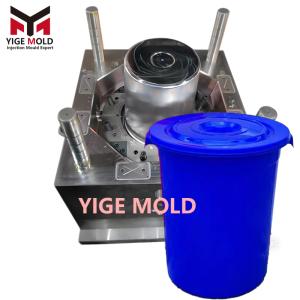
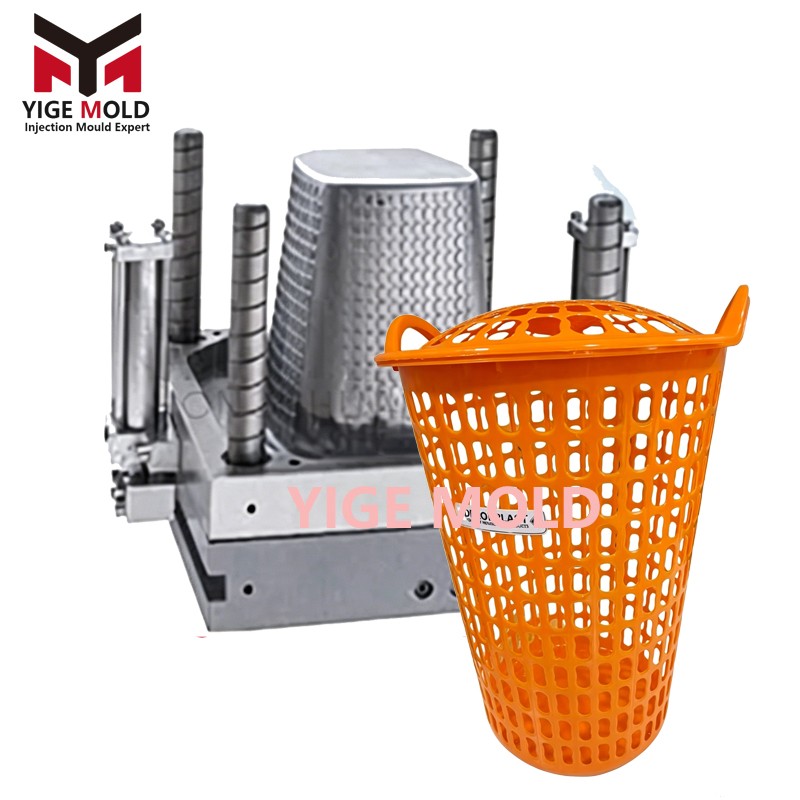
In the field of industrial manufacturing, Large Laundry Basket Molds are typically categorized as large-scale household injection molds. They are indispensable equipment in modern injection molding processes, specifically designed to process thermoplastics such as Polypropylene (PP) and High-Density Polyethylene (HDPE) into high-capacity storage containers for residential and commercial use. Products manufactured by these molds range from traditional rectangular dirty clothes hampers and round storage buckets to various hollow draining baskets.
Within the plastic products industry chain, large laundry basket molds occupy a unique niche. Unlike precision molds for electronic connectors or automotive interiors, they place greater emphasis on aesthetic appearance, structural strength, and the economic efficiency of production cycles. As a bridge connecting raw materials to finished consumer goods, the quality of this mold directly determines the surface finish, dimensional stability, and anti-aging properties of the final basket. In the current manufacturing landscape, it is not merely a simple forming tool but a core carrier for the mass and standardized production of plastic products, supporting the vast market for home storage solutions.
2. Mold Structure Design Analysis
The design of a large laundry basket mold is a complex systematic project. Its core challenge lies in balancing the large projected area with the clamping force of the injection molding machine, while ensuring the uniform flow of melt within the mold cavity.
Mold Base and Steel Selection
Since laundry baskets typically have large opening dimensions (diameters or side lengths often exceeding 50 cm), the mold base must adopt high-strength standards, such as large-scale LKM or HASCO standard bases, to prevent deformation during high-pressure injection. regarding steel selection, to cope with wear caused by reinforcing fillers like glass fiber potentially added to PP or PE materials, and to ensure a mold life of hundreds of thousands of cycles, P20 pre-hardened steel or 718H steel is usually selected for cores and cavities. For products requiring high mirror effects or transparent materials, corrosion-resistant stainless steels like S136 are chosen, accompanied by fine polishing.
Cooling System Layout
Cooling efficiency is key to determining the production cycle. The design of cooling water channels for large molds is particularly critical. Conformal cooling or multi-circuit straight-through water channels are typically used to ensure uniform temperature across the mold surface. If cooling is uneven, the massive plastic part is prone to warping, leading to demolding issues or unstable stacking. Mold flow analysis technology is often introduced during design to simulate the plastic melt filling process, optimizing gate locations and cooling channel arrangement to physically avoid defects like sink marks and air bubbles.
Ejection Mechanism
Considering that laundry baskets often feature mesh holes or rib structures, the ejection system design requires extra precision. Common ejection methods include ejector pins, ejector sleeves, and air-assisted ejection. For deep-cavity laundry buckets, multi-stage ejection or delayed ejection mechanisms are often necessary. These utilize the elastic deformation of undercuts to achieve automatic demolding, reducing reliance on manual labor or robotic post-processing.
3. Molding Process and Material Compatibility
The operation of large laundry basket molds relies on the high-temperature and high-pressure environment of injection molding machines. The process covers five basic stages: mold closing, injection, holding pressure, cooling, and mold opening/ejection.
Material Fluidity Control
Different plastic materials impose distinct requirements on mold design. For instance, when producing rattan-imitation laundry baskets with woven textures, the texture increases flow resistance. Therefore, the mold runner design must be wider, and injection speed and pressure must be increased accordingly to ensure the plastic completely fills every fine texture gap, avoiding short shots.
Surface Treatment Technology
To give plastic baskets different textures, the mold surface undergoes various treatments. The most common is texturing (etching), where chemical etching creates leather, geometric, or wood grain patterns on the mold surface. This gives the injected product a non-slip and aesthetically pleasing touch. Additionally, for high-gloss products, the mold surface may undergo chrome plating or nickel-phosphorus alloy treatment to achieve a mirror-like finish.
4. Industry Applications and Market Value
The application scenarios for large laundry basket molds extend far beyond simple laundry functions, permeating fields such as home storage, supermarket logistics, and agricultural picking.
Carrier of Home Aesthetics
With the improvement of living environments, consumer aesthetic requirements for household items have risen. Modern mold technology allows laundry baskets to move beyond monotonous blues or whites, enabling the production of Morandi color schemes, minimalist styles, and even products with complex hollow artistic patterns. The high precision of the molds ensures burr-free edges and smooth parting lines, allowing them to blend perfectly into modern home decor styles.
Logistics and Warehousing
In supermarket and logistics sectors, large hollow turnover crates (essentially a variant of large laundry basket mold products) play a vital role. Products from these molds require extremely high impact resistance and stacking stability, capable of withstanding heavy loads and bumps during long-distance transport. The rib layout and bottom grid structure in the mold design directly determine the load-bearing capacity of the finished product.
Economic Value
Although the initial development cost of a high-quality large laundry basket mold is relatively high, it can produce over a million units throughout its lifecycle. Through multi-cavity designs (such as 2-cavity or 4-cavity), the manufacturing cost per unit can be significantly reduced. This efficient replication capability allows plastic products to benefit the public at extremely low prices, demonstrating the advantages of economies of scale in modern industry.
5. Quality Control and Durability Standards
In the mold manufacturing industry, acceptance standards for large laundry basket molds are strict.
Dimensional Precision
Since the shrinkage rate of plastic after cooling is influenced by various factors, mold designers must perform precise shrinkage compensation on mold dimensions based on empirical data and mold flow analysis results. High-precision molds ensure product dimensional errors are controlled within the millimeter range, which is particularly important for laundry baskets that require matching lids or nesting for transport.
Venting Design
Large flat or curved surfaces can easily trap air during injection, leading to burnt marks or incomplete filling. Therefore, the parting surface, ejector pin fits, and specific venting groove designs are crucial. A reasonable venting system ensures gas is expelled from the cavity within milliseconds, guaranteeing a flawless product appearance.
Summary
In conclusion, the large laundry basket mold is a product of the combination of modern precision manufacturing and traditional daily necessity demands. Through rigorous mechanical structural design, scientific material application, and precise processing technology, it transforms ordinary plastic granules into practical tools indispensable for every household. In the current industrial system, it remains an important benchmark for measuring the processing capability and design level of a mold enterprise.