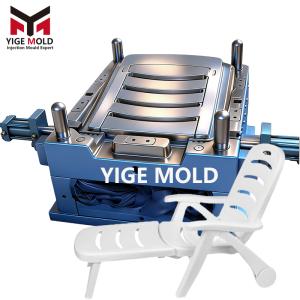
Stadium chair mold
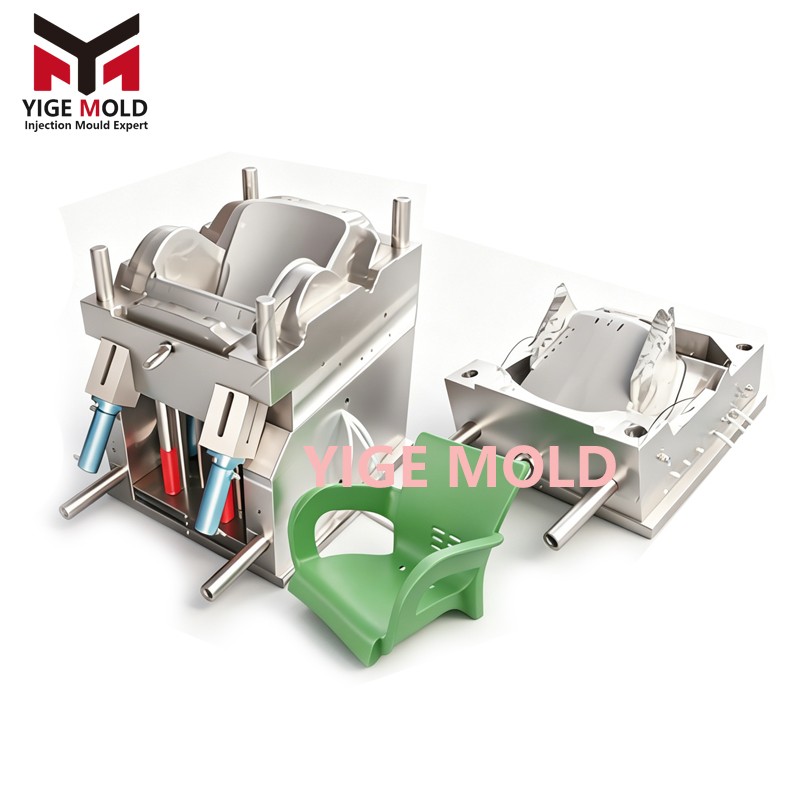
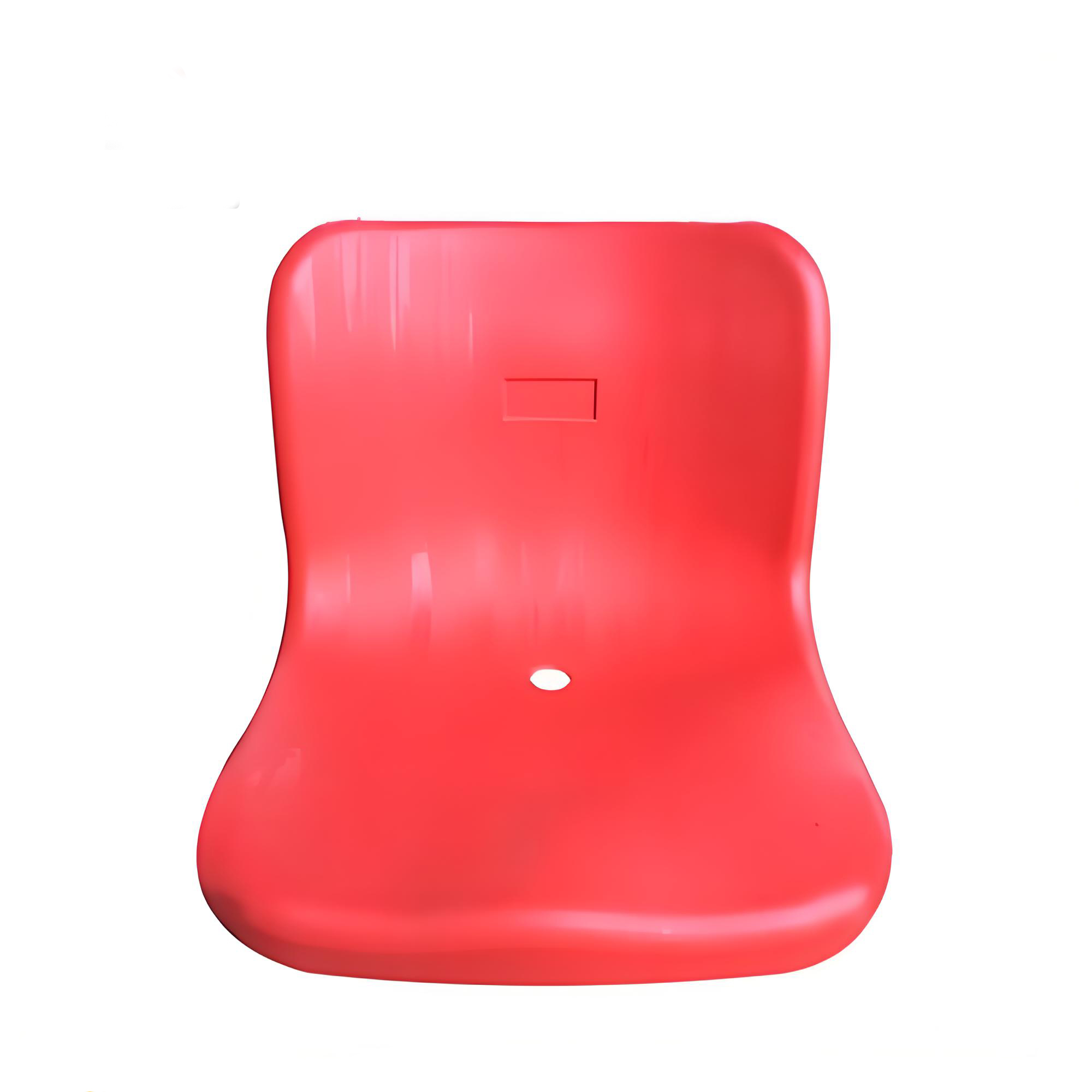
Introduction to Stadium Chair Molds
In the construction of modern large-scale stadiums, tens of thousands of seats form the visual main body of the spectator stands. These chairs must not only withstand decades of exposure to wind and sun and frequent use but also meet the dual standards of ergonomics and aesthetics. The stadium chair mold, as the core tool for manufacturing these "industrial consumer goods," presents design and manufacturing challenges that go far beyond ordinary consumer product molds. It requires balancing extremely long flow paths, huge projected areas, and strict weatherability requirements. This article will deeply explore the structural design, steel selection, injection molding process optimization, and surface treatment technologies of stadium chair molds.
Weatherability of Mold Steel and High Polishing Requirements
Stadium chairs mostly use Polypropylene (PP) or High-Density Polyethylene (HDPE) as raw materials, with added UV stabilizers to adapt to outdoor environments. Although these materials do not strongly corrode the mold, to ensure the aesthetics and cleanability of the chair surface, the mold cavity usually requires an extremely high polishing standard (such as SPI A1 mirror finish). Therefore, mold manufacturers mostly select pre-hardened steels like P20 or 718H. Some high-end molds even use S136 stainless steel to ensure that after millions of injection cycles, the chair surface remains as smooth as new, free of pitting or flow marks.
Half-Mold Structure and Complex Demolding Design
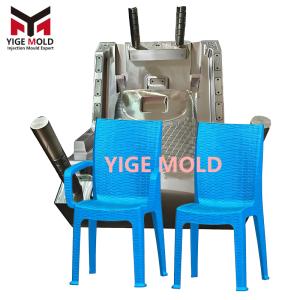
Stadium chairs usually feature backrest curves, armrests, and reinforcing ribs on the bottom. The structure is complex with multiple undercuts. To ensure smooth demolding, mold designs generally adopt a split mold structure or slider core-pulling mechanisms.
For one-piece molded chairs, the mold typically consists of two large left and right sliders, working in conjunction with an ejector plate system. The design challenge lies in the guiding and locking of the sliders; it is crucial to ensure that the sliders do not shift under high-pressure injection to prevent flash. Additionally, the mounting holes and reinforcing ribs at the bottom of the chair often require complex lifter mechanisms, demanding extremely high assembly precision and wear resistance from the mold.
Gating Systems and Application of Gas-Assisted Injection Molding
Since stadium chairs are large in size with relatively thin walls, plastic melt is prone to unbalanced flow or short shots during filling. Traditional cold runner molds not only generate a lot of waste but also struggle to guarantee the dimensional stability of large parts.
Modern high-end stadium chair molds widely adopt hot runner systems, especially valve-gate hot runners. By precisely controlling the opening time of the gate points, manufacturers can effectively eliminate gate marks and balance the melt flow within the cavity, reducing internal stress.
Even more advanced is Gas-Assisted Injection Molding (GAIM). During the injection process, high-pressure nitrogen gas is injected into the mold interior, forming a hollow structure inside the chair. This technology not only significantly reduces the chair's weight (saving material costs) but also eliminates sink marks in thick-walled areas, improving the chair's rigidity and impact resistance, making it less prone to brittle fracture in extreme cold or heat.
Conformal Cooling and Production Efficiency Optimization
The large projected area of stadium chairs makes long cooling times a major bottleneck restricting production efficiency. Traditional straight water channels find it difficult to uniformly cool the curved surfaces and rib areas, easily leading to warping and deformation.
To solve this problem, advanced mold designs utilize conformal cooling technology. Through 3D printing or deep-hole drilling, cooling channels consistent with the chair's contour are created inside the mold, ensuring heat is conducted away uniformly and rapidly. This not only shortens the molding cycle but also significantly improves the product's dimensional stability, guaranteeing the interchangeability of chairs in mass production.
Surface Treatment and Texture Design
To enhance the spectator experience, chair surfaces usually require special texturing. The mold cavity is processed via chemical etching or laser engraving to create leather grains, matte finishes, or specific geometric patterns. This not only adds to the aesthetics of the chair but also provides an anti-slip function. Additionally, nitriding treatment of the mold surface is an essential process; it improves the mold's hardness and wear resistance, extending its service life.
Trial Run Verification and Standardized Testing
After manufacturing, the mold must undergo strict trial run verification. In addition to routine dimensional checks, stadium chair molds require special physical performance testing. For instance, trial products are placed in temperature and humidity cycling chambers to simulate extreme outdoor environments, testing their anti-aging properties and dimensional stability. Simultaneously, load testing is conducted to ensure the chair does not fracture or permanently deform when bearing human weight.
In summary, the manufacturing of stadium chair molds is a systems engineering project integrating structural design, material science, hot runner technology, and precision machining. From the selection of steel to the application of gas-assisted injection, every link concerns the safety and comfort of the final venue facilities. With the upgrading of the sports industry, stadium chair molds are developing towards being lighter, more environmentally friendly, and more intelligent.