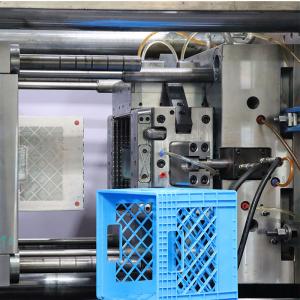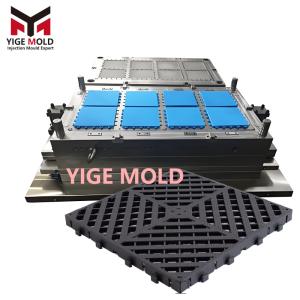
Pallet box mold
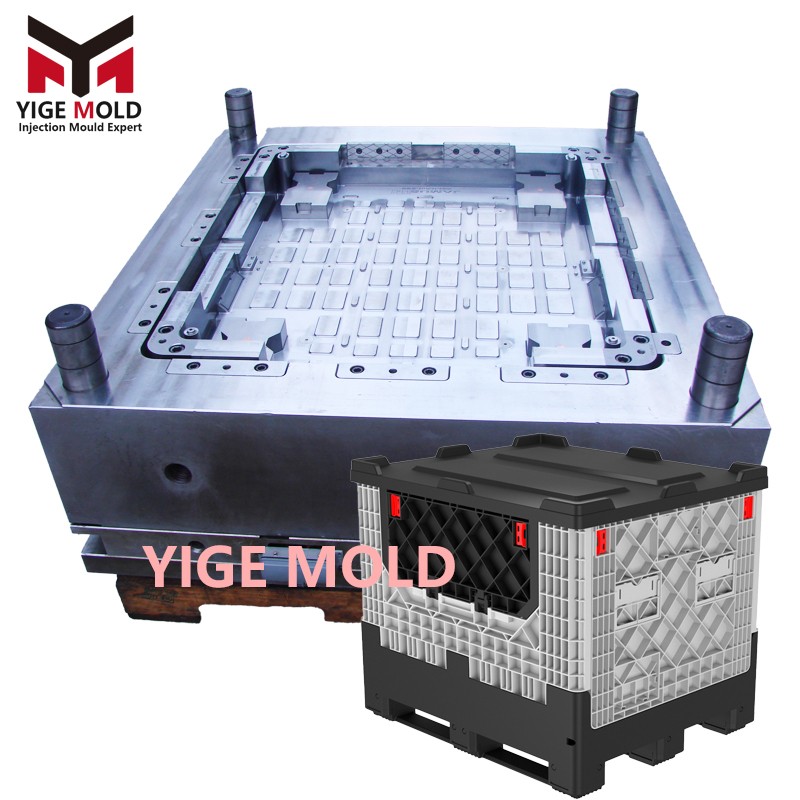
 Pallet Box Mold: The Precision Manufacturing Core of Industrial Logistics Packaging
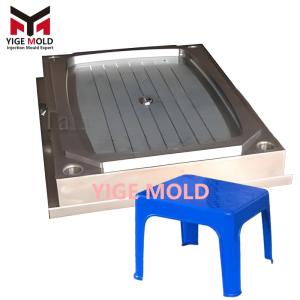
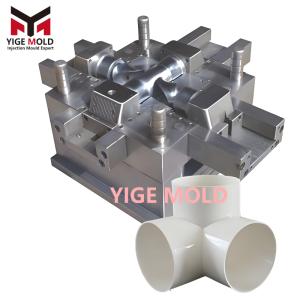
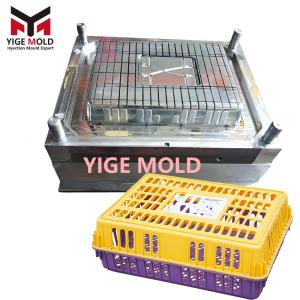
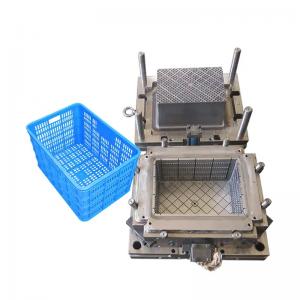
The pallet box mold is an essential piece of equipment in the injection molding field, specifically designed for producing various pallet box products. This type of mold utilizes high-precision processing technology to form structurally stable, load-bearing pallet box bodies in a single injection cycle using engineering plastic materials such as PP, PE, and HDPE through a hot runner system. As the core carrier in modern industrial logistics, the design of the pallet box mold directly determines the product's service life, load-bearing capacity, and handling efficiency.
Core Technologies in Mold Design
Key Points in Structural Design
The structural design of a pallet box mold requires comprehensive consideration of product function, production process, and cost control. The mold adopts a multi-point hot runner system to ensure uniform filling of the molten plastic into the cavity, avoiding defects such as shrinkage and warpage in the product. The cavity surface undergoes mirror polishing, achieving a surface smoothness of up to Ra0.8μm, ensuring smooth demolding and excellent appearance quality of the product.
Runner System Design
The hot runner system is one of the core technologies of the pallet box mold. It employs a multi-point valve-gated hot runner system, achieving uniform filling of molten plastic through precise temperature control and timing. The runner layout must be optimized according to the product's structural characteristics to prevent weld lines from appearing in stress-bearing areas, ensuring product structural strength. The main runner is designed with a large diameter to reduce pressure loss and improve injection efficiency.
Cooling System Design
The cooling system directly affects production efficiency and product quality. The mold adopts a multi-circuit cooling system, with independent cooling channels set up for the core and cavity to ensure uniform cooling. Cooling channels are designed in a spiral or baffle style to improve cooling efficiency and shorten the molding cycle. The layout of cooling channels must avoid moving parts such as ejector pins and sliders to ensure safe mold operation.
Venting System Design
Given the large volume and relatively thick walls of pallet box products, the venting system design is particularly important. Venting slots are set at the parting line, core inserts, sliders, and other locations, with slot depth controlled at 0.03-0.05mm and width at 8-10mm. For deep cavity areas, insert venting or venting steel designs are used to prevent defects such as burning or short shots in the product.
Mold Processing Technology
Material Selection and Heat Treatment
Core mold components are made from high-quality imported mold steels such as 718H, S136, and NAK80. 718H material offers good polishing performance and wear resistance, making it suitable for main forming parts like cavities and cores. S136 material has excellent corrosion resistance and is suitable for producing transparent or food-grade products. NAK80 material features high hardness and good wear resistance, making it ideal for moving parts such as sliders and lifters.
Materials undergo vacuum heat treatment and cryogenic treatment, achieving a hardness of up to HRC48-52. The heat treatment process includes steps such as quenching, tempering, and cryogenic treatment to ensure uniform internal material structure, eliminate internal stress, and extend mold service life.
CNC Machining Technology
Mold processing utilizes advanced equipment such as five-axis CNC milling machines, precision grinders, and slow wire EDM. Main forming parts like cavities and cores are roughed and finished using five-axis machining centers, achieving machining accuracy of ±0.01mm. For complex curved surfaces, high-speed milling technology is employed, achieving surface quality of up to Ra0.4μm.
Standard parts such as guide pillars and bushings, and ejector pins are processed using precision grinders, with fit clearance controlled within 0.005-0.01mm to ensure smooth movement. Moving parts like sliders and lifters are processed using slow wire EDM, achieving machining accuracy of ±0.003mm.
Electrical Discharge Machining
For areas difficult to mill, such as deep cavities and narrow slots, electrical discharge machining (EDM) technology is used. Electrode materials are selected from copper or graphite, and precision machining is performed using EDM forming machines. Discharge parameters must be strictly controlled during processing to ensure surface quality. For deep cavity areas, multi-electrode layered processing is used to avoid the impact of electrode wear on machining accuracy.
Surface Treatment Technology
The mold cavity surface undergoes mirror polishing, with the polishing process including multiple stages such as rough polishing, medium polishing, and fine polishing. Rough polishing uses oil stones or sandpaper to remove machining marks; medium polishing uses diamond paste or aluminum oxide polishing paste to improve surface smoothness; fine polishing uses mirror polishing paste to achieve a mirror-like surface finish.
For areas requiring wear resistance, PVD or CVD coating treatments are applied to increase surface hardness and wear resistance. Coating materials can be TiN, TiCN, CrN, etc., with coating thickness of 2-4μm and hardness up to HV2000 or higher.
Assembly and Debugging
Mold assembly is inspected using precision measuring instruments to ensure the fit accuracy of all components. Guide pillars and bushings adopt an oil-free lubrication design to reduce maintenance frequency. The ejection system uses nitrogen springs or mechanical springs to ensure stable and reliable ejection. The cooling system undergoes water pressure testing to ensure no leakage.
During trial molding, injection process parameters need to be adjusted, including injection speed, holding pressure, holding time, and mold temperature. The trial verifies product dimensions, appearance quality, structural strength, and other indicators, allowing for necessary adjustments and optimization of the mold.
Technical Features and Core Advantages
High-Precision Structural Design
Pallet box molds use a multi-point hot runner system to ensure uniform filling of molten plastic into the cavity, avoiding defects such as shrinkage and warpage. The mold cavity surface is mirror-polished, ensuring smooth demolding and a surface smoothness of up to Ra0.8μm. This precision design guarantees the dimensional stability and appearance quality of the pallet boxes, meeting the stringent requirements of industrial logistics for packaging containers.
Long-Life Design Philosophy
Core mold components are made from high-quality imported mold steel, undergoing vacuum heat treatment and cryogenic treatment to achieve a hardness of up to HRC48-52 and a service life exceeding 1 million cycles. Guide pillars and bushings feature an oil-free lubrication design, reducing maintenance frequency and lowering operational costs for enterprises. Material selection is based on a comprehensive consideration of mold service life, injection product requirements, and costs to ensure optimal cost-effectiveness.
High-Efficiency Production Performance
The use of quick mold change systems, combined with robotic automatic part removal, enables fully automated production. A single mold can achieve a daily output of 2,000-3,000 pieces, meeting the demands of large-scale logistics packaging. The mold design process fully considers the product's usage environment and performance requirements, such as compressive strength and durability, ensuring stable product quality under high-speed production conditions.
Application Areas
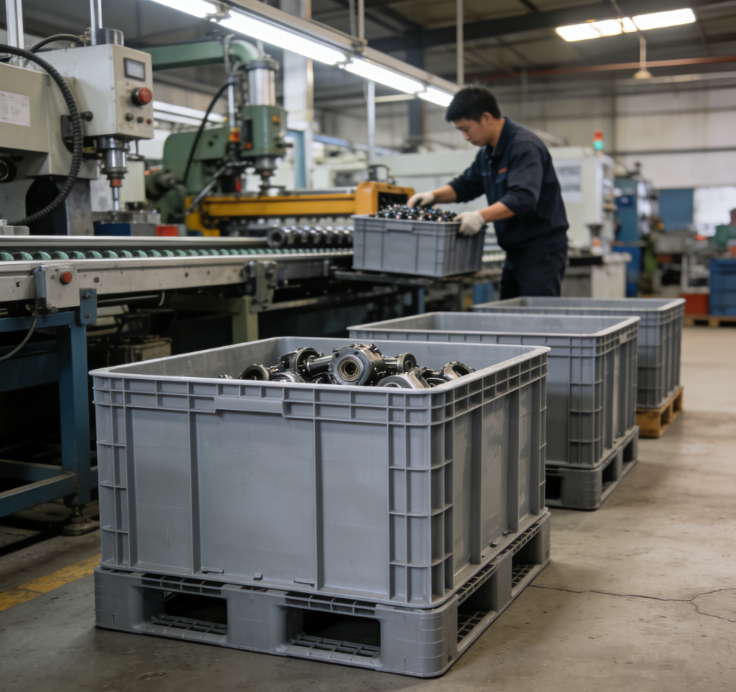
Pallet box molds are widely used in storage and logistics links across industries such as automotive parts, home appliance manufacturing, electronic components, food and pharmaceuticals, and chemical raw materials. Product specifications range from 600×400mm to 1200×1000mm, with load-bearing capacities from 500kg to 2000kg, meeting the loading needs of various industries.
In the automotive manufacturing sector, they are used for the handling and transportation of automotive parts, with oil and corrosion resistance perfectly suited to the automotive manufacturing environment. In the medical and health industry, closed pallet boxes compliant with GMP requirements provide clean and safe storage and transportation environments for pharmaceuticals and medical devices. In the food processing field, food-grade materials ensure food safety, and sealed designs effectively prevent contamination.
Yige Mold's Technical Advantages
Yige Mold possesses extensive technical accumulation and manufacturing experience in the field of pallet box mold manufacturing. The company utilizes advanced CAD/CAM design software and is equipped with high-end processing equipment such as five-axis CNC milling machines, precision grinders, and EDM machines, providing customers with one-stop services from product design to mold manufacturing.
Yige Mold emphasizes technological innovation, holding multiple patents in areas such as hot runner systems, cooling systems, and venting systems. The company adopts a modular design philosophy, allowing for the rapid customization of pallet box molds in different specifications based on customer needs, shortening delivery cycles and reducing customer costs.
In terms of quality control, Yige Mold has established a comprehensive quality management system, with strict inspections conducted at every stage from raw material procurement to finished product shipment. The company is equipped with precision inspection equipment such as coordinate measuring machines and video measuring systems to ensure mold accuracy meets design requirements, providing customers with high-quality mold products.
Yige Mold consistently adheres to a customer-centric approach, offering comprehensive pre-sales, in-sales, and after-sales services. The company has a professional technical team capable of providing value-added services such as technical consultation, mold maintenance, and process optimization, helping customers improve production efficiency and reduce operational costs.