Cooling Fan Mold
Cooling Fan Mold: The Micro-Casting of Precision Fluid Dynamics and the Steel Law of Dynamic Balance
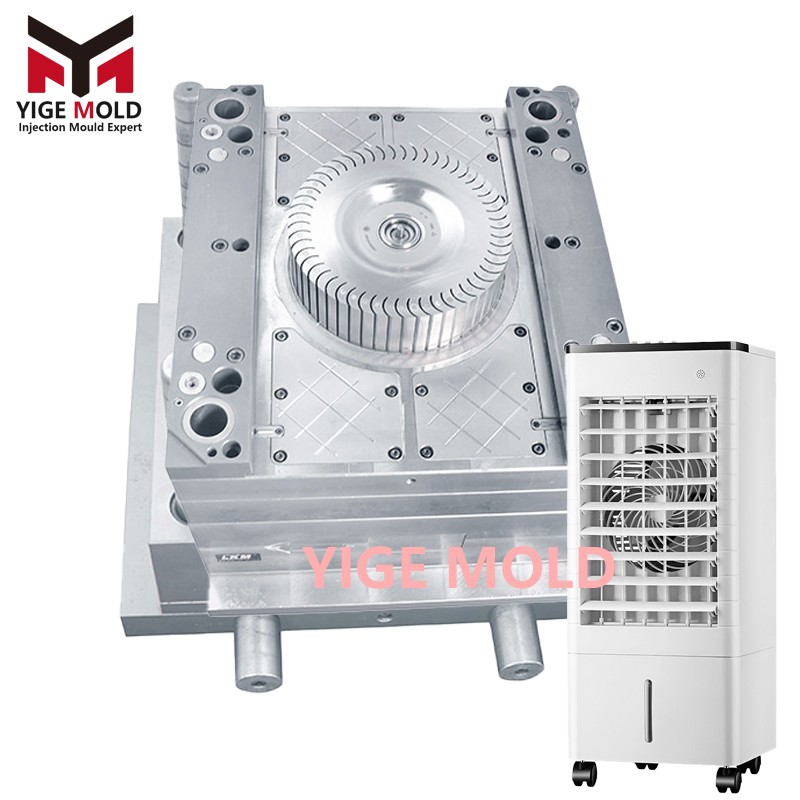
In the grand narrative of modern industrial civilization, the cooling fan maintains the vital signs of everything from microchips to giant engines with its constant rotation. It is the lung of electronic equipment, the coolant for the mechanical heart, and the last line of defense against the system collapse caused by thermodynamic entropy. However, behind this seemingly simple rotating component lies a manufacturing system with an almost obsessive demand for precision—the Cooling Fan Mold. It is not merely a tool for molding plastic blades but the physical expression of fluid dynamics and material mechanics. The curvature, thickness, and distribution of every blade are a precise carving of air by mold engineers on a micron scale. This mold system, with its steel body, defines the form and efficiency of the wind, standing as an indispensable micro-caster in the field of industrial heat dissipation.
The Ultimate Pursuit of Dynamic Balance: The Steel Oath to Eliminate Vibration
The core soul of a cooling fan mold lies in its absolute control over "dynamic balance." When a fan rotates at thousands of revolutions per minute, any minute imbalance in mass distribution is amplified by centrifugal force into significant vibration and noise. This is not just a matter of comfort but a critical issue concerning bearing life and equipment stability. Therefore, the design and manufacturing of a cooling fan mold are essentially a precise game of mass distribution.
The cavity design of the mold must adhere to strict principles of symmetry and consistency. The runner length, gate position, and cooling channel layout for every blade undergo precise mold flow analysis to ensure that the plastic melt fills every corner of each blade with the same speed, pressure, and temperature. Any minute difference can lead to weight deviations in the blades, thereby destroying the dynamic balance. Mold engineers use high-precision CNC and EDM machining to control cavity tolerances at the micron level, ensuring that every blade produced is identical like a twin. This ultimate pursuit of consistency is a steel oath the mold makes to the physics of high-speed rotation, aiming to eliminate every potential hidden danger of vibration and endow the fan with a quiet and enduring life.
Micro-Carving of Fluid Dynamics: The Air Poem of Blade Curvature
The efficiency of a cooling fan depends on how the blades convert electrical energy into the kinetic energy of airflow. This requires the blades to possess complex aerodynamic curved surfaces to cut through the air with minimal resistance, generating maximum air volume and pressure. The cooling fan mold is the chisel that transforms these abstract fluid dynamics formulas into physical metal cavities.
The core and cavity of the mold jointly construct a negative air channel. The twist angle of the blades, the sharpness of the edges, and the transition fillets at the roots have all undergone repeated CFD simulation and optimization. Mold manufacturers must overcome huge process challenges, such as how to prevent the plastic melt from solidifying prematurely under extremely thin wall thickness and how to avoid trapped air and burning under complex curved surfaces. To this end, molds often employ special venting steel inserts and conformal cooling channels to ensure that air is expelled instantly and heat is removed evenly during the high-temperature, high-pressure injection process. This precise control over micro-channels allows the produced blades to perfectly replicate the designer's aerodynamic intent, composing an air poem about airflow efficiency in rotation.
The Co-evolution of Material and Life: The Tough Persistence Under High Temperature and Pressure
Cooling fans are typically manufactured using engineering plastics like PBT and PA66, which are often reinforced with glass fibers to enhance strength and heat resistance. However, these hard fillers act like fine sandpaper, causing severe wear on the mold surface during injection. Therefore, cooling fan molds must possess extraordinary wear resistance and corrosion resistance to maintain precision over millions of injection cycles.
The selection of mold steel usually points to high-hardness, high-polish materials like S136 and 718H, which undergo vacuum heat treatment and surface nitriding to achieve a surface hardness of HRC48 or higher. This tough steel body can withstand the scouring of glass fibers and the corrosion of high-temperature plastics, ensuring that the cavity surface remains as smooth as new and dimensions as precise as ever throughout the mold's long life cycle. In addition, the mold's gating system typically employs hot runner technology to reduce the generation of sprue waste and improve material utilization. This co-evolution of materials and processes reflects the dual consideration of industrial manufacturing for economic efficiency and environmental responsibility, enabling the cooling fan mold to achieve green and sustainable production modes while meeting high-performance heat dissipation requirements.
Conclusion
The cooling fan mold is the silence and efficiency that industrial manufacturing bestows upon mechanical systems. With its ultimate pursuit of dynamic balance, it eliminates the hidden dangers of vibration; with its micro-carving of fluid dynamics, it optimizes airflow efficiency; with the co-evolution of material and life, it upholds the tenacity of production. Behind every rotating blade lies a profound understanding of precision, efficiency, and durability by mold engineers. It does not directly participate in heat dissipation, yet it provides the strongest power for every heat transfer; it does not directly touch the chip, yet it provides the most reliable guarantee for the operation of every core. It is the micro-caster of the heat dissipation field, silently casting industrial legends about wind, cold, and stability in every injection cycle.