Injection Pallet Mold
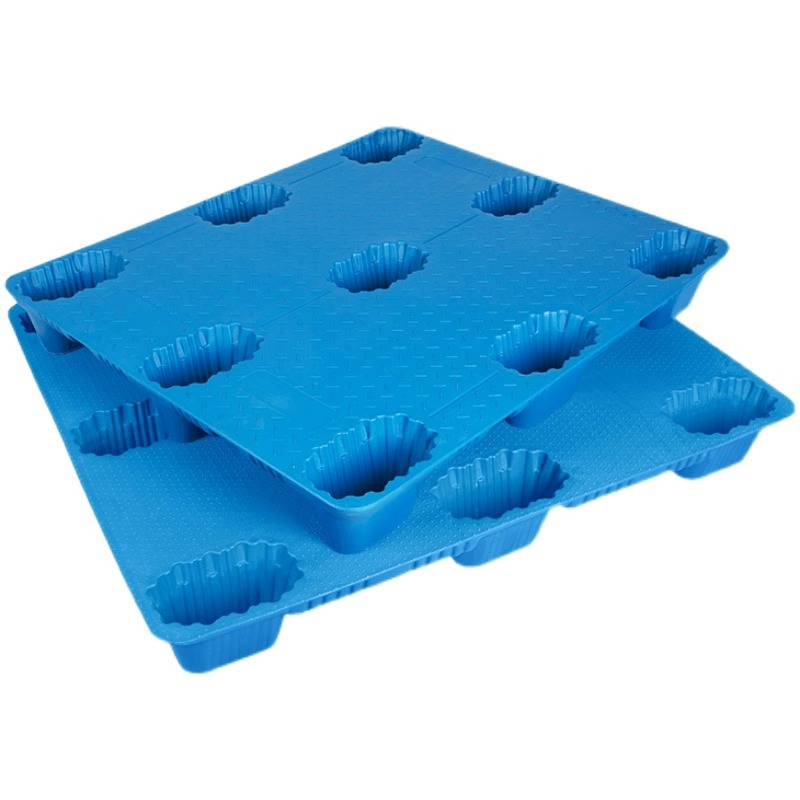 Introduction to Injection Molded Pallet Molds
I. Overview of Injection Molded Pallet Molds
1.1 Definition of Injection Molded Pallet Molds
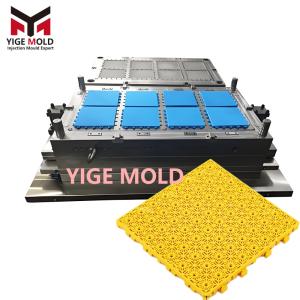
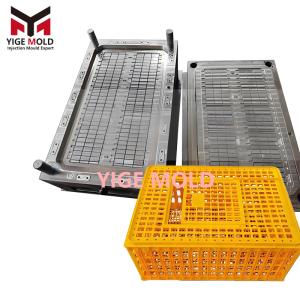
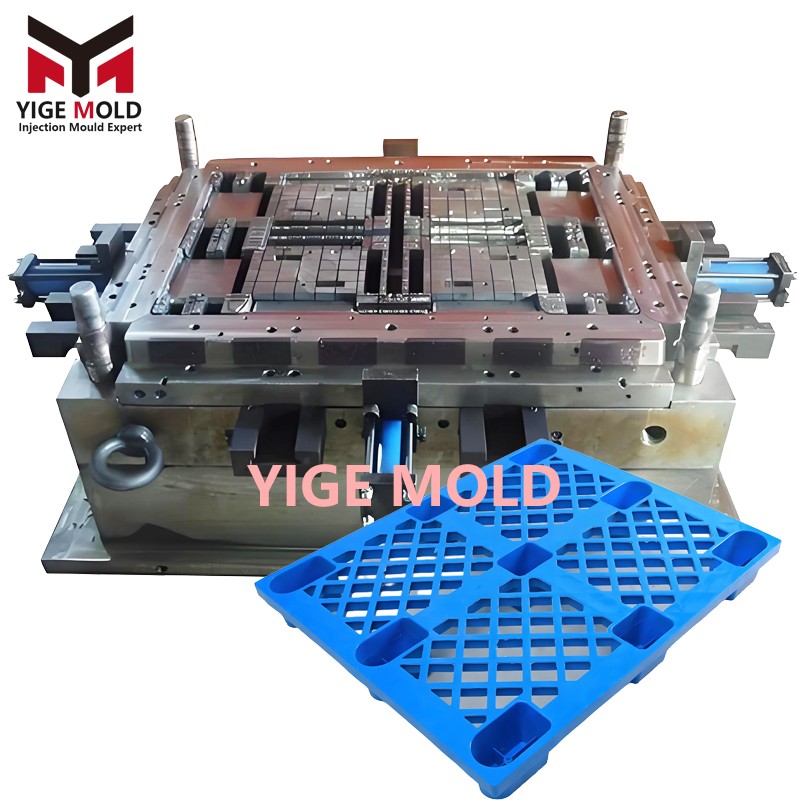
As the name suggests, injection molded pallet molds are specialized tools designed specifically for producing injection-molded pallets. They play a crucial role in the plastics processing industry. The mold primarily consists of two main parts: the moving mold (cavity side) and the fixed mold (core side). The moving mold is installed on the moving platen of the injection molding machine, while the fixed mold is mounted on the stationary platen. During operation, the two halves close to form a complete mold cavity and runner system. Molten plastic is injected into this cavity, and upon cooling and solidification, the desired plastic pallet is formed.
Structurally, an injection pallet mold comprises several key systems: the gating system, the temperature control system, the molding components, and the structural parts. The gating system guides the molten plastic into the cavity, while the temperature control system regulates the mold temperature to ensure smooth processing. Molding components are in direct contact with the plastic and determine the pallet's shape and dimensional accuracy. Structural parts provide support and alignment, ensuring the overall stability and reliability of the mold. These components work in synergy to achieve high-quality pallet production.
1.2 Importance of Injection Pallet Molds
In pallet manufacturing, the importance of the mold cannot be overstated. It is not only the core equipment for production but also the decisive factor in ensuring product quality and production efficiency.
Regarding product quality, the precision of the mold directly dictates the dimensional accuracy and appearance of the pallet. A well-designed, high-precision mold produces pallets with smooth surfaces, no defects, and stable dimensions that meet diverse application requirements. Conversely, defects in the mold—such as inaccurate cavity dimensions or rough surfaces—will lead to issues like warping, shrinkage, and surface flaws, severely impacting the pallet's performance and service life.
From a production efficiency perspective, high-quality molds feature optimized cycle times. Rational runner design, efficient cooling systems, and precise parameter settings enable the melt to fill the cavity quickly and evenly, shortening cooling time and increasing output. Furthermore, the degree of automation (e.g., automatic ejection, robotic part removal) directly affects efficiency. Automation significantly reduces manual labor, lowers production costs, and enhances overall productivity, generating greater economic benefits for enterprises.
II. Classification of Injection Pallet Molds
2.1 Classification by Structural Form
Injection pallet molds are classified into various types based on structure, with Two-Plate Molds and Three-Plate Molds being the most common.
-
Two-Plate Molds have a relatively simple structure, consisting of just the fixed and moving plates. The opening and closing actions occur directly between these two plates. They are easy to operate and cost-effective, suitable for producing pallets with simpler geometries and moderate precision requirements. Parts are ejected directly from the parting line, ensuring high production efficiency.
-
Three-Plate Molds consist of three plates: the fixed plate, the middle plate (stripper plate), and the moving plate. The addition of the middle plate allows the runner system to be separated from the cavity system. This structure facilitates pinpoint gating and allows the part to separate automatically from the runner scrap, enhancing the appearance and dimensional accuracy of the pallet. It is ideal for complex pallets with high precision requirements or those featuring side cores/holes, though it comes with higher complexity and cost.
2.2 Classification by Molding Process
Based on the molding process, molds are categorized into Hot Runner Molds and Cold Runner Molds.
-
Hot Runner Molds utilize heating elements to keep the plastic in the runner system molten. This minimizes heat loss during flow, enables continuous molding, reduces material waste, and shortens cycle times. Hot runner systems improve stress distribution within the part and boost quality, making them suitable for mass production and high-performance pallet manufacturing. However, they involve higher initial investment and stricter temperature control requirements.
-
Cold Runner Molds allow the plastic in the runners to cool and solidify along with the part. Each cycle requires the removal of both the part and the solidified runner scrap. While the structure is simple, maintenance is easy, and costs are lower (ideal for small batches and multiple varieties), they suffer from higher material consumption due to runner waste and slightly longer cycle times compared to hot runner systems.
III. Design Key Points of Injection Pallet Molds
3.1 Product Structure Design
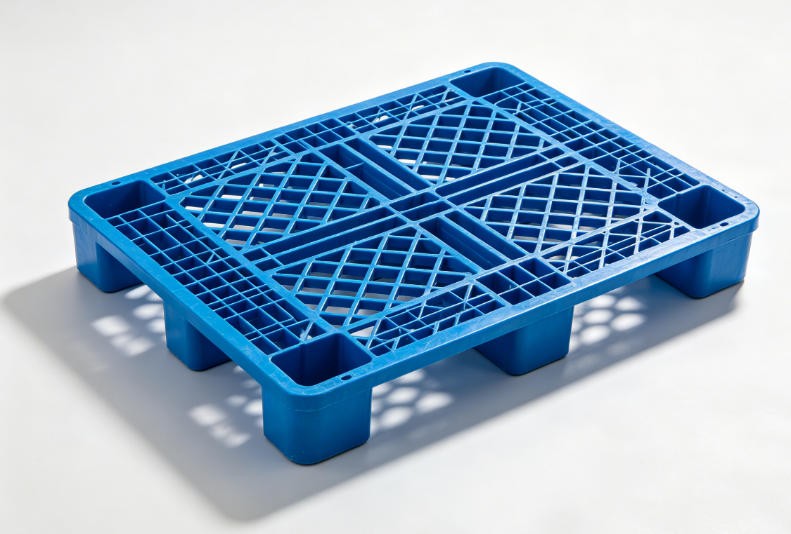
The structural design of injection pallets must align closely with usage requirements.
-
Load Capacity: The structural strength must be determined based on the weight and dimensions of the goods. For heavy loads (e.g., in machinery manufacturing), increasing the number and thickness of reinforcing ribs or utilizing special structural designs is necessary to enhance load-bearing capacity.
-
Dimensions: In logistics, pallet dimensions must match transport vehicles and racking systems to facilitate stacking, transportation, and optimal space utilization.
-
Anti-Slip Design: Incorporating anti-slip textures or adding rubber pads to the surface prevents goods from sliding during transit.
-
Special Applications: For stackable pallets, rational design of stacking notches is crucial for stability. When coordinating with automated equipment, the interface structure must be considered to ensure seamless integration and operational efficiency.
3.2 Mold Material Selection
The selection of mold materials is critical.
-
Carbon Structural Steel: Low cost and good machinability, but lower strength and hardness. Suitable for molds intended for small production volumes or lower precision requirements.
-
Alloy Structural Steel: Enhanced strength, hardness, and wear resistance through alloying elements. Ideal for high-volume production and high-precision molds, albeit at a higher cost.
-
Pre-hardened Steel: Treated to a moderate hardness before machining, offering excellent machinability and minimal heat treatment deformation. Perfect for large, complex, high-precision pallet molds.
-
Aging Hardening Steel: Soft after solution treatment (easy to machine), then hardened through aging treatment. Meets requirements for high hardness and precision.
Material selection should balance production volume, pallet precision, cost, and mold service life to achieve the best performance-to-cost ratio.
3.3 Cooling System Design
The cooling system is vital for injection pallet molds. An efficient cooling system drastically shortens the molding cycle and boosts productivity. Since the molten plastic must cool rapidly, faster cooling translates to shorter cycles. Moreover, uniform cooling ensures even shrinkage across the pallet, reducing internal stress and preventing defects like warping or deformation.
When designing the cooling system, water lines must be arranged rationally according to the mold structure and plastic properties. Channels should be positioned close to the cavity surface and distributed evenly to maintain consistent mold temperatures. Parameters such as channel diameter, length, and water flow rate must be calculated precisely to ensure optimal cooling. Additionally, inlet/outlet water temperatures and sealing integrity must be addressed to prevent leakage that could disrupt production. Optimizing the cooling system provides a strong guarantee for pallet quality and efficiency.
IV. Manufacturing Process of Injection Pallet Molds
4.1 Overview of the Manufacturing Process
Manufacturing an injection pallet mold is a complex, systematic process:
-
Design: Based on customer requirements and product characteristics, professional software is used to create 3D models and 2D drawings, defining structures, dimensions, and materials.
-
Material Procurement: Purchasing suitable mold steel and raw materials according to design specifications.
-
Machining: Progressing through rough machining (removing excess material), semi-finish machining (refining accuracy), and finish machining (achieving final precision and surface quality).
-
Assembly: Accurately assembling all processed components according to design requirements.
-
Trial Run & Inspection: Installing the mold on an injection machine for trial production to verify forming effects and dimensional accuracy. Necessary adjustments are made until the mold meets all standards, ensuring it is ready for delivery.
4.2 Key Manufacturing Techniques
-
CNC Machining: Essential for modern mold making. CNC machines precisely control tool paths for automated machining, ensuring high accuracy for complex structures (e.g., cavities, cores). It significantly shortens production cycles while maintaining high precision.
-
EDM (Electrical Discharge Machining): Utilizes pulsed electrical discharges between an electrode and the workpiece to erode metal. It is particularly effective for machining hard materials and complex shapes (e.g., narrow slots, deep holes, irregular surfaces) that are difficult to process with traditional cutting tools. EDM enhances the quality and precision of mold details, laying the groundwork for high-quality pallet production.
V. Market Status and Development Trends of Injection Pallet Molds
5.1 Analysis of Market Status
Currently, the injection pallet mold market demonstrates vigorous growth. In terms of market size, the rapid development of logistics, packaging, and manufacturing has driven soaring demand for plastic pallets, consequently expanding the mold market. [Note: Data placeholders retained]Global sales of injection pallets reached [Value] in 2022 and are projected to reach [Value] by 2029, with a CAGR of [%], reflecting significant growth potential.
Regarding competition, the market features numerous participants and intense rivalry. Major global manufacturers include AK PLAST INDUSTRIES and Taizhou Yasheng Plastic Industry Co., Ltd. In 2022, the top three global players held approximately [%] of the market share. The domestic market is also highly competitive, with some enterprises gaining advantages in technology R&D and product quality.
From a demand perspective, requirements vary by industry. The logistics sector prioritizes load capacity and dimensional accuracy, while manufacturing focuses more on durability and stability. The rise of emerging industries, such as New Energy Vehicles (NEVs), has introduced new demands for pallet molds, including requirements for lightweighting and electrical insulation.