Folding plastic stool mold
 Introduction to Mold for Folding Plastic Stools: Structural, Process, and Market Application Analysis
I. Mold Structural Design Features
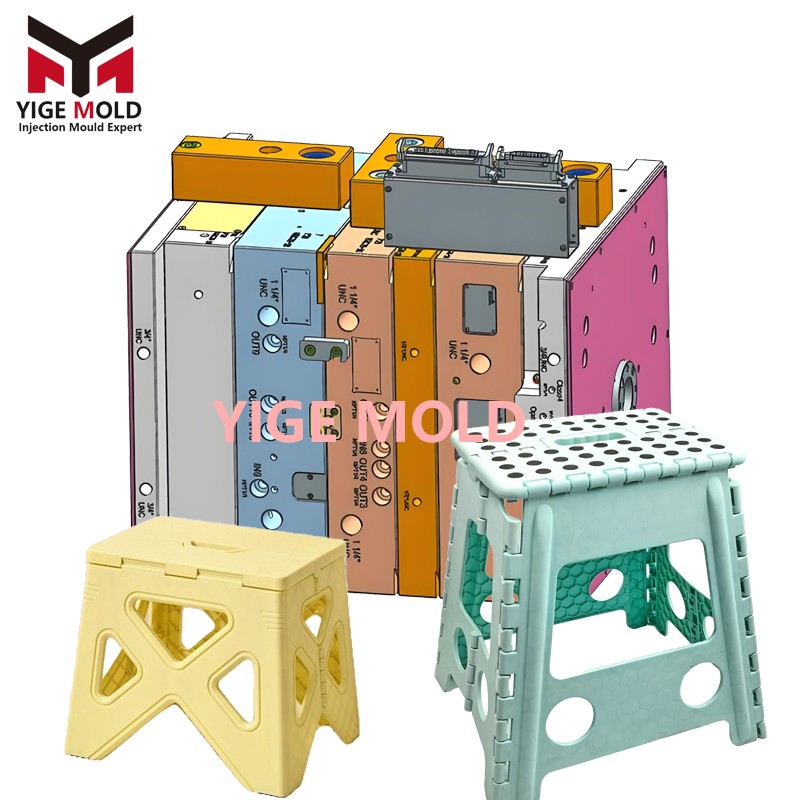
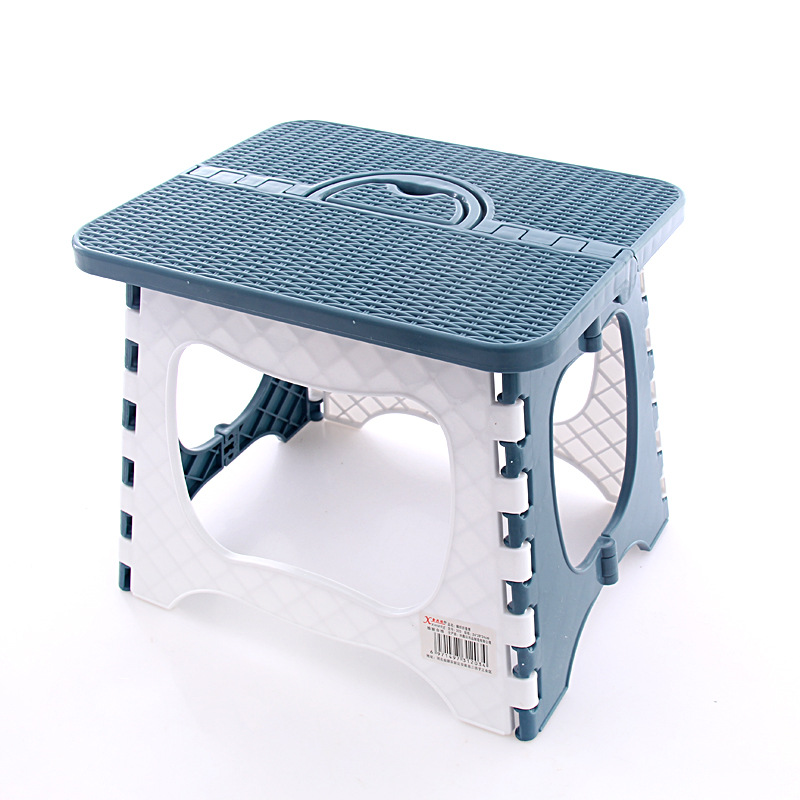
The mold for folding plastic stools employs high-strength, thick-walled injection molding technology. Its core structure includes components such as the upper clamping plate, upper mold base, upper mold core block, lower mold base, and lower mold core block. Internally, the mold features a nine-grid load-bearing rib design. Multiple sets of precision meshing gears ensure smooth opening and closing, while the folded stool remains slim in profile for convenient storage. The stool legs and seat surface are typically connected via a hinge or nested structure.
II. Production Process and Materials
1. Injection Molding Process
The mold utilizes the injection molding process, where molten PP or PE plastic material is injected into the mold cavity to form the main components of the stool in a single cycle. The optimized cooling system significantly reduces the production cycle time and enhances efficiency. A high-quality mold can endure hundreds of thousands of molding cycles.
2. Key Material Selection
-
Mold Material: Premium mold steels such as P20 and 718H are commonly chosen to ensure high hardness, wear resistance, and long service life.
-
Product Material: Primarily Polypropylene (PP) or Polyethylene (PE). These materials are safe, non-toxic, lightweight, and durable.
III. Core Technical Highlights
1. Efficient Ejection System
The mold incorporates a meticulously designed ejection mechanism (e.g., straight ejector pins) to achieve automatic and smooth demolding of the product. This effectively prevents potential deformation or damage from manual part removal, enhancing production safety and consistency.
2. Uniform Cooling System
Integrated cooling channels within the mold ensure heat is rapidly and evenly dissipated during the injection process. This not only shortens product cooling time but also minimizes internal stresses caused by temperature differentials, guaranteeing dimensional stability and strength of the stool.
3. Lightweight yet Reinforced Structure
Through the bottom nine-grid design and scientifically arranged reinforcing ribs, the product achieves lightweighting while maintaining bearing strength (typically exceeding 100 kg). Anti-slip pads are often added to the bottom of the legs to enhance stability and safety during use.
IV. Primary Application Scenarios
1. Home Living
Serves as flexible space-saving seating, suitable for dining areas, balconies, studies, etc. Its foldable design allows for easy storage, making it an ideal choice for compact homes.
2. Outdoor Leisure
Its lightweight and portable nature makes it well-suited for outdoor activities such as camping, fishing, and park relaxation. Some designs incorporate water resistance and easy-cleaning features.
3. Commercial and Public Use
Widely used in settings requiring quick deployment and storage of seating, such as food stalls, snack shops, exhibitions, and temporary classrooms, offering economical and practical solutions.
V. Summary of Core Product Advantages
The folding plastic stool, produced with specialized molds, offers core advantages including:
-
Portability: Lightweight with a compact folded volume.
-
Sturdiness and Durability: Scientifically designed structure offers strong load-bearing capacity and long service life.
-
Versatile Applicability: Suitable for multiple scenarios, meeting temporary or supplementary seating needs.
-
Easy Cleaning: Smooth surface allows for simple maintenance.
-
Cost-Effectiveness: High production efficiency offers excellent value.
Through precise mold design and manufacturing, the folding plastic stool successfully integrates functionality, durability, and cost-effectiveness, making it a practical item in daily life.