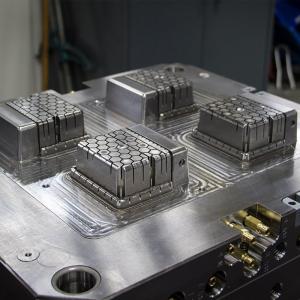
Plastic Tool Case Mold

Plastic Tool Case Mold
Short Description:

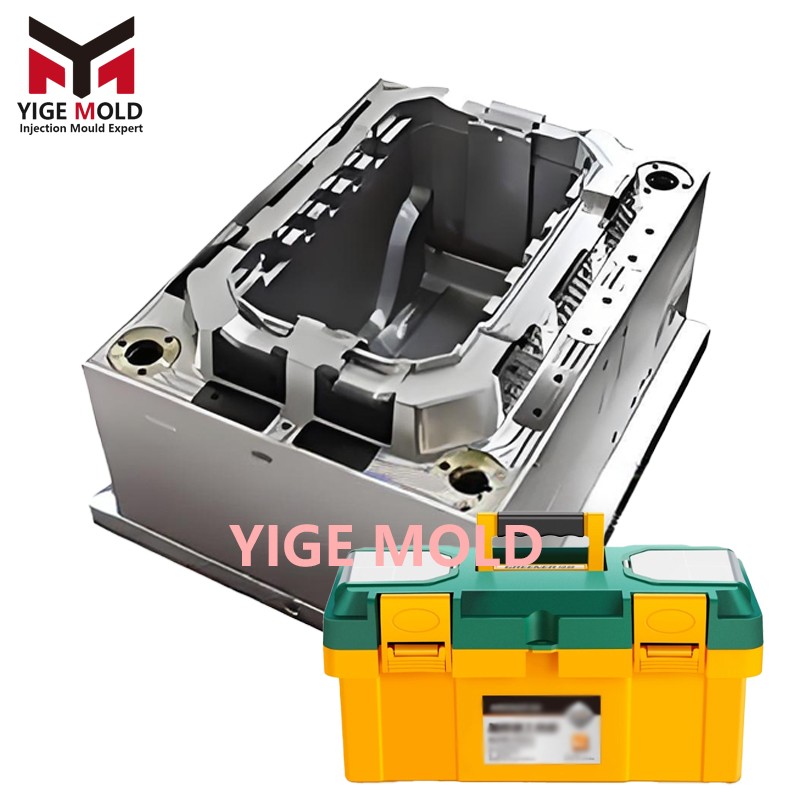
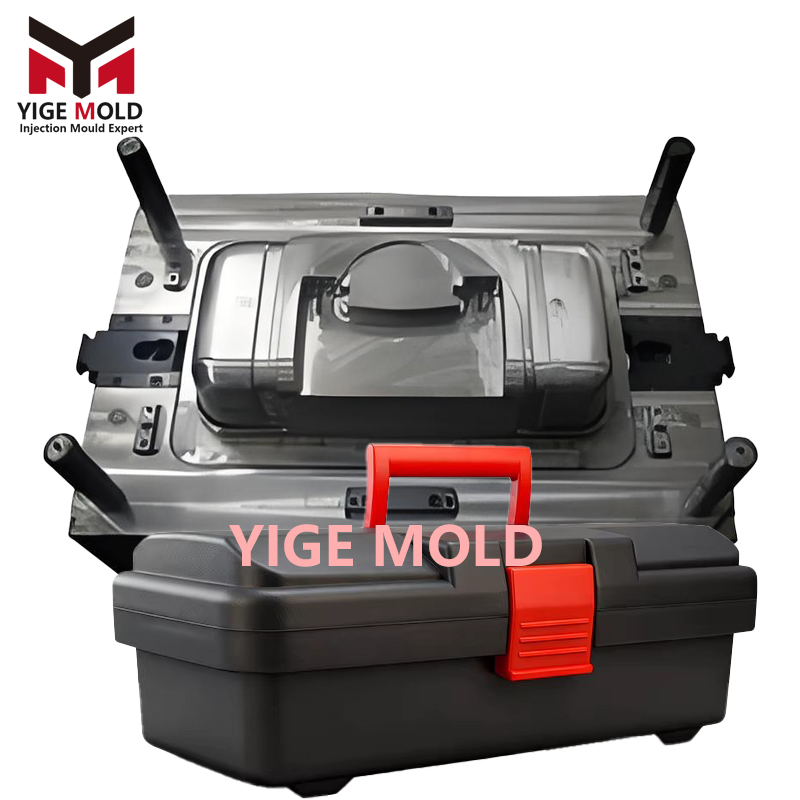
Premium Plastic Tool Case Mold for heavy-duty tool storage. Easy installation, long service life & burr-free finish. Compatible with all standard tool case sizes—essential for mass production....


  • Mould Name: Plastic Tool Case Mold
  • Mould Main Material: 718H;P20
  • Mould Cavity: 1Cavity
  • Delivery Time: 40 working days

Product Details

Product Tags

Professional Manufacturing Technology Analysis of Plastic Tool Case Mold

The Manufacturing Foundation for Precision Tool Carriers

In the modern industrial production and professional maintenance sectors, plastic tool cases serve as the core carriers for tool transportation, organization, and storage. Their design and manufacturing quality directly impact user experience and work efficiency. The key element determining the quality of plastic tool cases is the plastic tool case mold behind them. An excellent set of tool case molds must not only precisely replicate the product's form but also integrate considerations of ergonomics, structural mechanics, and efficient production, transforming engineering plastics such as polyethylene (PE), polypropylene (PP), or acrylonitrile butadiene styrene (ABS) into sturdy, durable, and functionally sound professional equipment.

Chapter 1: The Design Philosophy of Function-First

1.1 Engineering Design for Structural Strength

Tool cases must withstand tool weight, handling impacts, and stacking pressure during use. The first step in mold design is performing finite element analysis on the case structure to optimize the mechanical performance of critical areas.

Reinforcement Rib System Design: For the case sidewalls, bottom, and internal compartments, we employ radial, grid, or honeycomb reinforcement rib layouts. The rib height and thickness are precisely calculated to ensure rigidity while avoiding surface sink marks. Case corners use large radius transitions, coupled with dense reinforcement grids, as these are key stress concentration zones.

Load-Bearing Mechanism Reinforcement: Load-bearing parts such as handles, hinges, and latches utilize special insert designs. Taking hinges as an example, the mold must achieve integrated "living hinge" or "piano hinge" molding. The hinge pin diameter, wall thickness, and clearance tolerance are controlled within 0.1mm to ensure smooth operation even after tens of thousands of open/close cycles.

1.2 Integration of Modular and Ergonomic Features

Modern tool cases have evolved from simple storage containers into systematic workstations. The mold design must provide interfaces for modular expansion.

Multi-layer Stacking System: The case top and bottom are designed with precisely matching stacking slots and anti-slip ribs to ensure stability when stacked multiple layers high. The mold utilizes precise sliders and angled lifters to create these complex three-dimensional structures.

Internal Management System: The mold can integrally mold various specifications of tool slots, component dividers, and movable partition clips. These structures require complex core-pulling mechanisms and fine surface treatment, with dimensional tolerances typically controlled within ±0.15mm.

Ergonomic Details: Handle areas are designed with dual-shot overmolded soft-touch zones based on grip curves, requiring precise bonding of hard and soft materials. Case edges feature anti-pinch rounded corners, requiring corresponding cavity surfaces to be highly polished or textured.

Chapter 2: Manufacturing Challenges of High-Complexity Molds

2.1 Multi-Material Co-Injection and Two-Shot Molding Technology

High-end tool cases often employ two-shot or hard/soft material combinations, placing special demands on the molds.

Two-Shot Rotary Mold: Two independent injection units and cavity systems are integrated within one set of molds. Precise combination of two materials or colors is achieved via 180° or 360° rotation of the mold core. The runout error of the rotary system must be controlled below 0.01mm to ensure perfect alignment between the two shots.

Overmolding Technology: The hard case body is injected first. After slider conversion within the same mold, the soft grip is overmolded. Precise temperature zoning control is required in the mold, maintaining 80-100°C in the hard material zones and 40-60°C in the soft material zones to prevent material interference.

2.2 Realization of Complex Movement Systems

Tool case molds often incorporate some of the industry's most complex movement mechanism combinations.

Multi-Directional Core Pulling Systems: A medium-sized tool case mold may contain 15-20 slider and lifter mechanisms for forming various clips, grooves, and internal cavities. These mechanisms undergo motion simulation analysis to ensure correct opening sequence and no interference.

Gas-Assisted Molding Application: For large tool cases (length exceeding 600mm), we employ gas-assisted molding technology. Special gas channels are designed within the mold. High-pressure nitrogen is injected to form hollow structures, reducing weight and minimizing shrinkage while maintaining strength.

Sequential Valve Gating System: For long, narrow case structures, multi-point hot runner systems with sequential valve gate control are used. This ensures the melt fills simultaneously from multiple locations, eliminating flow lines and weld marks—particularly crucial for transparent or light-colored materials.

2.3 Surface Treatment and Texture Technology

Tool cases require not only durability but also a professional and aesthetically pleasing appearance.

Mold Texturing Process: According to design requirements, textures such as leather grain, fine grain, or orange peel are applied to the cavity surface. Texture depths range from 0.01mm to 0.3mm, requiring precise consistency control.

High-Gloss Surface Treatment: Frequently touched surfaces are mirror-polished to A1 grade finish (Ra ≤ 0.012μm). Polishing requires skilled manual operation by experienced technicians using progressively finer diamond pastes.

Functional Texturing: Anti-slip areas feature cross-hatched grid textures with depths of 0.2-0.3mm and draft angles of 8-10°, ensuring smooth demolding while providing sufficient friction.

Chapter 3: Material Adaptation and Process Optimization

3.1 Mold Optimization for Different Materials

Common tool case materials have distinct properties, necessitating corresponding adjustments in mold design:

Design for ABS: ABS has good flowability but is prone to weld lines. Gate location and size require special design. Cooling times are relatively longer, necessitating enhanced cooling systems in the mold.

Adaptation for PP: PP has high shrinkage and good toughness. The mold requires larger draft angles (typically 2-3°) and larger radius transitions at the base of reinforcement ribs.

Impact-Modified Materials: Materials containing glass fibers or elastomers are highly abrasive. Cavity and runner surfaces require high-hardness steels like S136H or Diamond-Like Carbon (DLC) coatings.

3.2 Design for Efficient Production Systems

Rapid Cycle Optimization: Cooling channel layouts are optimized via mold flow analysis to control the molding cycle for a typical 800×400×300mm tool case to 40-50 seconds. Beryllium copper inserts are used to accelerate local cooling, especially in thicker areas like hinges and latches.

Automation Integration Design: Mold design considers integration with automation systems from the outset, including robot pickup points, automatic gate removal features, and in-mold labeling positions.

Maintenance Friendliness: Wear parts like ejector pins and slider guides are standardized and modularized, allowing replacement within 15 minutes to minimize downtime.

Chapter 4: Quality Control and Performance Verification

4.1 Quality Control During Manufacturing

Material Selection and Treatment: Mold cores use pre-hardened steels like Swedish ASSAB 718HH or German DIN 1.2738, with hardness HRC 32-36, balancing machinability and wear resistance. Sliders and lifters use high-toughness steels like H13, heat-treated to HRC 48-52.

Precision Control System: Critical dimensions undergo 100% inspection using CMMs, complemented by blue light scanning to obtain complete surface data. Deviation from the design model is controlled within ±0.03mm.

Assembly Accuracy Assurance: Final mold assembly is performed in a temperature-controlled workshop. Clearances for all moving parts are controlled between 0.015-0.025mm to ensure precision is maintained even after hundreds of thousands of cycles.

4.2 Comprehensive Trial Run Validation Procedure

Functional Testing:

  • Opening/Closing Force Test: Hinge opening torque maintained at 0.8-1.2 N·m.

  • Latch Lifespan Test: Normal latching function after 5,000 simulated open/close cycles.

  • Stacking Stability Test: No deformation after 24 hours under load in a 5-high stack.

  • Drop Test: No cracks after 3 drops from 1.2m height on each of 6 sides.

Environmental Simulation:

  • High/Low Temperature Cycle Test: Storage stability from -20°C to 70°C.

  • UV Aging Test: Simulating outdoor use conditions.

  • Chemical Resistance Test: Exposure to common oils and solvents.

Chapter 5: Industry Applications and Customization Capabilities

5.1 Specialized Mold Series

Portable Tool Case Mold: Weight controlled between 2-5kg, focusing on ergonomic design, single-shot molding.

Rolling Tool Case Mold: Integrated wheel mounting structure, reinforced bottom design, load capacity up to 100kg.

Tool Cart Mold: Multi-drawer structure, each layer molded independently, paired with precision slide systems.

Custom Professional Mold: Designed for specific industries like automotive repair, electrical work, or aviation, incorporating specialized tool layouts and storage solutions.

5.2 Technical Service Support System

We provide full technical support from concept to mass production:

Design Consultation Phase: Based on the customer's tool list and usage scenarios, we propose optimized internal layout solutions and provide 3D design previews.

Mold Development Phase: Weekly progress reports during manufacturing, with customer on-site confirmation invited at key milestones.

Pilot Production Optimization Phase: Provision of a complete process parameter package, including temperature, pressure, and speed curves, and training for customer operators.

Mass Production Support: Establishment of a mold usage record, regular maintenance reminders, and technical problem response within 48 hours.

Conclusion: The Continuous Pursuit of Precision and Innovation

The manufacturing of plastic tool case molds is a systems engineering project that integrates mechanical design, materials science, and injection molding processes. Behind every successful mold set lies a relentless pursuit of detail and a deep understanding of function. From initial concept sketches to the final, efficiently running mold, we consistently adhere to the principle that "function dictates form, and precision ensures performance."


  • PREVIOUS:Injection Mold for Plastic Toolbox
  • NEXT:Toolbox Injection Mould

  • Leave Your Message
    Write your message here and send it to us

    Products categories

    • Toy Storage Box Mold

    • mold on cutting board plastic

    • PP Table Injection Mold

    • Mold for Car Wash Grilles

    • Pallet Injection Mold

    • Laundry basket mold