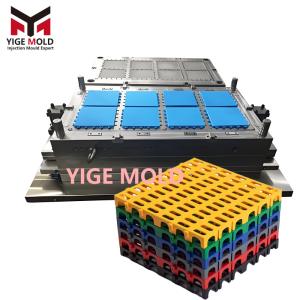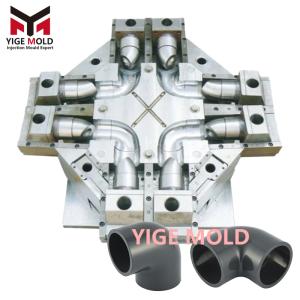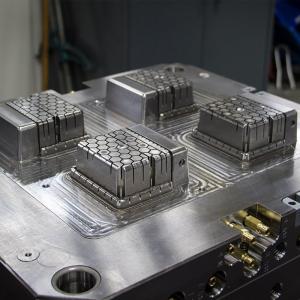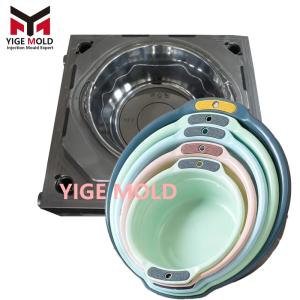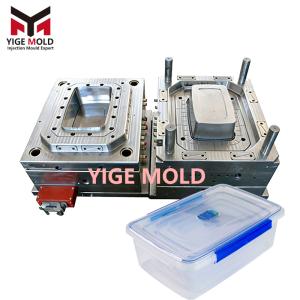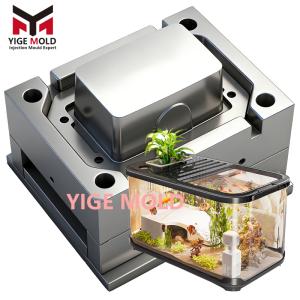
Household Waste Bin Mold
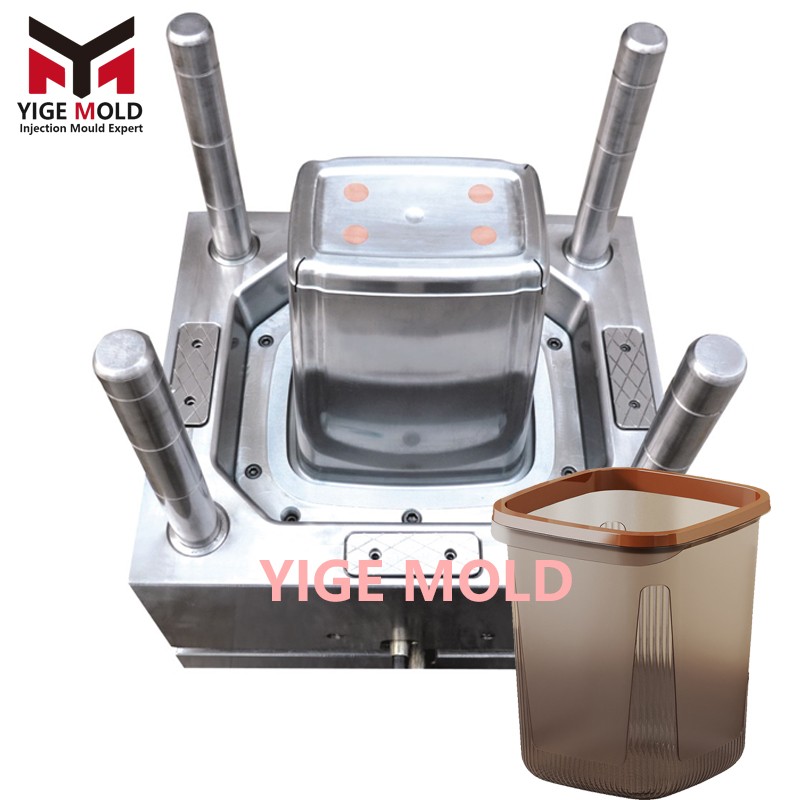
 Household Trash Can Mold Technical Details
1. Product Definition and Technical Scope
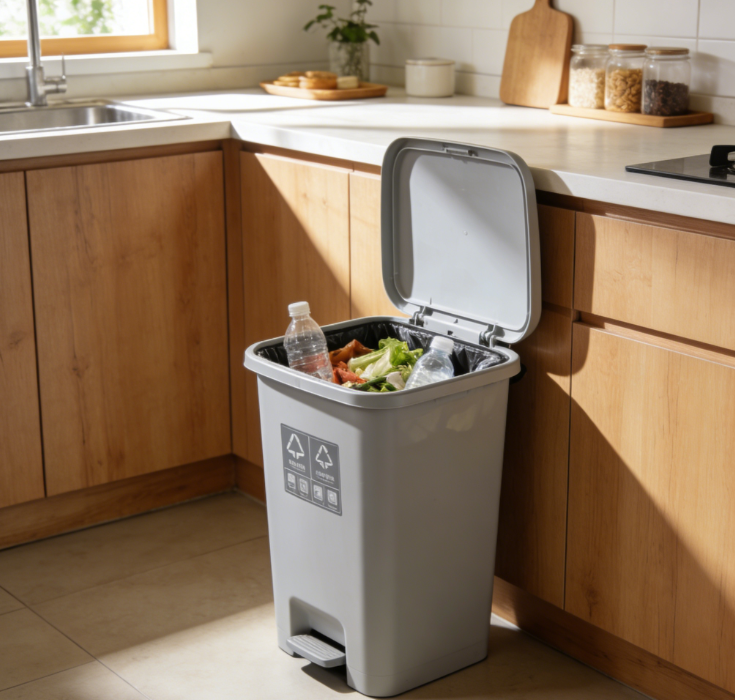
Household trash can molds belong to a special category of precision injection molds, specifically designed as production tools for manufacturing various types of home waste collection containers. These molds need to meet usage requirements for different scenarios such as kitchens, living rooms, and bathrooms, while also balancing aesthetics, functionality, and practicality. With the evolution of modern home lifestyles, trash can mold design is progressively developing in three main directions: intelligence, categorization, and space optimization.
2. Mold Structure Design Features
2.1 Opening/Closing System Design
Utilizing a precision lever transmission mechanism, optimized leverage ratios and fulcrum positions enable effortless opening and closing operations. The system design includes the following key elements:
-
Foot Pedal Mechanism: The pedal features an ergonomic curved surface design, with an applied force angle of 30-45°, and an opening force controlled within the range of 1.5-3 kg.
-
Hinge System: Stainless steel axle core paired with POM axle bushings, achieving an opening/closing lifespan of up to 80,000-100,000 cycles.
-
Damping Device: Hydraulic dampers ensure smooth lid closure, with a closing time of 2-3 seconds.
-
Safety Mechanisms: Dual protection through anti-pinch design and child safety locks.
2.2 Sorting System Integration
Multi-compartment trash can molds employ a modular design philosophy:
-
Partitioning Structure: Movable partition wall thickness: 1.2-1.8 mm, with adjustable partition ratios.
-
Identification System: Uses in-mold injection of text and symbols for permanent identification of different waste streams.
-
Capacity Optimization: Dry/Wet waste compartment capacity ratio of 3:2, aligning with household sorting habits.
-
Independent Inner Bins: Each sorting area is equipped with an independent, removable inner bin, with a volume deviation ≤5%.
3. Materials Engineering Application
3.1 Mold Steel Selection
|
Part Type |
Recommended Material |
Hardness Requirement |
Treatment Process |
|---|---|---|---|
|
Cavity Plate |
NAK80 |
HRC 38-42 |
Mirror Polishing |
|
Moving Parts |
S136 |
HRC 48-52 |
Nitriding |
|
Guiding Mechanism |
SUJ2 |
HRC 58-62 |
Quenching & Tempering |
|
Gating System |
Hot-Work Steel |
HRC 45-50 |
Chromium Plating |
3.2 Plastic Material Configuration
-
Main Body Material: PP-RM240 (Impact-Modified Polypropylene)
-
Sealing Material: TPV65A (Dynamically Vulcanized Thermoplastic Elastomer)
-
Decorative Parts: ABS-757 (High Gloss, Injection Grade)
-
Functional Parts: POM-C9021 (High-Wear-Resistance Polyoxymethylene)
4. Manufacturing Process Flow
4.1 Mold Processing Flow
Mold Design → CNC Rough Machining → Heat Treatment → CNC Finish Machining
    ↓
EDM Machining → Wire-Cut EDM → Polishing → Assembly & Debugging
    ↓
Trial Molding → Mold Modification → Final Inspection → Mass Production
4.2 Injection Molding Process Parameters
Temperature Control:
-
Barrel Temperature: 190-220°C for PP, 220-250°C for ABS
-
Mold Temperature: 40-65°C (adjusted based on part wall thickness)
-
Hot Runner Temperature: 210-240°C
Pressure Parameters:
-
Injection Pressure: 80-120 MPa
-
Holding Pressure: 60-80% of Injection Pressure
-
Back Pressure: 5-15 MPa
Time Control:
-
Injection Time: 3-8 seconds
-
Holding Time: 10-25 seconds
-
Cooling Time: 20-40 seconds
-
Mold Opening Time: 2-4 seconds
5. Product Performance Standards
5.1 Mechanical Performance Indicators
-
Impact Strength: ≥25 kJ/m² at 23°C (Izod Impact)
-
Compressive Strength: ≤3 mm deformation under 500 N vertical load
-
Tensile Strength: ≥25 MPa
-
Flexural Modulus: ≥1500 MPa
5.2 Durability Testing
-
Opening/Closing Life: 100,000 cycles at room temperature, 50,000 cycles at high temperature (60°C)
-
Drop Test: No breakage after free fall from 1.2 m height under full load
-
Weathering Test: ΔE ≤ 3 color change after 1000 hours of UV aging
-
Chemical Resistance: No corrosion after 24-hour immersion in common cleaning agents
5.3 Safety Standards
-
Material Safety: Compliant with FDA 21 CFR 177.1520
-
Heavy Metal Content: Compliant with EN71-3 Standard
-
Flammability Rating: UL94 HB or higher
-
Sharp Edges: R-angle ≥ 0.5 mm
6. Key Mold Design Technologies
6.1 Cooling System Optimization
Adopting a "Conformal Cooling" design philosophy, the distance between cooling channels and the cavity surface is maintained at 10-15 mm to ensure uniform cooling. Large molds utilize zonal cooling, with temperature differences between zones controlled within ±2°C.
6.2 Venting System Design
Venting slots are placed at melt flow ends and insert junctions, with a depth of 0.02-0.03 mm and a width of 5-8 mm. Special structures employ venting pins or vacuum venting technology.
6.3 Ejection System Configuration
A combined ejection method using "ejector pins + push blocks" is employed. Ejection points are selected at the thickest wall sections and at the roots of reinforcing ribs. Ejection stroke is precisely controlled within 5-15 mm.
7. Innovative Design Directions
7.1 Intelligent Integration
-
Sensor Module Integration: Pre-designed mounting locations for infrared/capacitive sensors
-
Capacity Monitoring: Built-in slots for ultrasonic sensors
-
Automatic Sealing: Integrated mechanism for automatic trash bag tying
7.2 Environmental Design
-
Material Reduction: Wall thickness optimization reduces material usage by 15-20%
-
Disassembly Design: Facilitates sorting and recycling
-
Easy Maintenance Structure: Modular design allows individual component replacement
7.3 Humanized Improvements
-
Spill Prevention Design: Leak-proof rim design at bin opening prevents liquid spills
-
Easy-to-Clean Structure: Smooth transitions, no cleaning dead spots
-
Quiet Design: Uses rubber vibration dampers, operational noise ≤ 45 dB
8. Cost Control Strategies
8.1 Design Optimization
-
Standardization: Over 60% of components use standard parts
-
Manufacturing Simplification: Reduces complex curves, lowering machining difficulty
-
Mold Lightweighting: Optimizes structure while ensuring strength
8.2 Production Optimization
-
Multi-Cavity Design: 2-4 cavities designed based on product size
-
Quick Mold Change: Standardized interfaces, mold change time ≤ 30 minutes
-
Automated Production: Enables unattended continuous production
8.3 Maintenance Optimization
-
Preventive Maintenance: Establishes maintenance schedules for regular upkeep
-
Rapid Repair: Modular design enables quick replacement of faulty parts
-
Lifecycle Management: Life prediction and early warning for key components
9. Quality Assurance System
9.1 Process Control
-
First Article Inspection: Complete inspection before each production batch
-
In-Process Inspection: Hourly sampling of critical dimensions
-
Statistical Process Control (SPC): Real-time monitoring of key parameters
9.2 Final Inspection
-
Full Dimension Inspection: Uses Coordinate Measuring Machines (CMM)
-
Functional Testing: Simulates actual usage scenarios
-
Packaging Inspection: Ensures transportation safety
9.3 Traceability System
Establishes a complete product traceability system, enabling full process traceability from raw materials to finished products, ensuring rapid recall and improvement of defective products.
10. Market Competitiveness Analysis
10.1 Technical Advantages
-
High-Precision Manufacturing: Dimensional accuracy achieves ±0.05 mm
-
Long-Life Design: Mold lifespan can exceed 1 million cycles
-
Rapid Response: New product development cycle of 30-45 days
10.2 Cost Advantages
-
Material Utilization Rate: Exceeds 95%
-
Production Efficiency: Single mold output increases by 20-30%
-
Maintenance Cost: Reduced by 30-40%
10.3 Service Advantages
-
Technical Support: Provides full-process technical support from design to production
-
Training Services: Offers operation and maintenance training for clients
-
Rapid Response: Responds to client needs within 24 hours
This technical solution, through systematic design philosophy, advanced manufacturing processes, and a comprehensive quality control system, provides clients with a high-quality household trash can mold solution. We are committed to continuous improvement and innovation to create greater value for our clients.