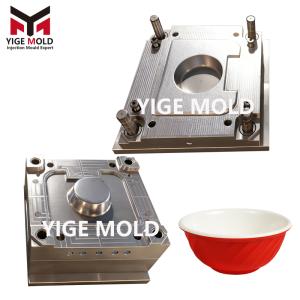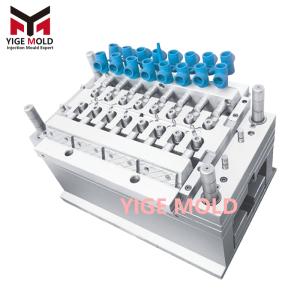
Plastic Bowl Mold
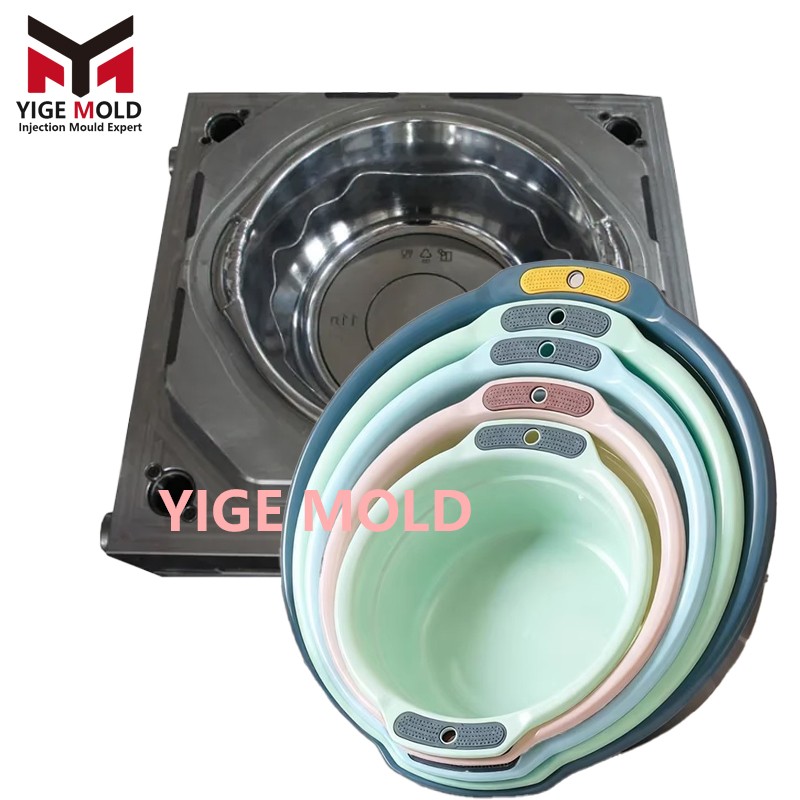
Professional Manufacturing of Plastic Bowl Molds: The Precision Fusion of Aesthetics, Function, and Efficiency
Overview: Redefining Everyday Containers
In a wide range of scenarios, from kitchen food prep to home storage, plastic bowls (commonly referred to as "mixing bowls," "salad bowls," or "storage bowls") are indispensable everyday items due to their light weight, durability, affordability, and versatility. Behind their seemingly simple appearance lies the crystallization of highly precise mold technology and a deep understanding of user experience. The professional manufacturing of plastic bowl molds involves not just the shaping of a container, but a critical balance between ergonomic feel, stacking/storage efficiency, visual aesthetics, and extreme production cost control.
Chapter 1: In-depth Design Analysis Based on User Experience
Unlike large industrial containers, bowls interact directly with users' hands, requiring user-centric design as the top priority.
-
Ergonomic Design for Grip and Handling:
-
Rolled Rim: The mold must form a smooth, thickened rim. This is not only a safety feature to prevent cuts but also provides a comfortable grip and creates a smooth channel for pouring liquids. The polishing precision (often requiring a mirror finish grade like #A2) and draft angle control in this area of the mold are crucial.
-
Grip Texture: Subtle matte or striated textures are designed on the sides or base of the bowl. This is achieved through mold texturing processes like EDM texture or chemical etching, with texture depths typically between 10-30 microns. It provides a secure grip without compromising aesthetics or cleanability.
-
-
Space-Optimized Structural Design:
-
Scientific Wall Thickness Distribution: Moldflow analysis optimizes wall thickness to ensure sufficient rigidity (preventing deformation when holding heavy contents) while minimizing material usage. Typical wall thicknesses range from 1.2mm to 2.5mm with gradient variation.
-
Stacking and Nesting Functionality: This is key to enhancing warehousing and retail efficiency. The mold must precisely design the taper of the side walls (typically 3°-5°) and the stacking lugs on the bottom rim to ensure multiple bowls can stack tightly, stably, and be easily separated. This demands extremely high concentricity and draft accuracy from the mold.
-
-
Surface Treatment: Merging Aesthetics and Function:
-
From high-gloss transparent to matte finishes, from solid colors to ceramic or wicker-pattern textures, the surface finish directly determines the product's added value. These effects are achieved through different polishing grades or complex texturing patterns on the mold.
-
Chapter 2: Mold Engineering for High-Volume, Efficient Production
Plastic bowls are typically high-volume, low-unit-cost items, making high productivity, long lifespan, and low maintenance cost the core competitive advantages of the mold.
-
High-Yield Mold Structure:
-
Multi-Cavity Mold Design: To maximize output per injection cycle, multi-cavity layouts (e.g., 1x4, 1x6, 1x8, or more) are commonly used. This requires an absolutely balanced runner system to ensure consistent fill pressure, speed, and time for each cavity, guaranteeing uniform product weight and dimensions.
-
Hot Runner System: Valve-gated hot runner systems are widely adopted to completely eliminate cold runner waste, saving material and shortening the cycle time. Hot nozzle placement requires precise calculation to avoid localized overheating which can degrade the material (especially critical for temperature-sensitive transparent materials like PP or AS).
-
-
Rapid Cycle and Cooling Optimization:
-
The relatively regular shape of bowls makes them ideal for rapid cycle molding. Molds incorporate high thermal conductivity inserts (like beryllium copper) in thick-walled areas like the base and are designed with dense conformal cooling channels to minimize cooling time. Target cycle times can often be controlled within 15-25 seconds.
-
-
Ejection and Automation Integration:
-
Air-assisted ejection or multi-point synchronized ejector pin systems are used to ensure smooth, fast demolding of the thin-walled bowl without distortion or ejector pin marks.
-
Automation is considered from the mold design stage, with standard interfaces预留 for in-mold part removal, automatic stacking, or packaging, enabling unmanned production lines.
-
Chapter 3: Precise Adaptation of Mold to Material Properties
Different uses for bowls require different materials, and the mold must be "tailor-made."
-
Food-Grade Polypropylene (PP) Bowls:
-
Material Properties: Low density, heat resistant (microwave-safe), good toughness but moderate rigidity, relatively high shrinkage.
-
Mold Strategy: Slightly larger draft angles (to prevent vacuum sticking), enhanced cooling to control shrinkage/warpage, runner sizes adapted to its flow characteristics.
-
-
Transparent/Semi-Transparent Polystyrene (PS/AS) or Polypropylene (PP) Bowls:
-
Material Properties: High clarity or specific haze is desired. Extremely high demands are placed on mold surface finish, as any scratch or polishing mark will be magnified on the final product.
-
Mold Strategy: Cavities must undergo diamond paste polishing to a mirror finish (up to #A1 grade). All mold steel must be high-purity, texture-free mirror polish steel (e.g., S136H, NAK80). Cooling must be exceptionally uniform to prevent flow marks, weld lines, or other optical defects.
-
-
Eco-Friendly Bowls with Recycled Content:
-
Material Properties: Potentially unstable flow, more contaminants, higher abrasiveness on the mold.
-
Mold Strategy: Use more wear-resistant steel for critical components. Runners and gates are designed wider to reduce flow resistance and facilitate cleaning.
-
Chapter 4: Quality Validation and Sustainable Production
-
Precision Dimensional Control:
-
Coordinate Measuring Machines (CMM) are used to critically inspect rim diameter, depth, wall thickness uniformity, and stacking/interference dimensions to ensure interchangeability.
-
-
Practical Functional Testing:
-
Stacking Test: Stability test under full load, stacked 5-10 units high.
-
Drop Test: Free-fall drop from a specified height (e.g., 1 meter) from multiple angles to check impact resistance.
-
Load-Bearing Deformation Test: Fill with 1.5 times the rated capacity of water, measure deformation after 24 hours of static loading.
-
-
Sustainable Mold Design:
-
Modular Design: Wear-prone components (e.g., ejector pins, inserts) are designed as standard modules for quick replacement, minimizing downtime.
-
Longevity Commitment: Through the use of high-quality steel and standardized heat treatment, the design life for such high-productivity molds is typically required to exceed 1 million cycles.
-