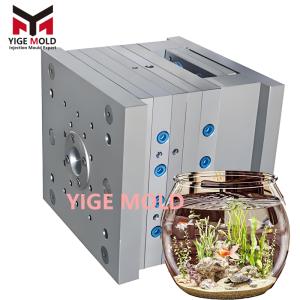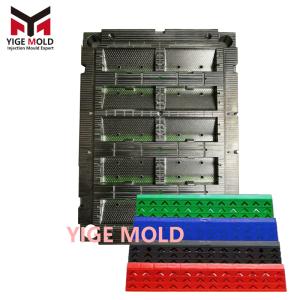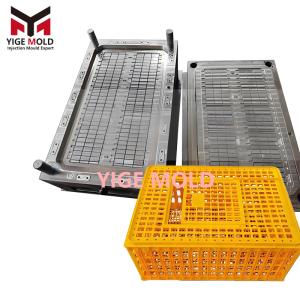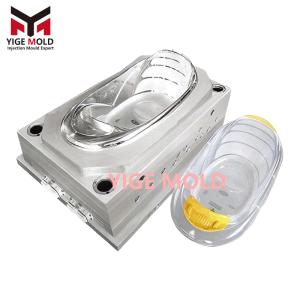
Laundry Tub Mold
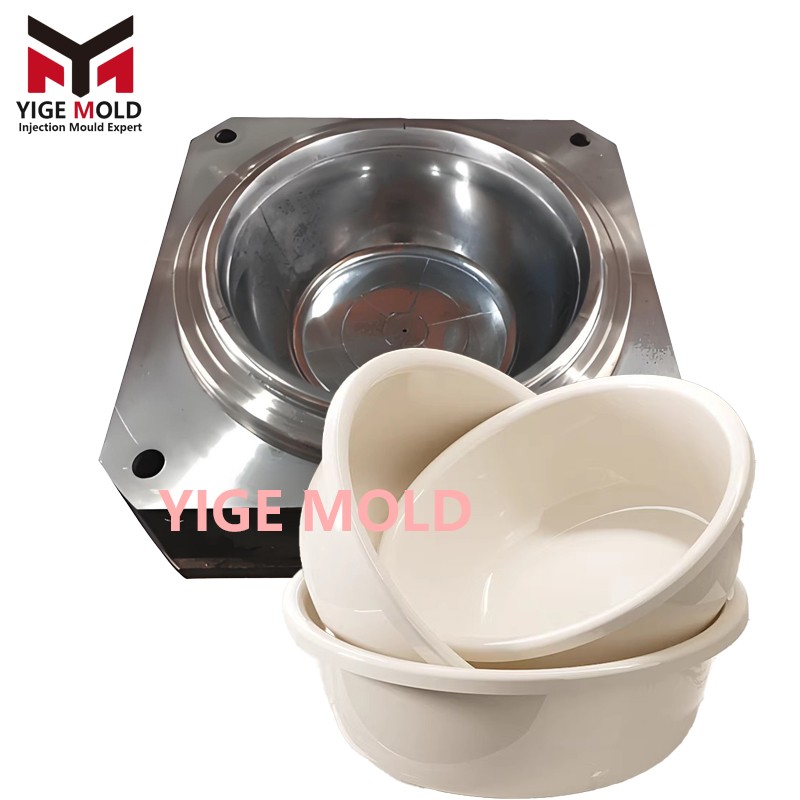
 Comprehensive Technical Analysis of Laundry Tub Molds: From Design and Manufacturing to Application Selection
1. Product Overview and Market Positioning
1.1 Core Value of Laundry Tub Molds
Laundry tub molds are specialized forming tools for the professional production of household and commercial laundry containers, mainly used to manufacture laundry tubs, washboard tubs, and other products made from PP, PE, and other plastic materials. These molds must not only meet daily washing functional requirements but also balance multiple standards such as durability, ergonomics, and space efficiency.
1.2 Product Classification System
-
Household Laundry Tub Molds: Capacity 20-100 liters, focusing on lightness and aesthetics
-
Commercial Laundry Tub Molds: Capacity 100-500 liters, emphasizing durability and load-bearing capacity
-
Multifunctional Laundry Tub Molds: Integrating washboards, draining baskets, and other features
-
Collapsible Laundry Tub Molds: Optimized for storage space with portable design
2. Key Technologies in Mold Design
2.1 Structural Design Elements
Tub Structure Design
Laundry tubs adopt integrated molding design with uniform wall thickness controlled between 2.5-4mm. The bottom reinforcing ribs are arranged in radial or grid patterns to ensure a load-bearing capacity of 50-200kg. The edges are designed with rolled structures, increased to 5-6mm thickness, enhancing structural strength while preventing scratches.
Ejection System Optimization
Using 8-12 evenly distributed ejector pins combined with a pneumatic-assisted ejection system ensures smooth demolding of thin-walled, large planar products without deformation. Delayed ejection mechanisms are installed in specific areas to prevent cracking during product ejection.
Gating System Design
Based on tub size, multi-point hot runner gating (3-8 points) ensures rapid and uniform melt filling. Large laundry tubs (capacity >100L) use valve gate sequential gating to control weld line positions and ensure product appearance quality.
2.2 Material Selection Standards
Mold Steel Materials
-
Core and cavity: Use pre-hardened mold steels such as P20, 718H
-
Sliders and angled lifters: Use hot-work mold steels like H13, SKD61 with hardness HRC 48-52
-
Ejector pins and sleeves: Select wear-resistant materials like SKD61, FDAC
Surface Treatment
-
Cavity polishing: Achieve #3000-6000 grit mirror finish
-
Surface coating: Apply PVD coatings like DLC, TiN to improve wear resistance
-
Anti-corrosion treatment: Nickel plating applied to cooling water channels
3. Manufacturing Processes and Precision Control
3.1 Machining Process Flow
-
Rough Machining Stage
-
Template milling: Leave 0.5mm machining allowance
-
Cavity rough milling: Use 20-32mm diameter tools
-
Heat treatment: Vacuum quenching to required hardness
-
-
Precision Machining Stage
-
CNC fine milling: Use 6-12mm diameter ball-nose tools
-
EDM processing: Handle deep grooves, reinforcing ribs, and other details
-
Wire cutting: Process special-shaped holes, sliders, etc.
-
-
Polishing and Assembly
-
Manual polishing: Progressive polishing from #400 to #6000
-
Component assembly: Ensure fit clearance of 0.02-0.05mm
-
Trial and debugging: At least 3 trial runs to optimize parameters
-
3.2 Precision Control Standards
-
Dimensional accuracy: ±0.1mm (overall dimensions), ±0.05mm (functional dimensions)
-
Flatness: Tub bottom flatness ≤0.3mm/1000mm
-
Wall thickness uniformity: Deviation at any point ≤±8%
-
Weight stability: Batch weight variation ≤±2%
4. Production Process Parameters
4.1 Injection Molding Process Parameters
Temperature Control
-
Barrel temperature: Front zone 180-200°C, middle zone 200-220°C, rear zone 220-240°C
-
Mold temperature: 40-60°C (for PP material), precisely controlled by mold temperature controllers
-
Hot runner temperature: 220-250°C, with zoned independent control
Pressure and Time
-
Injection pressure: 60-100MPa, using multi-stage injection
-
Holding pressure: 40-60MPa, with 3-5 stage pressure reduction
-
Cooling time: 60-180 seconds (adjusted based on wall thickness)
-
Cycle time: 90-300 seconds
4.2 Quality Control Points
Production Process Monitoring
-
Dimensional sampling every 2 hours, focusing on tub opening diameter and depth
-
Load testing every 4 hours, applying 1.5 times the rated weight
-
Drop testing each shift, free fall from 1 meter height
Performance Test Items
-
Load-bearing test: Apply 150% rated weight for 24 hours
-
Temperature resistance test: -20°C to 60°C temperature cycling
-
Aging test: 1000 hours of UV accelerated aging
-
Health and safety testing: Heavy metal migration, formaldehyde emission
5. Mold Maintenance and Management
5.1 Daily Maintenance System
Pre-production Inspection
-
Check heating system and temperature control system
-
Verify smooth operation of ejection and core-pulling systems
-
Confirm unobstructed cooling water channels without leaks
Production Monitoring
-
Monitor mold temperature fluctuation ≤±2°C
-
Record lubrication status of ejector pins and guide pillars
-
Observe abnormalities like flash, short shots, etc.
Post-production Maintenance
-
Apply rust inhibitor to cavities
-
Clean venting slots and cooling channels
-
Inspect and record wear conditions
5.2 Regular Maintenance Plan
Weekly Maintenance
-
Disassemble and clean ejector pins and sleeves
-
Check wear on sliders and angled lifters
-
Calibrate temperature sensors
Monthly Maintenance
-
Complete disassembly and inspection
-
Measure key dimensions
-
Replace wear parts like seals
Quarterly Overhaul
-
Re-polish cavities
-
Repair worn areas
-
Update aging components
6. Cost-Benefit Analysis
6.1 Investment Cost Structure
Mold Manufacturing Costs
-
Small laundry tub molds (20-50L): 80,000-150,000 RMB
-
Medium laundry tub molds (50-100L): 150,000-250,000 RMB
-
Large laundry tub molds (100L+): 250,000-400,000 RMB
Production Cost Analysis
-
Material cost: PP raw material accounts for 60-70%
-
Energy cost: Electricity accounts for 15-20%
-
Labor cost: Accounts for 10-15%
-
Mold amortization: 0.1-0.5 RMB per piece
6.2 Production Efficiency Indicators
Capacity Analysis
-
Small molds (2 cavities): 300-500 pieces/day
-
Medium molds (1 cavity): 150-250 pieces/day
-
Large molds (1 cavity): 80-150 pieces/day
Economic Production Batch
-
Minimum economic batch: 5,000-10,000 pieces
-
Optimal production batch: 20,000-50,000 pieces
-
Mold life: 800,000-1.2 million cycles
7. Selection Recommendations and Application Guidelines
7.1 Key Points for Mold Selection
Based on Production Volume
-
Annual output <50,000 pieces: Choose simple single-cavity molds
-
Annual output 50,000-200,000 pieces: Standard single-cavity molds
-
Annual output >200,000 pieces: Multi-cavity or automated molds
Based on Product Requirements
-
Standard household use: Standard molds focusing on cost-effectiveness
-
High-end commercial use: Reinforced molds focusing on durability
-
Export products: Precision molds focusing on dimensional stability
7.2 Supplier Selection Criteria
Technical Capability Assessment
-
Design experience: Whether there are successful cases of similar products
-
Processing equipment: Whether equipped with five-axis machining, slow wire cutting, etc.
-
Testing capability: Whether equipped with CMM, projectors, and other testing equipment
Service Quality Considerations
-
Delivery cycle: Normally 60-90 days, expedited 30-45 days
-
After-sales service: Whether lifetime technical support is provided
-
Spare parts supply: Whether common spare parts are standardized
8. Innovation Directions and Technical Upgrades
8.1 Structural Design Innovations
-
Quick mold change system: Achieves mold changes within 15 minutes
-
Modular design: Standardized core components reducing maintenance costs
-
Intelligent ejection system: Pressure-sensing automatic ejection speed adjustment
8.2 Manufacturing Process Improvements
-
High-speed machining technology: Reduces processing time by over 30%
-
Composite polishing process: Combines mechanical and chemical polishing
-
Digital inspection: 3D scanning for full-process quality control
8.3 Sustainable Development Solutions
-
Energy-saving design: Optimizes cooling system reducing energy consumption by 20-30%
-
Long-life design: Uses wear-resistant materials for key components to extend lifespan
-
Repairable design: Modular design of wear-prone areas for easy replacement and repair
9. Conclusion
Laundry tub molds, as high-volume, widely-used daily plastic product molds, directly impact product quality and production efficiency. When selecting professional mold manufacturers, consideration should extend beyond initial investment costs to comprehensively evaluate mold lifespan, production efficiency, quality stability, and technical support capabilities. Core and cavity components made from high-quality mold steels like P20 and 718H, combined with scientific maintenance management systems, ensure stable performance during long-term production. Users are advised to fully consider their production needs when selecting molds and establish long-term cooperative relationships with mold suppliers to achieve mutual benefits.