Insulated Lunch Box Mold
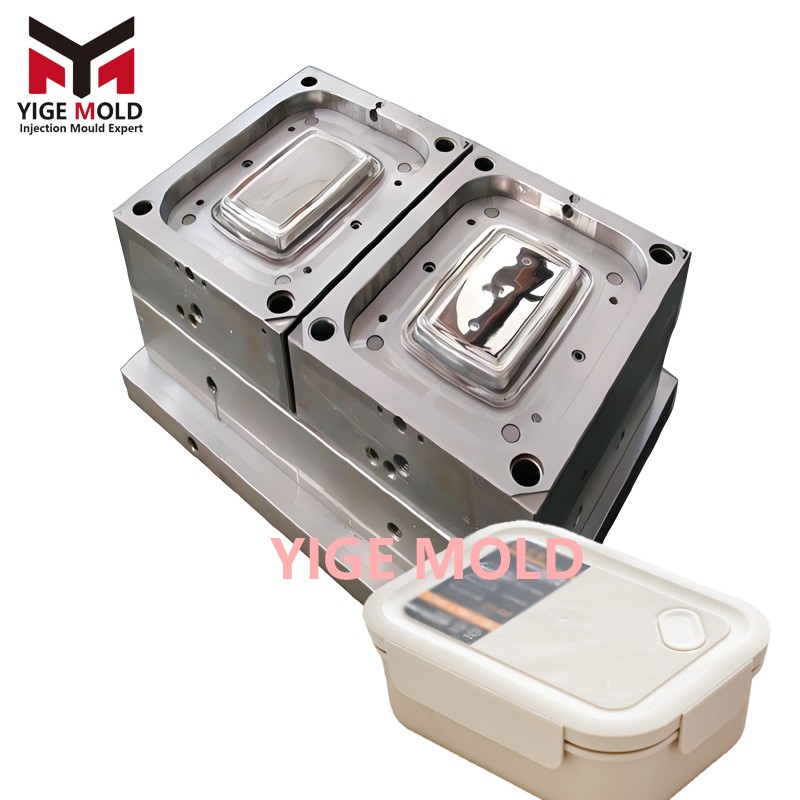
An In-Depth Technical Exposition on Insulated Lunch Box Molds
Abstract: Insulated lunch box molds represent a pinnacle of applied engineering within the food packaging and domestic goods manufacturing sector. These specialized tooling systems transcend conventional container molding by embedding functional thermal management properties directly into the product's architecture during the primary forming process. This document provides a comprehensive technical analysis of insulated lunch box molds, detailing their classification, design intricacies, material-process synergies, and the rigorous validation protocols that govern their output. The discussion underscores how these molds serve as critical enablers in transforming passive storage vessels into active temperature-regulation systems.
1. Foundational Principles and Technical Taxonomy
The fundamental objective of an insulated lunch box mold is to fabricate a monolithic or composite plastic structure capable of impeding heat transfer. This is achieved not by adding secondary components post-molding, but by engineering the mold itself to create intrinsic insulating features. The industry primarily delineates these molds based on the underlying physics of insulation they are designed to facilitate.
1.1. Static Air Gap Insulation Molds (The Predominant Method)
This category leverages the low thermal conductivity of trapped, stagnant air. The mold's core function is to form a continuous, sealed cavity of air between two parallel plastic walls.
-
Gas-Assisted Injection Molding (GAIM) Systems: These are sophisticated molds equipped with high-pressure gas (N₂) injection units. The process sequence involves a short shot of polymer melt, followed by the injection of gas which cores out the thicker sections, forming the hollow air chamber. The mold design is critically dependent on:
-
Gas Pin Placement and Sequencing: Strategic positioning of gas injection pins to ensure uniform gas penetration and prevent fingering or blow-through.
-
Melt Flow Front Control: The initial polymer shot volume and injection speed must be precisely calibrated to create a solidified "skin" that the gas can push against without escaping.
-
Internal Channel Geometry: The shape and size of the internal air chamber, defined by the mold core, must promote uniform air entrapment without creating thin, weak sections prone to collapse.
-
-
Structural Foam Molding Molds (An Alternative Approach): Here, a chemical blowing agent mixed with the polymer resin decomposes during injection, releasing gas (usually N₂ or CO₂) to create a foamed, microcellular core sandwiched between solid skins. The mold for this process is designed to withstand lower clamping pressures and requires robust venting to handle the released gases. The resulting part has a lower density and the foamed core provides inherent insulation, though typically less effective than a dedicated air gap.
1.2. Integrated Insulant Cavity Molds
This design philosophy prepares the plastic shell to host a secondary, high-performance insulating material. The mold's role is to create a perfectly dimensioned, accessible, and sealable compartment.
-
Polyurethane (PU) Foam-Filled Molds: The mold produces a hollow double-shell product. The critical design elements are the filling port(s) and vent holes. These features must be integral to the part design, often shaped as small nozzles or recesses that can be cleanly sealed (e.g., via hot-plate welding or plug insertion) after the exothermic PU foam injection process. Mold cooling is vital to ensure the plastic shell has sufficient heat resistance to withstand the foaming reaction without distortion.
-
Vacuum Insulation Panel (VIP) Integration Molds: For premium applications requiring superior insulation in a slim profile, molds are designed to create shells with internal geometries that precisely cradle a pre-manufactured VIP core. This involves designing registration features, clips, or channels within the mold cavity to hold the VIP in place during the molding process or in a subsequent assembly step. Tolerances here are exceptionally tight to prevent compression or movement of the fragile VIP.
2. Advanced Design Considerations and Engineering Challenges
The design of an insulated lunch box mold is a multi-disciplinary exercise in balancing structural mechanics, thermal dynamics, and production efficiency.
2.1. Thermal Management of the Mold Itself (A Critical Success Factor)
The uniform formation of insulating layers is directly tied to the mold's ability to extract heat consistently.
-
Conformal Cooling Technology: Standard straight-drilled cooling channels are insufficient for the complex, often curvilinear, surfaces defining air gaps. Conformal cooling utilizes additive manufacturing (e.g., DMLS - Direct Metal Laser Sintering) or special casting techniques to create cooling channels that mirror the three-dimensional contour of the cavity surface. This technology dramatically reduces cycle times and minimizes thermal gradients across the part, which is essential for preventing warpage that could compromise the air gap's integrity.
-
Thermal Isolation and Zoning: Areas of the mold forming thin sections (like the outer skin) may require different cooling intensities compared to areas forming thick ribs or gate locations. Advanced molds employ separate cooling circuits with individual temperature controls to manage these zones independently, optimizing crystallization and shrinkage behavior.
2.2. Precision Engineering for Airtight Seals
The insulating air layer or the foam cavity is useless if the product's primary closure is not airtight.
-
Micro-Tolerances on Sealing Surfaces: The mating surfaces of the lid and body—where the main seal occurs—are machined to micron-level tolerances (typically ±0.01-0.02mm). This often requires post-machining operations like precision grinding or polishing of the mold inserts.
-
Undercut Management for Gaskets: If a thermoplastic elastomer (TPE) gasket is overmolded, the mold must include undercuts to mechanically lock the gasket in place. The design of these undercuts, and the associated mold actions (lifters, sliders) to release them, must be flawless to ensure consistent gasket formation and adhesion.
2.3. Structural Analysis and Fatigue Resistance
The hollow or foam-filled sections can act as structural weaknesses. Mold design must compensate by strategically placing cosmetic and functional ribs.
-
Finite Element Analysis (FEA) Integration: Modern mold design heavily relies on FEA software to simulate the injection process (filling, packing, cooling) and structural performance under load (drop tests, stacking tests). This virtual prototyping identifies potential sink marks, air traps, or high-stress areas, allowing for mold geometry optimization before steel is cut.
-
Gate Location Optimization: The gate location is pivotal. It must allow the polymer melt to flow symmetrically to fill both inner and outer walls simultaneously, ensuring balanced pressure and preventing weld lines in critical sealing or load-bearing areas.
3. Material Selection and Process Parameter Interdependence
The performance triangle of material, mold, and machine parameters is particularly acute for insulated products.
-
Material Pairing for Co-injection/Two-Shot Molding: When using different materials for inner (food-contact) and outer (aesthetic/durable) layers, their compatibility in terms of adhesion, shrinkage, and thermal expansion must be meticulously evaluated. Common pairs include PP (inner) / ABS (outer) or Tritan™ (inner) / PC (outer). The mold must accommodate the specific shrinkage factors of each material in its respective cavity regions.
-
Process Window Characterization: The "sweet spot" for process parameters is narrow. For GAIM, variables include melt temperature, short shot size, gas pressure, gas injection delay time, and gas hold time. An unstable process can lead to inconsistent wall thickness, visible gas bubbles on the surface ("silver streaks"), or incomplete filling. Robust Process Control (RPC) and Statistical Process Control (SPC) are essential for mass production.
4. Comprehensive Validation and Quality Assurance Regime
Molds are qualified not just by the parts they produce, but by the performance of those parts over time.
-
Dimensional & Metrological Inspection: Using Coordinate Measuring Machines (CMM) and 3D scanners to verify critical dimensions, especially those related to seal interfaces and air gap uniformity.
-
Functional Performance Testing:
-
Thermal Endurance Test: Filling with water at 95°C, storing in a 20°C environment, and measuring temperature at 4, 6, and 8-hour intervals. Performance is benchmarked against industry standards (e.g., JIS S 2037, ASTM standards).
-
Leak Test: Submersion testing or pressure decay testing to verify the integrity of both the primary lid seal and the sealed air chamber (if applicable).
-
-
Durability and Safety Testing: Repeated open-close cycles (often 20,000+), dishwashing durability tests, drop tests, and material migration tests (for food contact compliance) are conducted on samples from production runs to validate the mold's long-term reliability.
Conclusion
The insulated lunch box mold is far more than a shaping tool; it is a functional substrate generator. Its design is a complex optimization problem where the goals of thermal resistance, mechanical strength, production efficiency, and consumer safety converge. The evolution of these molds—driven by advancements in conformal cooling, multi-material molding, and simulation software—directly enables the market's demand for lighter, more efficient, and more durable thermal storage solutions. As sustainability concerns grow, future developments will likely focus on molds designed for mono-material structures (easing recyclability) and for integrating bio-based or recycled polymers without sacrificing the critical insulation performance that defines the product. Thus, the insulated lunch box mold stands as a testament to precision engineering's role in enhancing everyday utility through meticulously controlled material science and thermodynamics.