PP Table Injection Mold
 Core Technology Analysis of Polypropylene Table Injection Molds: From Material Characteristics to Precision Molding
1. Product Positioning and Technical Characteristics
1.1 Core Advantages of Polypropylene Material in Table Manufacturing
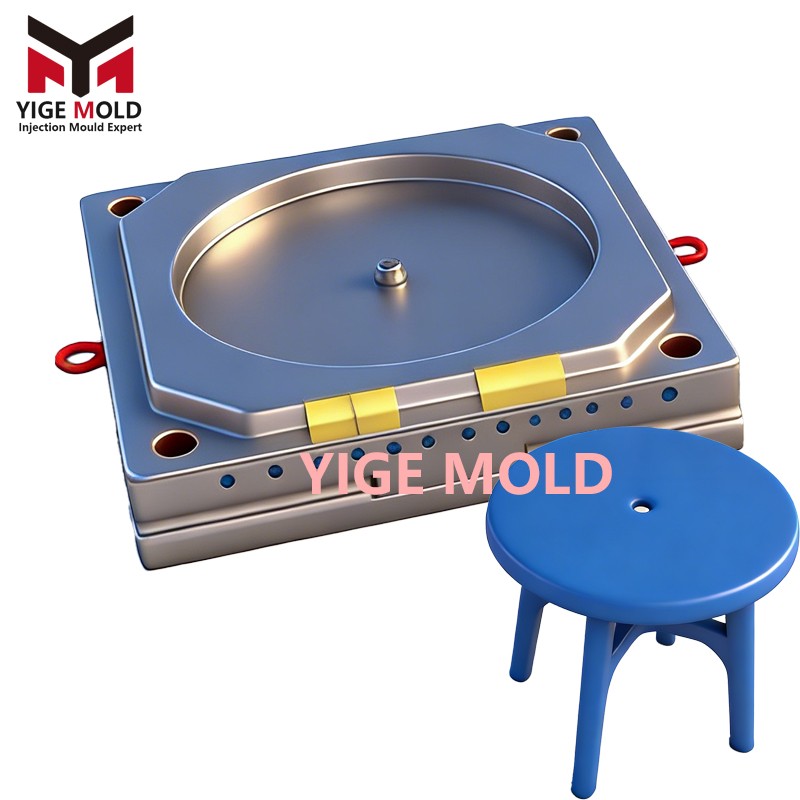
Polypropylene (PP) table injection molds are specialized molding tools specifically designed for the characteristics of polypropylene raw materials. As a semi-crystalline thermoplastic, polypropylene has low density (0.90-0.91g/cm³), excellent chemical resistance, and outstanding fatigue resistance, making it particularly suitable for manufacturing lightweight, durable, and outdoor-use table products.
1.2 Material Adaptability Requirements in Mold Design
-
Shrinkage Compensation Design: Precise compensation for PP material shrinkage rate of 1.5-2.5%
-
Crystallinity Control: Regulates PP crystallinity (40-70%) through mold temperature adjustment
-
Stress Relief Design: Reduces internal stress caused by crystallization shrinkage
2. Innovative Solutions in Mold Structure Design
2.1 Cavity System Design Tailored for PP Characteristics
Thin-Wall Molding Solution
-
Wall Thickness Optimization: Tabletop thickness 2.5-3.5mm, reinforcement rib thickness 1.2-1.8mm
-
Flow Length Ratio Control: PP material flow length ratio optimized to 280-320:1
-
Weld Line Management: Optimizes gate positioning to place weld lines in non-stress areas
Large Flat Surface Molding Technology
-
Multi-point Sequential Valve Gating: Tabletop uses 8-12 point sequential valve control
-
Pressure Balance Design: Ensures filling pressure difference ≤5% on large flat surfaces
-
Anti-Warpage Structure: Asymmetric cooling system combined with reinforcement rib layout
2.2 Support Structure Optimization Design
Table Leg and Connection Structure
-
Multi-rib Support System: Each table leg designed with 8-12 longitudinal reinforcement ribs
-
Snap-fit Connection Mechanism: Utilizes PP material's elastic modulus characteristics
-
Assembly Guidance Design: Tapered guidance with 0.3-0.5mm clearance
Folding Mechanism Integration
-
Hinge Integrated Molding: Living hinge fatigue life ≥10,000 cycles
-
Self-lubricating Design: Applies PP material's low friction characteristics
-
Limit Structure: Opening/closing angle limit accuracy ±1°
2.3 Mold Materials and Surface Treatments
Special Steel Selection
-
Core and Cavity: Modified 1.2738 pre-hardened steel, hardness HRC 38-42
-
Slider System: 1.2344 hot-work steel, hardness HRC 48-52
-
Ejection Mechanism: 1.2312 free-cutting steel, surface nitrided
Special Surface Technologies
-
Texture Transfer Technology: Wood grain, stone patterns, and other decorative textures
-
Anti-static Coating: Prevents static dust adsorption on PP materials
-
Wear-resistant Treatment: DLC coating on moving parts surfaces
3. Precision Manufacturing Process System
3.1 High-Precision Machining Technology
Large Flat Surface Machining Process
-
Five-axis Simultaneous Precision Milling: Flatness controlled within 0.1mm/m²
-
Constant Temperature Machining Environment: Machining temperature controlled at 20±2°C
-
Online Measurement Compensation: Real-time correction with laser trackers
Complex Structure Machining
-
Deep Cavity EDM Machining: Depth-to-diameter ratio reaches 15:1
-
Micro-hole Drilling Technology: 0.5mm diameter cooling water holes
-
High-speed Hard Milling: Direct precision machining of hardness above HRC50
3.2 Assembly and Debugging Standards
Fit Precision Control
-
Slider Fit Clearance: 0.02-0.04mm
-
Ejector Pin Hole Fit: H7/g6 accuracy grade
-
Guide Pillar/Bushing Fit: Radial clearance 0.005-0.01mm
Function Verification Testing
-
Mechanism Motion Test: 1000 continuous cycles without sticking
-
Pressure Distribution Test: 32-point pressure sensor grid detection
-
Temperature Field Verification: Infrared thermal imager temperature uniformity analysis
4. Injection Molding Process Parameter Optimization
4.1 PP Material Processing Window
Temperature Parameter Settings
-
Melt Temperature: 200-230°C (adjusted according to material grade)
-
Mold Temperature: 40-80°C (controls crystallization rate)
-
Hot Runner Temperature: 210-240°C zoned control
Pressure and Time Parameters
-
Injection Pressure: 70-110MPa (higher pressure required for large flat surfaces)
-
Holding Pressure: 40-60MPa (multi-stage decreasing)
-
Cooling Time: 60-120 seconds (determined by wall thickness)
4.2 Crystallinity Control Strategy
Temperature Gradient Management
-
Rapid Heating Phase: Mold temperature 60-80°C for first 30 seconds
-
Constant Temperature Crystallization Phase: Maintains stable mold temperature
-
Gradient Cooling Phase: Cooling rate 10°C/min
Pressure-assisted Crystallization
-
Holding Pressure Maintenance: Prevents void formation from shrinkage
-
Pressure Release Control: Avoids excessive compression
5. Key Quality Control Technologies
5.1 Dimensional Stability Control
Shrinkage Compensation Strategy
-
Anisotropic Compensation: Different shrinkage rates in flow and transverse directions
-
Time-dependent Compensation: Effect of holding time on shrinkage
-
Process Window Validation: Dimensional stability under multiple parameter combinations
Flatness Control
-
Multi-point Support Ejection: Prevents ejection deformation
-
Post-curing Treatment: Jig-assisted shaping after demolding
-
Stress Relief Process: Aging treatment at 60°C environment
5.2 Mechanical Performance Verification
Load Capacity Testing
-
Static Load: 100kg load at table center, deformation ≤3mm
-
Impact Test: 10kg weight dropped from 0.5m height
-
Fatigue Testing: 10,000 usage cycle simulation
Environmental Adaptability
-
Temperature Cycling: -20°C to 60°C alternating tests
-
UV Aging: 1000 hours xenon lamp aging test
-
Chemical Resistance: Common cleaner immersion tests
6. Production Efficiency Enhancement Solutions
6.1 Rapid Molding Technology
Efficient Cooling System
-
Conformal Cooling Channels: 3D printed complex water channels
-
Dual Temperature Zone Control: Separate temperature control for tabletop and legs
-
Rapid Thermal Cycling: Steam-assisted rapid heating
Automation Integration
-
Robotic Automatic Part Removal: Angular rotation during removal
-
Online Runner Removal: Shear-type gate automatic removal
-
Automatic Inspection and Sorting: Vision system quality grading
6.2 Mold Maintenance Strategy
Preventive Maintenance System
-
Wear Monitoring: Regular CMM measurement of critical areas
-
Lubrication Management: Automatic lubrication system with timed dosing
-
Cleaning Maintenance: Ultrasonic cleaning after each production run
Rapid Repair Solutions
-
Modular Design: Quick replacement of damaged components
-
Standardized Parts: Inventory of common spare parts
-
Remote Guidance: AR technical support for on-site repairs
7. Application Expansion and Customization
7.1 Multi-functional Integration
Additional Function Reservations
-
Cable Management: Integrated cable channels in tabletop
-
Cup Holder Integration: Elastic snap-fit structures
-
Expansion Interfaces: Standardized connection interfaces
Surface Functionalization
-
Anti-slip Textures: Laser-etched anti-slip patterns
-
Logo Areas: Dedicated areas for company logo molding
-
Measurement Scales: Embedded measurement scales
7.2 Rapid Changeover System
Modular Design Concept
-
Quick-change Inserts: Rapid replacement of tabletop patterns
-
Size Adjustment Modules: Adjustable table leg height design
-
Color Switching Solutions: Multi-material co-injection system
Conclusion
Polypropylene table injection molds represent the technological pinnacle of plastic furniture molds. Their success depends not only on precision manufacturing processes but also on deep understanding and innovative application of PP material characteristics. As material science and mold technology continue to advance, polypropylene table molds are developing toward higher efficiency and better performance. Choosing professional polypropylene table injection mold solutions will provide furniture manufacturers with significant competitive advantages.