Heavy-Duty Pallet Mold
 Heavy-Duty Pallet Mold: Professional Injection Molding Solution
I. Product Definition and Market Positioning
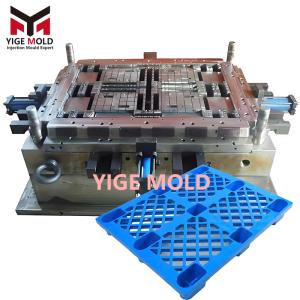
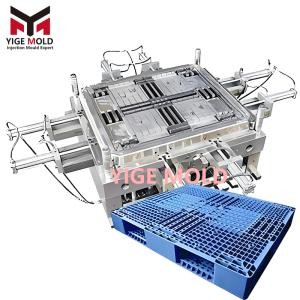
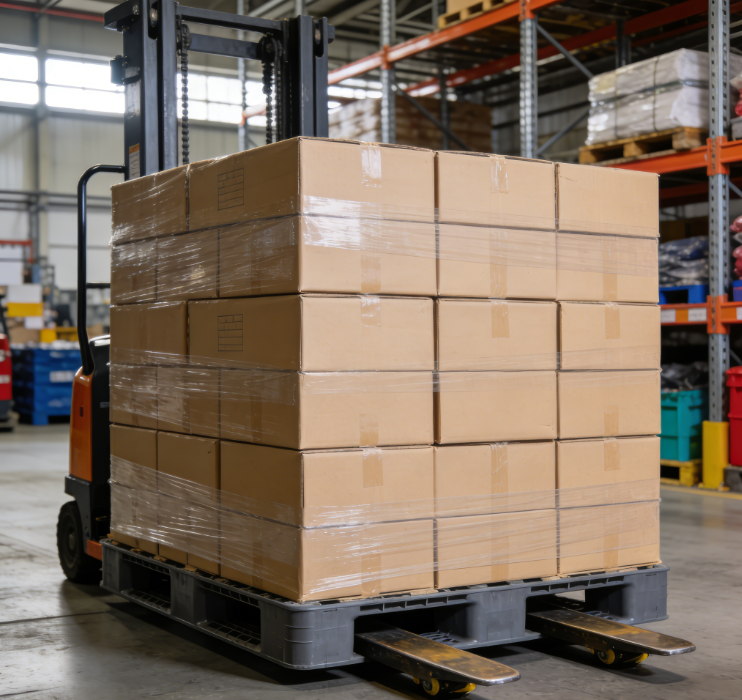
A heavy-duty pallet mold is a specialized injection mold used for producing logistics pallets with a load-bearing capacity exceeding 3 tons, falling under the category of industrial-grade mold products. These molds are primarily used to manufacture high-strength, high-load-capacity plastic pallets, meeting the logistics needs of scenarios such as large mechanical equipment, heavy goods, and automated warehousing. With the rapid development of the modern logistics industry, the application of heavy-duty pallets in sectors like automotive manufacturing, heavy machinery, chemicals, and cold-chain logistics is increasingly widespread, placing higher demands on mold precision, strength, and durability.
II. Core Technical Features
1. High-Strength Structural Design
Heavy-duty pallet molds utilize a multi-layer rib layout and cross-support structure to ensure stability during high-pressure injection molding. The mold cavity design fully considers stress distribution, incorporating R-angle transitions (≥3.0mm) in stress concentration areas to avoid mold cracking caused by stress concentration. The pallet base employs a grid or channel framework. Through CAE analysis optimization of rib layout, bending strength is improved by over 40%.
2. Multi-Directional Core Pulling Mechanisms
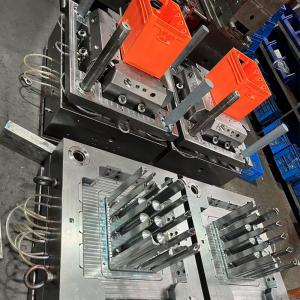
For complex pallet structures (e.g., plastic pallets with embedded steel pipes), molds use multi-directional core pulling designs such as "large slides + hydraulic cylinders" or "angled leader pins + large slides" to solve demolding challenges in undercut areas. Core pulling mechanisms use high-strength Cr12 mold steel to ensure precision and durability under frequent operation.
3. Hot Runner System
To reduce molding clamp force and improve part quality, heavy-duty pallet molds commonly employ a hot runner system. The hot runner design minimizes runner waste, improves material utilization, and shortens the molding cycle. The system is equipped with multiple hot nozzles to ensure uniform melt filling of the large cavity, preventing defects like short shots or weld lines.
4. Precision Guiding System
The mold uses precision leader pin and bushing guides with a fit clearance controlled within 0.02mm to ensure accurate mold closing. Leader pins are made from high-strength steel, surface-treated with nitriding (HV≥1000), offering excellent wear resistance and a service life exceeding 1 million cycles.
III. Materials and Process Standards
1. Mold Steel Selection
-
Cavity Material: Pre-hardened mold steels like S136H, NAK80, hardness HRC 38-42, offering excellent wear resistance and polishability.
-
Moving Components: Hot-work steels like SKD61, H13, hardness HRC 48-52, with high-temperature and fatigue resistance.
-
Mold Frame Material: S50C steel, providing sufficient strength and rigidity.
2. Surface Treatment Processes
-
Mirror Polishing: Cavity surfaces polished to Ra ≤ 0.05μm, ensuring part surface smoothness.
-
Nitriding Treatment: Mold surface hardness can reach HV ≥ 1000, significantly improving wear and corrosion resistance.
-
Hard Chrome Plating: Some moving components are hard chrome plated for further enhanced wear resistance.
3. Injection Molding Process Parameters
-
Barrel Temperature: 190-230°C for PP, 220-260°C for ABS.
-
Mold Temperature: 40-80°C, adjusted based on part wall thickness.
-
Injection Pressure: 70-120 MPa (high-pressure injection required for heavy-duty pallets).
-
Holding Pressure: 60-80% of injection pressure.
-
Molding Cycle: Typically 3-5 minutes, depending on product size and wall thickness.
IV. Product Performance Advantages
1. High Load-Bearing Capacity
Pallets produced by heavy-duty pallet molds can bear loads of 3-5 tons, with some specially designed products reaching over 8 tons. Through optimized structural design and material selection, pallets remain stable and resistant to deformation even under full load.
2. Excellent Impact Resistance
Using high-quality materials like High-Density Polyethylene (HDPE) or Copolymer Polypropylene (PP), combined with rational structural design, pallets possess good toughness and energy absorption characteristics, effectively dispersing external impact forces and avoiding deformation or breakage from point loading.
3. Anti-Slip and Moisture-Resistant Design
Pallet surfaces feature anti-slip textures with a friction coefficient ≥0.8, ensuring safe goods handling. The materials themselves have excellent moisture resistance, making them suitable for storage and transport in humid environments.
4. Long Service Life
Heavy-duty pallet molds are manufactured using premium steels and advanced processes, achieving a service life exceeding 1 million cycles. The produced pallets can be reused multiple times, with a service life of 5-8 years under normal usage conditions.
V. Main Application Areas
1. Automotive Manufacturing Industry
Used for storage and transport of heavy goods like automotive parts and engine assemblies, requiring pallets with high load capacity and dimensional stability.
2. Heavy Machinery Industry
Used for storage and handling of large mechanical equipment and construction machinery parts, requiring pallets with high strength and impact resistance.
3. Cold-Chain Logistics
Heavy-duty pallets are used in cold-chain logistics for frozen food and pharmaceutical products, requiring pallets with low-temperature resistance, moisture resistance, and easy cleaning.
4. Chemical Industry
Used for storage and transport of chemical raw materials and hazardous goods, requiring pallets with corrosion resistance, anti-static properties, and compliance with safety standards.
5. Automated Warehouses
Heavy-duty pallets are used with automated storage systems, requiring pallets with precise dimensions, stable structure, and compatibility with automated equipment for identification and handling.
VI. Production Process Flow
1. Mold Design and Manufacturing
CAD/CAM technology is used for mold design, with CAE analysis to optimize structure and ensure design rationality. Manufacturing utilizes advanced equipment like CNC milling machines, EDM machines, and wire-cutting machines, strictly controlling machining accuracy and surface quality.
2. Injection Molding
Dried plastic pellets are fed into the injection machine hopper, conveyed by the screw to the heated barrel for melting, and injected into the mold cavity under high pressure. Temperature, pressure, and time parameters are strictly controlled during injection to ensure stable part quality.
3. Cooling and Solidification
The melt cools and solidifies within the mold. Cooling time is determined by part wall thickness, typically 15-50 seconds. Mold temperature is controlled between 40-80°C to ensure proper cooling and dimensional stability.
4. Mold Opening and Demolding
The mold opens, and the part is ejected via the ejection system. Ejection speed and position must be carefully controlled during demolding to avoid part deformation or damage.
5. Post-Processing and Inspection
Parts undergo post-processing like deburring and trimming, followed by quality inspections including dimensional checks, visual inspection, and load-bearing tests to ensure products meet design requirements.
Summary: Core Elements for Successful Manufacturing of Yige's Heavy-Duty Pallet Molds
The successful manufacturing of Yige's Heavy-Duty Pallet Molds relies on four core elements:
-
Precision Design: Accurate structural design based on CAE analysis ensures mold stability under high-pressure injection and precise part dimensions.
-
Quality Materials: Matching high-performance mold steels with quality plastic materials meets requirements for high strength and wear resistance.
-
Advanced Processes: Application of advanced technologies like hot runner systems and multi-directional core pulling mechanisms improves production efficiency and part quality.
-
Strict Quality Control: Full-process quality control from mold machining to product molding ensures products meet international standards.