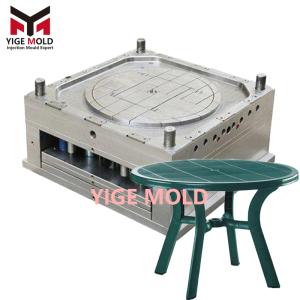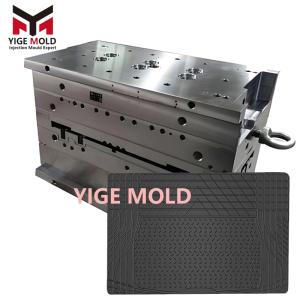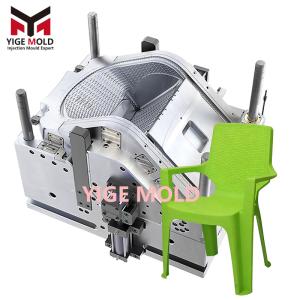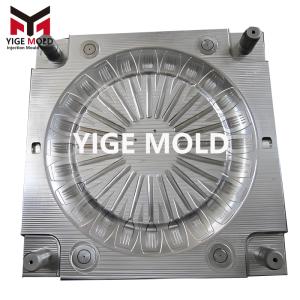
One-piece plastic chair mold
 One-Piece Plastic Chair Mold: Engineering Practice for Integrated Structure and Production Manufacturing
I. Basic Concepts and Process Characteristics
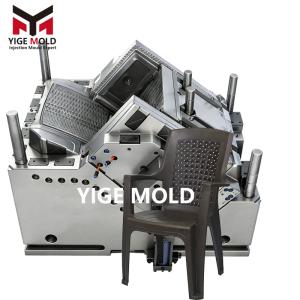
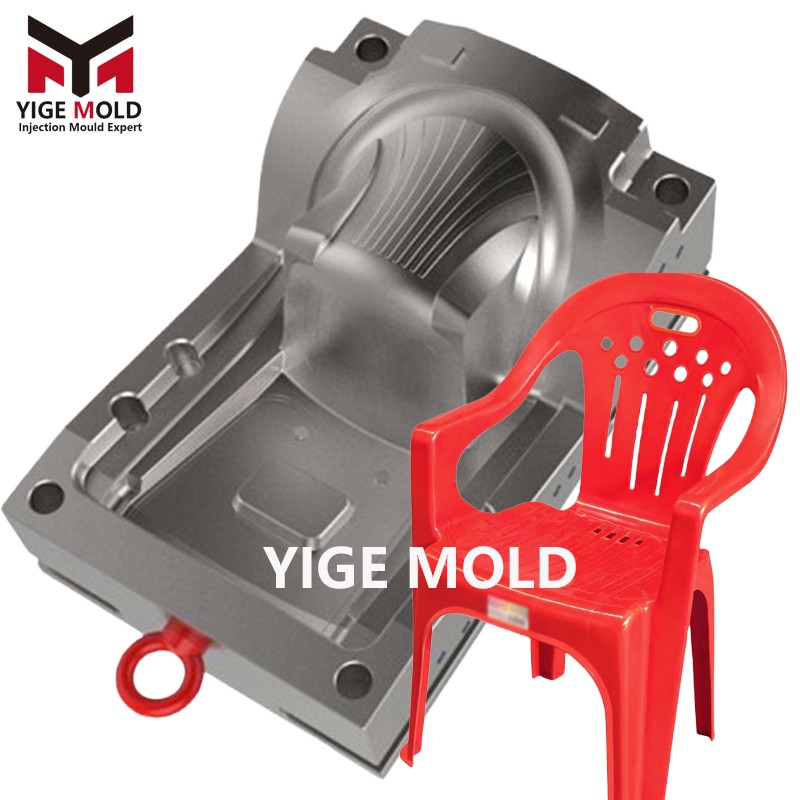
The one-piece plastic chair mold is specialized molding equipment used to produce integrated plastic chairs. Its core characteristic lies in completing the molding of the entire main structure of the chair—including the backrest, seat, and support legs—in a single injection molding cycle. This process eliminates the secondary processing and assembly steps required for traditional multi-part construction, giving the product excellent structural integrity and uniformity. Mold design and manufacturing must accommodate the typical features of chair products, such as large size, complex curved surfaces, and thin-wall structures, ensuring stable quality and efficiency in mass production.
II. Mold Construction and Functional Systems
Mold Base Framework
A heavy-duty mold base structure is employed to meet the rigidity requirements of large molds. Mold plates are typically 300-400mm thick to ensure dimensional stability during injection. Guide pillar systems use standard configurations, with pillar diameters ranging from φ60-80mm, surfaces hardened to improve wear resistance. Plate alignment uses taper or side lock systems to ensure closing accuracy. Mounting surfaces are machined for flatness, facilitating installation and leveling on the injection molding machine.
Molding System Components
Cavities and cores use integrated or modular insert structures, selected based on product shape complexity. Mold surfaces receive polishing or texture treatment according to product requirements, with finer polishing for high-appearance chairs. Parting line design considers demolding and mold machining, typically positioned in non-appearance areas or natural boundaries.
Gating System Configuration
A multi-point hot runner system is used based on the chair's structure and size. Hot runner points typically number 8-16, evenly distributed across the product to ensure balanced filling. Runners are designed in a balanced layout, with branch runner lengths and cross-sectional areas calculated for matching. Gate types (pin-point, edge, etc.) are selected based on product structure. The hot runner system includes independent temperature control units to ensure uniform temperature at all points.
Cooling System Layout
Cooling channels are designed according to product wall thickness and structural features. Channel diameters are typically φ8-12mm, spaced 15-20mm from the cavity surface. Channel density is increased or special cooling structures are used in thick-walled and high-heat areas. Layout follows uniform cooling principles to avoid local hot or cold spots. Flow rates for cooling circuits are calculated for balanced cooling performance.
Ejection System Design
Ejection mechanisms are designed for the one-piece chair's structural features. Ejection points are evenly distributed based on product shape to prevent deformation. Ejector pin diameters (typically φ6-10mm) are selected based on ejection area and resistance. Sleeve ejectors or ejector plates may be used in deep cavities or special structure areas. Ejection stroke is determined by demolding needs to ensure complete part release.
III. Material Selection and Application
Mold Material Selection
Cavities and cores mainly use pre-hardened plastic mold steels like P20, 718, hardness HRC 30-40. Moving parts like sliders and lifters use quenched mold steel, hardness HRC 48-52. Mold plates use high-quality structural steel for sufficient strength and rigidity. Guide pillars and bushes use high-carbon steel with surface treatment for wear resistance. Fasteners use high-strength standard components for reliable connections.
Plastic Material Application
Chairs primarily use Polypropylene (PP) for good overall performance and cost-effectiveness. Outdoor chairs may use weather-resistant materials like ASA or ABS. Special-purpose chairs may use reinforced materials like glass-fiber-reinforced PP. Material selection considers shrinkage, flow, strength, and other properties. Color is achieved via masterbatch, typically added at 1-2%.
Auxiliary Material Usage
Seals use high-temperature resistant rubber materials. Lubricants use specialized mold lubricating oil. Cooling media use softened water or specialized coolant. Insulation materials reduce heat loss. Identification materials are used for mold marking and management.
IV. Manufacturing Process
Machining Process Flow
Mold manufacturing starts with design, followed by material preparation, rough machining, heat treatment, finish machining, assembly, and debugging. Large components are rough-machined using gantry milling machines to remove most stock. Heat treatment (quenching, tempering, etc.) is performed as per material requirements. Finish machining uses high-precision equipment to ensure dimensional and geometric accuracy. Electrical Discharge Machining (EDM) is used for complex shapes and deep slots. Polishing is performed as per surface requirements.
Precision Control Measures
Precision measuring tools are used for dimensional control during machining. Critical dimensions are measured multiple times to ensure design compliance. Mating surface machining controls flatness and perpendicularity for assembly accuracy. Moving part machining controls fit clearance for smooth operation. Cooling channels are pressure tested after machining to ensure sealing reliability.
Assembly and Debugging Work
All parts are cleaned before assembly. Components are assembled step-by-step per assembly sequence. Part positioning and fit are checked during assembly. Mold trial checks parting line contact and clearance. Moving parts are checked for stroke and speed. Water lines are flow tested after connection. Functional testing follows electrical wiring.
V. Production Process Management
Injection Molding Process Setup
Appropriate barrel temperatures are set in 3-5 zones based on material properties. Injection pressure and speed are adjusted per product structure and wall thickness. Packing pressure and time are set based on shrinkage. Cooling time is calculated from product wall thickness for sufficient cooling. Mold temperature is maintained within set range by mold temperature controllers.
Production Process Control
Mold condition is checked before production, confirming all components are intact. Process parameters are monitored during production, with adjustments for abnormalities. Product inspection is performed regularly to ensure quality stability. Production data is recorded for process analysis and improvement. Mold maintenance is performed as scheduled to maintain good condition.
Quality Control Activities
First articles undergo full dimensional inspection for compliance. Sampling inspection during production monitors quality changes. Performance testing is conducted periodically to verify product function. Quality records are maintained for traceability and analysis. Quality issues are analyzed for corrective actions.
VI. Maintenance and Care Work
Daily Maintenance Content
Mold appearance and cleanliness are checked each shift. Lubrication status of moving parts is checked, oil added as needed. Cooling system patency is checked, filters cleaned. Fastener condition is checked, loose parts addressed. Mold usage (cycles, abnormalities, etc.) is recorded.
Periodic Maintenance Items
Scheduled maintenance is performed after a set number of cycles. All mold components are cleaned, wear is inspected. Wear parts (seals, ejector pins, etc.) are replaced. Moving part clearances are adjusted, minor damage repaired. Water system is checked, deposits cleaned. Maintenance content and results are recorded.
Long-Term Maintenance Plan
Overhaul plans are developed based on usage. Severely worn parts are repaired or replaced. Mold accuracy is checked, adjusted if necessary. Aging parts are replaced to extend service life. Anti-rust treatment is applied before storage, molds are stored properly.
VII. Application Field Analysis
Public Facility Applications
Suitable for seating in airports, stations, hospitals, etc. Requires good load capacity and durability. Typically features sturdy design, neutral colors. Must meet public space safety and hygiene requirements. Mounting considers stability and maintenance ease.
Commercial Venue Use
Used in restaurants, cafes, malls, etc. Emphasizes appearance and comfort. May use various colors and styles. Considers ease of cleaning and maintenance. Must match overall commercial venue style.
Office Environment Suitability
For offices, meeting rooms, etc. Emphasizes ergonomic design. Considers comfort for prolonged use. May integrate simple adjustment features. Clean, simple appearance fitting office atmosphere.
Outdoor Location Installation
For parks, plazas, courtyards, etc. Materials need good weather and UV resistance. Structural design considers drainage and cleaning. Mounting accommodates outdoor conditions. Colors and styles coordinate with surroundings.
VIII. Economic Considerations
Mold Investment Analysis
Mold manufacturing costs include materials, machining, design, etc. Investment scale depends on mold complexity and size. Payback period and return on investment are evaluated. Mold service life and maintenance costs are considered. Overall economic benefits are assessed comprehensively.
Production Cost Control
Material costs are reduced through design and process optimization. Production efficiency is improved via parameter optimization and increased equipment utilization. Quality costs are reduced by controlling scrap and rework rates. Energy costs are lowered through process optimization and equipment management. Labor costs are controlled via automation and standardization.
Usage Benefit Evaluation
Product quality stability and reliability. Production efficiency and output capacity. Market acceptance and competitiveness. Service life and maintenance costs. Overall economic and social benefits.
IX. Operational Specification Requirements
Safe Operating Procedures
Operators must be trained, familiar with equipment. Procedures must be followed, equipment used correctly. Safety protection must be observed, PPE worn. No unauthorized operation during equipment running. Abnormalities must be reported and handled promptly.
Equipment Management Standards
Equipment files are established, basic info recorded. Maintenance schedules are developed, maintenance performed on time. Equipment condition is checked regularly, potential issues identified early. Equipment operation is standardized to prevent damage from misuse. Emergency procedures are established for quick fault response.
Production Management Requirements
Production plans are developed, production scheduled properly. Workflows are standardized for consistent operation. Process control is strengthened for stable quality. Record management is maintained for traceability and analysis. Processes are continuously improved to enhance production levels.
X. Current Status and Prospects
One-piece plastic chair mold technology, developed over many years, has formed a relatively mature technical system. Significant progress has been made in materials, processes, and equipment. Mold manufacturing accuracy and stability continue to improve, as does production efficiency. Product quality and performance meet the needs of various application scenarios.
As market demand for plastic chairs grows, the application scope of one-piece molds continues to expand. They are widely used in public spaces, commercial facilities, office environments, and more. Product types have evolved from simple chairs to chair systems with multiple functions. Manufacturers continuously improve competitiveness through technological innovation and process improvement.
Mold manufacturers need to adjust product structures based on market changes. R&D should be strengthened to enhance mold design and manufacturing capabilities. Production processes should be optimized to improve efficiency and quality stability. Service systems should be perfected to provide customers with comprehensive solutions. Continuous improvement and innovation maintain competitive industry advantage.
As key equipment for plastic chair manufacturing, the technical level of one-piece plastic chair molds directly affects product quality and cost. Through scientific design, precise manufacturing, and standardized operation, high-quality plastic chair products can be produced to meet diverse user needs. Mold manufacturers should focus on technological accumulation and experience summarization, continuously improving professional capabilities to contribute to industry development.