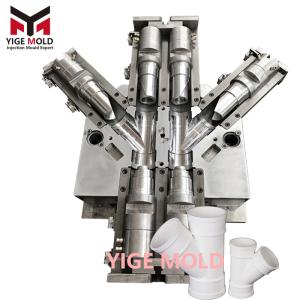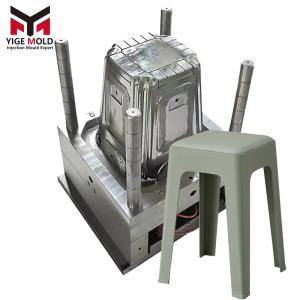
plastic rattan chair mold
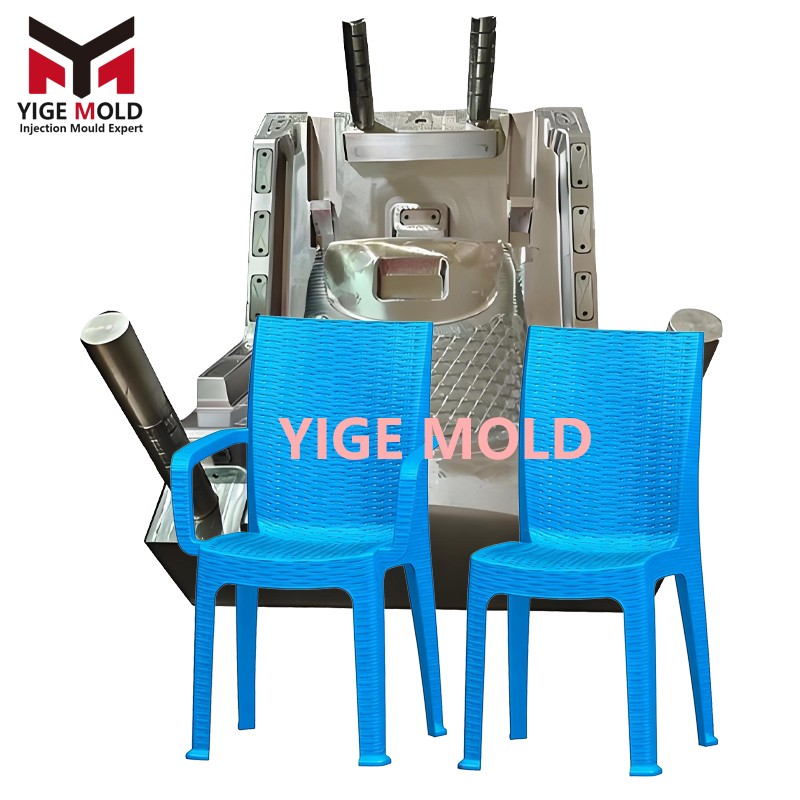
Plastic Rattan Chair Mold: The Industrial Art of Weaving Natural Aesthetics
Plastic rattan chairs, prized for their lightweight durability, resistance to moisture and decay, versatile designs, and ease of cleaning, have become essential in modern outdoor furniture, cafes, home balconies, and interior decor. They adeptly replicate the texture and appearance of natural rattan while overcoming its tendencies toward mildew and cracking. The foundation of this realistic visual appeal and robust performance lies in its source—the plastic rattan chair mold. This is not merely a production tool but a comprehensive engineering discipline that blends biomimetic design, polymer flow science, intricate mechanism design, and precision manufacturing.
Part 1: Product Characteristics and Mold Design Objectives
Understanding the mold requires a deep appreciation of its final product. A plastic rattan chair is typically composed of two primary elements:
-
Structural Frame Components: These form the primary load-bearing framework, including legs, armrests, and backrest supports. This section demands high strength and stiffness, often produced via thick-wall injection molding using materials like PP (polypropylene) or HDPE (high-density polyethylene).
-
Simulated Woven Components: This is the core of its aesthetic and functional identity, such as the woven seat, backrest, and side panels. It requires an exceptional imitation of natural rattan's rounded profile, organic texture, interlaced patterns, and balanced flexibility. Materials like PE (polyethylene) or modified PP are typically used, formed through thin-wall injection molding along complex paths.
Consequently, the design goals for plastic rattan chair molds are exceptionally demanding and multifaceted:
-
High-Fidelity Biomimicry: The mold cavity surface must be precisely textured to replicate the subtle ridges, grooves, and even natural imperfections of rattan strands.
-
Managing Complex Flow Paths: The plastic melt must travel through the mold along lengthy, curved, and interwoven channels that mimic continuous hand-woven strands, presenting significant challenges for uniform flow and packing.
-
Ensuring Uniform Thin Walls: To maintain flexibility and material efficiency, the simulated weave sections often have consistent wall thicknesses between 1.5-3mm. Any deviation can lead to warping or weak spots.
-
Enabling Damage-Free Ejection: The woven design incorporates numerous undercuts. The mold must separate from the delicate "strands" without causing tears or deformation, making ejection mechanism design the paramount challenge.
-
Achieving Flawless Surfaces: As a high-visibility consumer product, the final part must be free of visible flow lines, weld lines, and sink marks, demanding exceptional gating and cooling strategies.
Part 2: Analysis of the Mold's Systematic Architecture
The tooling for a plastic rattan chair is often a sophisticated system comprising several coordinated molds.
1. Mold Strategy and Configuration:
A multi-cavity or family mold system is standard. Due to fundamental differences in geometry, wall thickness, and material behavior, the structural frame and woven components are usually produced in separate, dedicated molds. A complete chair results from the output of several such molds, with the parts later assembled via mechanical snaps, screws, or welding. Some advanced designs attempt to combine frame and weave in a single shot, but this pushes the limits of mold and process engineering.
2. Core Challenge: Mold Architecture for Simulated Weave Components
This represents the technical pinnacle. The mold is an intricate assembly of multiple sliders, lifters, and interlocking inserts.
-
Parting and Core-Pulling Strategy: The interlocking weave pattern makes ejection along a single direction impossible. Designers decompose the cavity into dozens, sometimes hundreds, of individually moving inserts and sliders. During mold opening, these components move in a meticulously choreographed sequence—driven by angled pins, hydraulic cylinders, or cam blocks—along non-parallel paths to disengage from the complex weave without interference, a process known as "sequential" or "decomposition" ejection.
-
Creating Surface Texture: The authentic rattan texture on the cavity is achieved through:
-
Chemical Etching: The prevalent method. A textured pattern is photographically transferred to the polished mold steel and etched to a controlled depth, producing a random, naturalistic finish.
-
Laser/EDM Texturing: Used for more precise or geometric textures, or for modifying specific areas.
-
-
Advanced Gating Solutions: To maintain the visual continuity of the "woven" strands and eliminate visible knit lines, specialized gating is essential.
-
Hot Runner Systems: Virtually mandatory. They enable melt delivery to multiple, strategically hidden gate locations (e.g., on the part's non-visible side or at weave intersections), ensuring balanced filling of the long, narrow flow paths and minimizing aesthetic defects.
-
Automated Gates: Gates like pin-point or tunnel types cleanly separate from the part, leaving minimal witness marks.
-
3. Cooling System Engineering:
The intricate weave geometry severely complicates cooling channel placement. Non-uniform cooling is a primary cause of warpage. Solutions include:
-
Conformal Cooling: The state-of-the-art approach. Using metal additive manufacturing (3D printing), cooling channels that perfectly follow the contour of the weave can be built inside the mold core. This provides optimal, uniform cooling, dramatically improving quality and cycle time.
-
High-Efficiency Traditional Cooling: Where conformal cooling isn't used, a network of baffles, bubblers, and thermal pins is meticulously designed. High-conductivity materials like copper alloys are often embedded in hard-to-cool areas to act as heat bridges.
4. Venting for Quality:
The elongated, confined cavities trap air easily. A dense network of very shallow vents (0.01-0.02mm deep) is machined on parting lines and insert seams. Additional venting pins or porous metal inserts are placed in last-fill zones to prevent burns and incomplete filling.
Part 3: Materials, Fabrication, and Fine-Tuning
-
Mold Materials: Core components like cavities, cores, and sliders are made from pre-hardened or through-hardened tool steels with excellent polishability and wear resistance, such as Stavax (S136) or NAK80. Critical moving parts are often hardened and surface-treated for durability.
-
Manufacturing Processes:
-
Roughing and Semi-Finishing: High-speed CNC milling creates the primary shapes of the mold blocks.
-
Detail and Texture Machining: The complex rattan texture is typically applied via Photo Chemical Etching (PCE) or precision Electrical Discharge Machining (EDM) using machined copper or graphite electrodes.
-
Ultra-Precision Machining and Fitting: Sliders and inserts are finished using precision wire EDM and jig grinding to achieve fit tolerances within 0.005mm. Master mold makers perform meticulous hand-fitting to ensure all components move smoothly without producing flash on the part.
-
-
Process Commissioning: This phase brings the mold to life. Process engineers conduct extensive Design of Experiments (DOE), tuning injection parameters—especially multi-stage velocity and pressure profiles—to perfectly balance the flow of plastic through the intricate cavity. The goal is a complete fill with excellent surface replication and minimal stress. Simultaneously, the timing and stroke of every moving component in the ejection sequence are refined for flawless, automated cycling.
Part 4: Applications and Lasting Value
Products from these molds serve diverse markets:
-
Hospitality & Retail: Furniture for restaurant patios, hotel poolsides, cafe seating, and resort lounges.
-
Public & Institutional: Durable, low-maintenance seating for parks, public plazas, and educational campuses.
-
Residential: Stylish and practical furniture for patios, balconies, sunrooms, and indoor living spaces.
-
Specialty: Items like all-weather baby high chairs, pet furniture, and decorative accent pieces.
Conclusion: The plastic rattan chair mold stands as a testament to the fusion of artistic vision and manufacturing excellence. It translates the timeless, organic appeal of hand-woven rattan into a durable, mass-producible plastic form. Each chair is the product of a sophisticated metal system where hundreds of precisely machined components operate in harmonious, microscopic alignment. Beyond mere production, this technology serves as a crucial enabler, making sustainable, weather-resistant, and aesthetically pleasing furniture accessible on a global scale. The development of such a mold is a formidable engineering undertaking—a precise ballet of mechanics, thermodynamics, and material science executed within hardened steel. It represents one of the most demanding and rewarding specializations within the field of precision mold making.