Washing machine lid mold
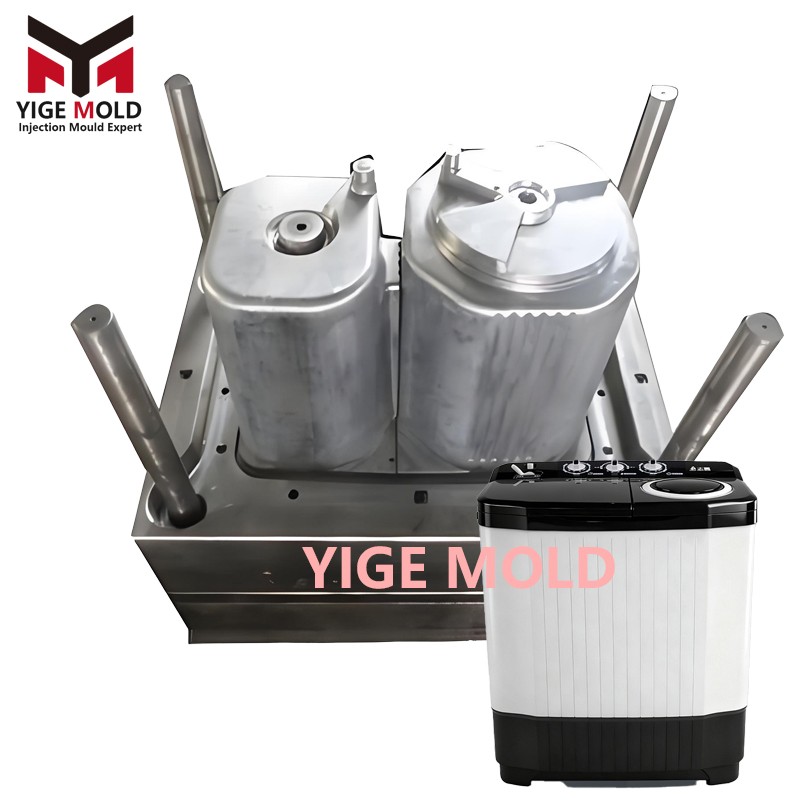
 Washing Machine Lid Mold: Precision Integration of Functional Aesthetics and Structural Engineering
I. Product Overview and Technical Positioning
The washing machine lid mold is a representative precision product mold in the home appliance mold field. Its manufacturing quality directly affects the overall aesthetics, usage safety, and long-term reliability of the washing machine. As a critical component of the washing machine, the lid not only serves protective and sealing functions but also acts as the primary user interface. Its design and manufacturing must balance multiple requirements including industrial design, structural mechanics, materials science, and ergonomics. Modern washing machine lid molds have evolved from simple protective cover production tools into high-precision manufacturing systems integrating multiple functions.
II. Key Technologies in Structural Design
1. Anti-Warpage Design for Large Thin-Walled Parts
Washing machine lids are typical large thin-walled parts (typically with a projected area of 0.3-0.8 m² and wall thickness of 2.5-3.5 mm). Warpage prevention is the primary design challenge:
-
Topology Optimization of Ribs: Finite element analysis software simulates rib layout. A radial rib network is arranged in main stress areas, with rib height-to-wall thickness ratio controlled between 2.5:1 and 3:1. Roots incorporate R1.5-R2.5 fillets to avoid stress concentration.
-
Pre-Deformation Compensation Technology: Mold flow analysis predicts shrinkage deformation. The mold design incorporates pre-set reverse compensation surfaces, with compensation amounts precisely calculated based on material shrinkage rate and flow direction, typically 0.3%-0.8%.
-
Multi-Point Balanced Ejection System: 16-24 evenly distributed ejector pins are set in the mold, with pin diameters of φ6-φ8 mm and spacing of 150-200 mm, ensuring uniform force distribution during ejection.
2. Precision Molding of Hinge Mounting System
The hinge area of the lid withstands cyclic loads from frequent opening/closing, requiring extremely high structural strength:
-
Metal Insert Molding Technology: Stainless steel or zinc alloy inserts are pre-placed at hinge mounting points. The mold requires a precision positioning system to ensure insert positional accuracy of ±0.05 mm.
-
Reinforced Rib Composite Structure: A three-level rib reinforcement system is designed around hinge mounting points: primary ribs at 80% of wall thickness, secondary ribs at 60%, and tertiary distribution ribs at 40%, forming a progressive load-bearing structure.
-
Stress Dispersion Design: A fan-shaped rib layout disperses concentrated stress over a larger area, keeping maximum stress below 30% of the material's yield strength.
3. Integrated Observation Window Design
Combining transparent observation windows with opaque lid bodies requires special processes:
-
Two-Shot Injection Mold: Using rotating cores or slider conversion technology, transparent PC/PMMA windows are molded first, followed by opaque lid bodies. The interface features a dovetail interlock structure of 0.3-0.5 mm.
-
Ultrasonic Welding Structure: Welding ribs are pre-formed on the mold, 0.8-1.0 mm high with a top width of 0.3-0.4 mm, ensuring welding strength and sealing.
-
Optical Quality Assurance: The observation window area of the mold surface requires A1-grade mirror polishing (Ra ≤ 0.012 μm), with isolation grooves around the perimeter to prevent contamination from flash.
III. Core Technologies in Mold Manufacturing
1. High-Precision Cavity Machining
-
Five-Axis Simultaneous Machining: Complex curved surfaces are machined using five-axis high-speed machining centers, achieving surface accuracy of ±0.03 mm and surface roughness of Ra 0.8 μm.
-
Precision EDM: Fine structures like rib slots and snaps are processed via precision Electrical Discharge Machining (EDM), with accuracy of ±0.01 mm and sidewall perpendicularity ≤0.02 mm/100 mm.
-
Collaborative Machining Datum: All machining processes use a unified datum coordinate system, with cumulative errors controlled within 0.05 mm.
2. Surface Treatment Technology
-
Optical-Grade Polishing: Appearance surfaces undergo an eight-stage progressive polishing process, from 800# sandpaper to 12,000# diamond paste, achieving a final surface roughness of Ra ≤ 0.02 μm.
-
Functional Textures: Non-appearance surfaces use VDI 18-25 spark erosion textures or fine etching, improving demolding and hiding shrinkage marks.
-
Wear-Resistant Enhancement: Moving components like sliders and lifters undergo nitriding treatment, achieving surface hardness of HV900-1000 and increasing service life 3-5 times.
3. Hot Runner System Design
Addressing the large area and thin-wall characteristics of washing machine lids:
-
Multi-Point Valve Gate Hot Runner: 8-12 point valve gate hot runner system, with gate diameters of φ1.2-1.5 mm, ensuring rapid and balanced filling.
-
Sequential Control System: PLC precisely controls the opening/closing timing of each valve gate, managing weld line position and flow balance.
-
Zoned Temperature Control: The hot runner is divided into 3-4 independent temperature control zones, with temperature control accuracy of ±1°C, adapting to filling requirements in different areas.
IV. Materials Engineering and Process Optimization
1. Material Selection and Application
-
ABS Material: Most common, offering good overall properties. Shrinkage rate 0.4%-0.7%. Mold temperature needs control at 50-70°C.
-
HIPS Material: Economical choice. Shrinkage rate 0.3%-0.6%. Good flowability but poorer heat resistance.
-
PP Material: Used for some low-cost models. Shrinkage rate 1.2%-1.8%. Requires enhanced cooling and packing pressure control.
-
PC/ABS Alloy: Used in high-end products. Shrinkage rate 0.5%-0.7%. Excellent heat resistance and impact strength.
2. Molding Process Window Optimization
-
Three-Stage Injection Speed Control: First stage slow speed to pass the gate, second stage high speed to fill the main body, third stage low speed to fill the end, avoiding jetting and air traps.
-
Gradient Packing Pressure Control: Four-stage packing with pressure gradually decreasing from 90% to 30%. Time adjusted based on wall thickness, typically 15-25 seconds.
-
Cooling Time Calculation: Based on the thickest wall section, typically wall thickness (mm) × coefficient (1.5-2.0), ensuring adequate cooling.
V. Quality Control System
1. Dimensional Accuracy Inspection
-
Full-Dimensional CMM Measurement: Measurement point spacing 50 mm. Key dimension tolerance ±0.15 mm, non-critical dimensions ±0.3 mm.
-
Geometric Tolerance Inspection: Flatness requirement ≤0.3 mm/1000 mm, profile tolerance ≤0.5 mm.
-
Assembly Function Testing: Simulating actual installation, inspecting hinge mounting hole position tolerance ±0.1 mm, snap-fit clearance 0.2-0.4 mm.
2. Performance Verification Testing
-
Fatigue Life Test: Simulating 50,000 open/close cycles, checking for no cracks or loosening in hinge areas.
-
Load Test: Applying 50 kg static load for 24 hours, deformation ≤1.0 mm.
-
Environmental Test: Temperature cycling between -10°C to 60°C for 20 cycles, dimensional change rate ≤0.2%.
-
Chemical Resistance Test: Contact with detergents, fabric softeners, etc., for 500 hours with no cracking or discoloration.
3. Production Stability Verification
-
Continuous Production Validation: 1000 consecutive cycles, dimensional stability CPK ≥1.33.
-
Material Switch Testing: Testing 2-3 different materials to verify mold adaptability.
-
Quick Mold Change Verification: Mold changeover time ≤30 minutes, including mounting/dismounting, alignment, and debugging.
VI. Production Efficiency Optimization
1. Rapid Molding Technology
-
Sequential Valve Control: Optimizing weld line position via valve timing control, reducing post-processing.
-
Variotherm Mold Temperature Technology: Using steam-assisted heating to quickly raise mold temperature from 30°C to 80°C, then cool to 40°C, shortening cycle time by 15%.
-
Automation Integration: Robotic automatic part removal, automatic inspection, automatic packing, single cycle time controlled within 45 seconds.
2. Maintenance-Friendly Design
-
Modular Structure: Designing wear-prone areas as replaceable modules, such as sprue bushings, sliders, ejector pins.
-
Standardized Components: Using standard-sized guide pins, guide bushes, and ejector pins for easier procurement and replacement.
-
Maintenance Access Design: Providing sufficient maintenance space in the mold design; key components can be replaced without disassembling the entire mold.
VII. Innovation Development Trends
1. Lightweight Design
-
Thin-Walling Technology: Through CAE optimization, reducing wall thickness from 3.0 mm to 2.2 mm, decreasing weight by 25%.
-
Microcellular Foaming Technology: Using physical blowing agents to further reduce weight by 15-20% while maintaining strength.
-
Composite Material Application: Developing long glass fiber reinforced plastics, increasing stiffness by 50% at equal thickness.
2. Functional Integration
-
Electronic Component Integration: Reserving installation structures and wiring channels for sensors, displays, and control buttons.
-
Antibacterial Function: Special mold surface treatment imparting antibacterial properties to the product surface.
-
Self-Cleaning Design: Microstructure surface design reducing stain adhesion and facilitating cleaning.
3. Sustainable Development
-
Recycled Material Compatibility: Optimizing mold design to accommodate 30-50% recycled material usage.
-
Energy-Efficient Design: Optimizing cooling systems to reduce energy consumption by 15-20%.
-
Long-Life Design: Extending mold life from 500,000 cycles to 800,000 cycles through material and structural optimization.
VIII. Cost Control and Value Analysis
1. Manufacturing Cost Optimization
-
Material Utilization: Improving material utilization from 85% to 92% through runner optimization and nesting improvements.
-
Energy Consumption Reduction: Efficient hot runner and cooling systems reduce energy consumption by 25%.
-
Maintenance Cost: Modular design reduces maintenance costs by 30% and downtime by 40%.
2. Product Value Enhancement
-
Appearance Quality: A-grade surfaces reduce subsequent painting processes, saving 15-20% in costs.
-
Assembly Accuracy: Precision mold-guaranteed dimensional accuracy reduces assembly adjustment time by 30%.
-
Brand Value: High-quality appearance and reliable performance enhance product grade and brand image.
The technological development of washing machine lid molds reflects the home appliance industry's continuous pursuit of high-quality appearance and reliable performance. Evolving from simple protective functions to today's complex products integrating aesthetics, human-machine interaction, and intelligent control, mold technology has played a crucial supporting role. In the future, with the application of new materials and processes, washing machine lid molds will continue to develop towards lightweight, intelligent, and environmentally friendly directions, providing a solid technical foundation for innovation in home appliance products. Mold manufacturers need to continuously deepen their understanding of material properties, structural design, and process optimization to maintain a leading technological position in the competitive market.