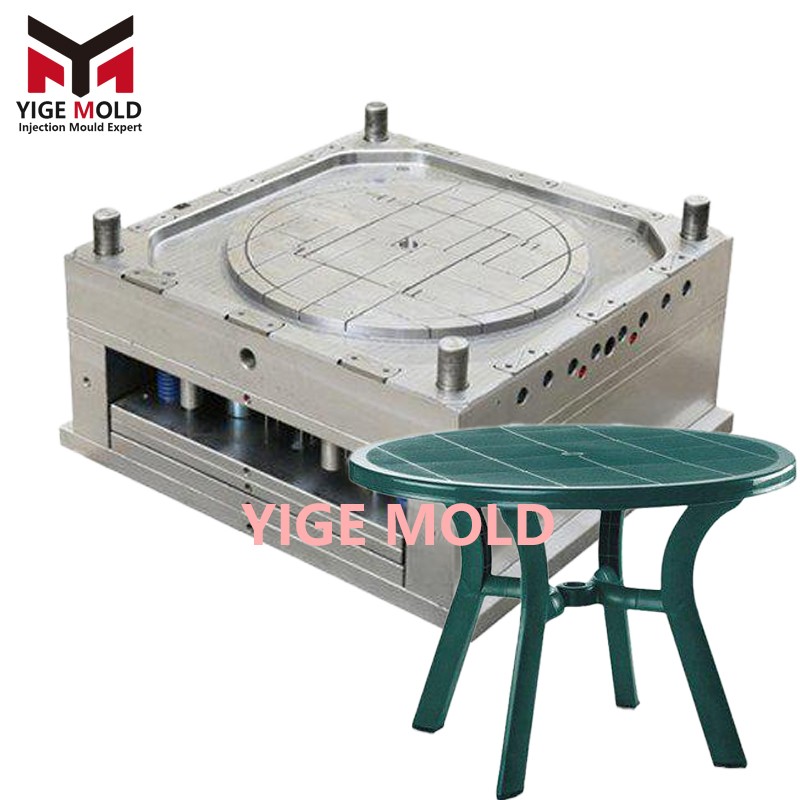
Patio Round Table Mold
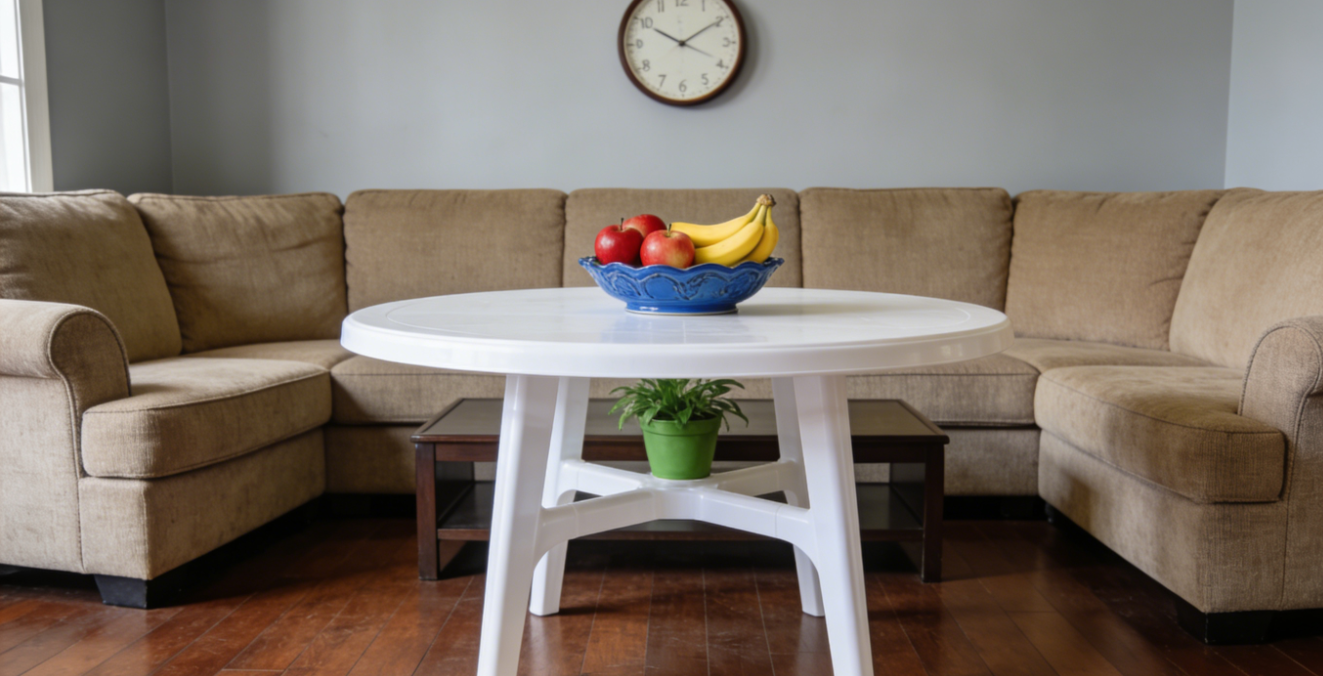 Comprehensive Technical Solution for Patio Round Table Molds
I. Product Positioning and Market Characteristics
1.1 Special Requirements for Patio Round Tables
Patio round table molds are specifically designed for outdoor leisure scenarios and must meet three core requirements: all-weather usability, multi-environment adaptability, and long-term durability. Compared to indoor tables, patio round tables require additional consideration for UV protection, temperature tolerance, rain erosion, and other outdoor environmental factors.
1.2 Target Product Features
-
Climate adaptability: Tolerates temperature range from -20℃ to 60℃
-
Anti-aging design: Continuous outdoor service life ≥5 years
-
Usage convenience: Transportable by one person, maximum weight ≤15kg
-
Easy maintenance: Cleanable with water rinse, no special maintenance required
II. Key Elements of Structural Design
2.1 Tabletop Structure Design
Anti-deformation Structure
-
Gradual wall thickness design: Edge thickness 8-10mm, central area thickness 4-5mm
-
Radial reinforcement ribs: 16-24 radial ribs, height 15-20mm
-
Circumferential reinforcement rings: 3-5 concentric rings, spacing 150-200mm
Drainage and Anti-pooling Design
-
Micro-slope design: Center-to-edge gradient 0.5-1°
-
Drainage grooves: 4-6 radial water channels, depth 2-3mm
-
Edge diversion: Peripheral drainage ledge prevents water backflow
2.2 Support Structure Optimization
Table Leg Connection System
-
Three-leg support structure: Forms stable triangular support
-
Reinforced connection plate: Diameter 200-250mm, thickness 6-8mm
-
Anti-loosening design: Self-locking tapered connection, pull-out force ≥500N
Ground Adaptability
-
Height-adjustable feet: Adjustment range ±10mm
-
Anti-slip bottom design: Rubber pad inserts or anti-slip texture
-
Uneven ground compensation: Three-point independent leveling system
2.3 Functional Integration Design
Umbrella Hole Integration
-
Standard umbrella hole size: Diameter 32mm or 38mm
-
Reinforcement ring structure: Wall thickness increased to 6-8mm
-
Drainage design: Sloped drainage at umbrella hole bottom
Cup Holder Configuration
-
Embedded cup holders: Diameter 75-85mm, depth 40-50mm
-
Anti-tip design: Bottom anti-slip texture
-
Quick drainage: Micro-holes at bottom
III. Material and Process Solutions
3.1 Specialized Material Selection
Outdoor-specific Plastics
-
UV-resistant polypropylene: UV stabilizer content ≥1.5%
-
Weather-resistant polyethylene: Carbon black content 2-2.5%
-
Reinforced composite materials: Glass fiber content 15-20%
Material Performance Requirements
-
Impact strength: IZOD notched impact ≥8kJ/m²
-
Weather resistance: QUV aging test 2000 hours, ΔE≤3
-
Temperature tolerance: No cracking at -30℃ low-temperature impact
3.2 Mold Steel Configuration
Core Component Material Selection
-
Core and cavity: 1.2738HH pre-hardened steel, hardness HRC 38-42
-
Moving parts: 1.2344ESR premium hot-work steel, hardness HRC 48-52
-
Wear-resistant parts: Powder metallurgy high-speed steel, hardness HRC 60-62
Surface Treatment Processes
-
Mirror polishing: Tabletop area polished to #6000 grit
-
Wear-resistant coating: TiCN coating on moving parts, thickness 3-5μm
-
Corrosion protection: Nickel plating on cooling water channels
IV. Molding Process Control
4.1 Injection Parameter Optimization
Temperature Control Solution
-
Melt temperature: 210-230℃ (for UV-resistant materials)
-
Mold temperature: 50-70℃ (promotes crystallization)
-
Hot runner temperature: 220-240℃, zoned independent control
Pressure Control Strategy
-
Injection pressure: 80-110MPa, multi-stage control
-
Holding pressure: 50-70MPa, duration 15-25 seconds
-
Back pressure: 8-12MPa, ensures plasticization quality
4.2 Dimensional Stability Assurance
Shrinkage Control
-
Flow direction shrinkage: 1.8-2.2%
-
Transverse direction shrinkage: 1.5-1.8%
-
Post-shrinkage compensation: Mold temperature control ±2℃
Deformation Prevention
-
Symmetrical cooling layout: Inlet-outlet water temperature difference ≤3℃
-
Holding pressure curve optimization: 6-stage pressure reduction
-
Post-demolding shaping: Special shaping rack cooling
V. Mold Manufacturing Precision
5.1 Precision Machining Requirements
Large Flat Surface Machining
-
Five-axis simultaneous machining: Flatness ≤0.1mm/1000mm
-
Constant temperature machining environment: Temperature control 22±1℃
-
Online measurement compensation: Real-time laser tracker correction
Surface Machining Precision
-
Tabletop surface: Contour accuracy ±0.05mm
-
Reinforcement ribs: Position accuracy ±0.03mm
-
Assembly structure: Fit clearance 0.1-0.2mm
5.2 Assembly and Debugging Standards
Fit Precision Control
-
Slide fit: Clearance 0.02-0.04mm
-
Ejection system: Smooth operation without sticking
-
Guide pillar/bushing: Fit clearance 0.008-0.012mm
Function Verification Testing
-
Opening/closing test: 1000 continuous cycles
-
Pressure test: 120% overload injection pressure test
-
Temperature test: 72-hour continuous mold temperature stability test
VI. Quality Control System
6.1 Production Process Control
Real-time Monitoring Parameters
-
Mold cavity pressure: 32-point pressure sensor monitoring
-
Temperature distribution: 16-point thermocouple temperature monitoring
-
Injection curve: Cycle-by-cycle curve comparison analysis
Online Inspection Items
-
Dimensional inspection: Laser scanning of critical dimensions
-
Weight control: Weighing per cycle, deviation ≤±0.8%
-
Appearance inspection: Automatic vision inspection system
6.2 Finished Product Performance Testing
Mechanical Performance Testing
-
Load test: 100kg center load, deformation ≤3mm
-
Stability test: No tipping at 15° inclination
-
Fatigue test: 10,000 usage cycle simulation
Environmental Adaptability
-
Temperature cycling: -20℃ to 50℃ cycle testing
-
UV aging: 2000-hour QUV testing
-
Rain erosion: Continuous spray testing for 72 hours
VII. Production Efficiency Optimization
7.1 Rapid Molding Design
Cooling System Optimization
-
Conformal cooling channels: Cooling efficiency improved by 40%
-
Zoned temperature control: Independent temperature control for tabletop and support structure
-
Rapid thermal cycling: Molding cycle shortened by 25%
Automation Integration
-
Robotic automatic part removal: Special fixtures with flipping function
-
Automatic gate separation: Submarine gate automatic cutting
-
Online labeling system: Automatic outdoor use label application
7.2 Mold Maintenance Strategy
Preventive Maintenance
-
Critical dimension monitoring: Weekly CMM inspection
-
Lubrication system management: Automatic lubrication, timed replenishment
-
Cooling channel cleaning: Monthly pulse cleaning
Rapid Repair Solutions
-
Modular design: Damaged parts replaceable within 4 hours
-
Standardized spare parts: Common parts kept in stock
-
Remote support: AR technology guides on-site repairs
VIII. Application Scenario Adaptation
8.1 Different Patio Types
Home Patios
-
Size range: Diameter 90-120cm
-
Matching design: Compatible with 4-6 patio chairs
-
Style options: Modern minimalist, rustic, Mediterranean
Commercial Patios
-
Size specifications: Diameter 120-150cm
-
Durability requirements: 8-10 hours daily usage
-
Maintenance standards: Professional weekly cleaning
8.2 Climate Zone Adaptation
Temperate Regions
-
Material selection: Standard UV-resistant materials
-
Temperature range: -15℃ to 45℃
-
Special requirements: Anti-freeze cracking design
Tropical Regions
-
Material upgrade: Enhanced UV-resistant materials
-
Drainage reinforcement: Strengthened drainage design
-
Anti-mold treatment: Mold inhibitor addition
Conclusion
The design and manufacturing of patio round table molds require comprehensive consideration of the special requirements of outdoor environments and practical user needs. Through scientific material selection, precise structural design, strict process control, and comprehensive quality assurance, patio round table products can be produced that are both aesthetically pleasing, practical, and durable. Professional mold solutions not only ensure product quality but also reduce manufacturing costs through production optimization, creating greater market value for customers.