PVC coupler mold
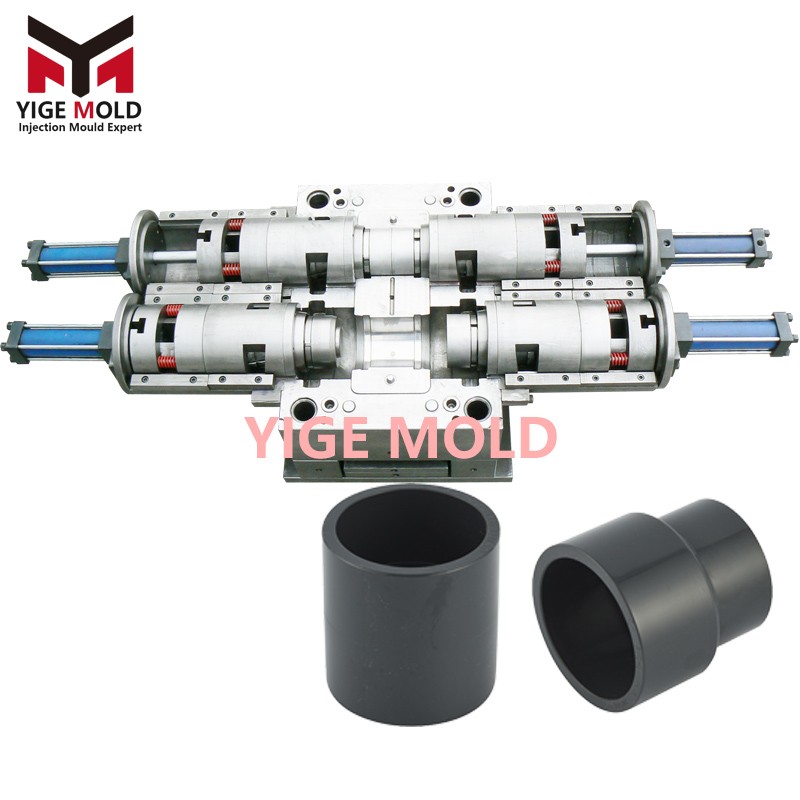
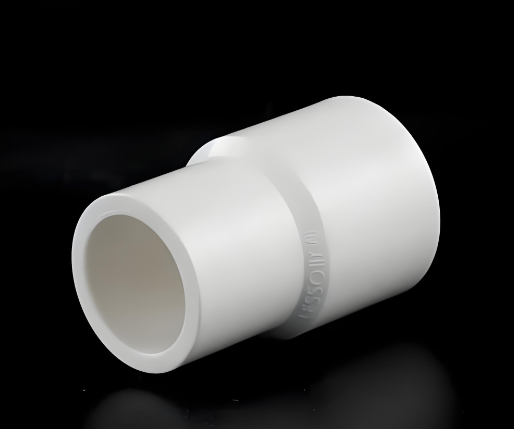 PVC Coupling Mold: The Precision Foundation for Building Fluid-Tight Connections
In modern building water supply and drainage systems and industrial pipeline engineering, PVC couplings, as the most basic pipeline connection components, bear the core function of ensuring system sealing integrity. The internal quality and performance of these seemingly simple fittings are entirely dependent on the precision of the core equipment used in their manufacturing process—the PVC coupling mold. As an important component in the professional mold manufacturing field, the design and production of such molds integrate comprehensive technologies from polymer materials science, fluid mechanics, and precision mechanical engineering.
I. Structural Characteristics and Technical Challenge Analysis
Although PVC couplings have relatively simple geometric forms, their functional requirements present clear engineering challenges for mold design:
-
Precision Geometric Fit Requirements
As connection nodes in pipeline systems, couplings must ensure precise fitting of the socket and spigot. Mold design must strictly control key dimensions, including the cylindricity, coaxiality, and mating taper of the socket inner diameter and spigot outer diameter, ensuring the final product achieves a tight mechanical fit and provides ideal foundational conditions for subsequent bonding or sealing.
-
Long-Term Service Stability Requirements
Under continuous internal pressure and external environmental factors, couplings need to maintain long-term dimensional stability and structural integrity. Mold design must consider the characteristics of PVC material, ensuring products do not experience creep deformation during use and maintain lasting seal integrity through rational structural design.
-
Economic Balance for Mass Production
As one of the most widely used standard components in pipeline systems, couplings must achieve high-efficiency, low-cost mass production. This requires mold design to achieve an optimal balance between multi-cavity layout, molding cycle, and material utilization, while ensuring consistency and stability of products from all cavities.
II. Technical Implementation Path for Precision Manufacturing
A mold capable of consistently producing high-quality PVC couplings demonstrates its engineering value across multiple technical levels:
-
Dimensional Accuracy Assurance System
-
Cavity Precision Forming Technology: Uses CNC machining centers to complete precision machining of cavities, ensuring geometric accuracy of sockets and spigots. Key molding surfaces undergo fine grinding and polishing to meet specified surface finish requirements.
-
Temperature Compensation Design Method: Based on the shrinkage characteristics of PVC material and variations in mold operating temperature, precise dimensional compensation calculations are performed during the design phase to ensure finished product dimensions fully comply with standard specifications under normal temperature conditions.
-
-
Efficient Production Solutions
-
Flow Control System Optimization: Ensures the melt can uniformly and synchronously fill all cavities through balanced runner layout and reasonable gate design. End-feed gates are typically employed, facilitating post-processing without affecting product functionality.
-
Temperature Management Strategy: Designs reasonable cooling channel layouts according to the structural characteristics of couplings, achieving uniform and efficient heat dissipation control, effectively shortening the molding cycle, and reducing product internal stress.
-
-
Long-Term Operation Assurance Mechanism
-
Wear-Resistant Structure Design: Uses wear-resistant materials or surface treatment processes in critical molding areas to enhance mold service life. Especially in socket molding areas, sufficient hardness is required to resist long-term production wear.
-
Venting and Ejection Systems: Designs effective venting structures and reliable ejection mechanisms to ensure gas is smoothly expelled from the cavity during production and products can be demolded stably without deformation.
-
III. Influence Mechanism of Mold Performance on Product Quality
The technical level of the mold directly determines the final performance of PVC couplings:
-
Correlation Between Geometric Accuracy and Sealing Performance
The dimensional accuracy and surface quality of the socket-spigot mating surfaces on couplings formed by the mold directly affect the sealing effectiveness at the connection point. Precise dimensional fits provide ideal filling space for sealing materials, while good surface conditions facilitate the formation of a uniform bonding interface.
-
Structural Integrity and Long-Term Reliability
The uniform wall thickness and material denseness obtained through mold optimization ensure couplings possess balanced structural strength. This enables the products to withstand pressure fluctuations and external loads within the pipeline system, guaranteeing safety and reliability during long-term use.
-
Production Efficiency and Economic Benefits
Optimized mold design can significantly improve production efficiency and material utilization. Reasonable multi-cavity layouts and fast molding cycles directly reduce the per-unit production cost, providing economic feasibility for large-scale applications.
IV. Value Manifestation of Professional Technical Services
Professional mold manufacturing services can provide comprehensive technical support for PVC coupling production:
-
Systematic Process Validation: Determines the optimal combination of injection parameters through systematic trial molding and process debugging, ensuring the mold achieves expected performance under mass production conditions.
-
Full-Cycle Technical Services: Provides comprehensive technical support throughout the entire process from mold design and manufacturing to usage maintenance, including operator training, daily maintenance guidance, and troubleshooting services.
-
Continuous Technical Improvement: Offers professional suggestions for mold optimization and improvement based on accumulated experience from production practice and technological advancements, continuously enhancing production efficiency and product quality.
V. Quality Control and Standardization Management
A完善的 quality control system is the fundamental guarantee for ensuring mold performance:
-
Full-Process Quality Control: Establishes strict quality control standards for every stage from design review, material selection, and processing manufacturing to final debugging.
-
Standardized Operating Procedures: Develops standardized mold manufacturing process flows and quality inspection criteria to ensure quality consistency across different mold batches.
-
Technical Documentation Integrity: Maintains complete mold technical files, including design drawings, machining records, debugging reports, and usage instructions, providing comprehensive technical support for subsequent use and maintenance.