Imitation rattan chair mold
 Imitation Rattan Chair Mold: A Molding Solution for Natural Texture and Functional Structure
I. Product Definition and Application Scenarios
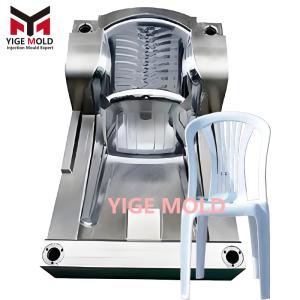
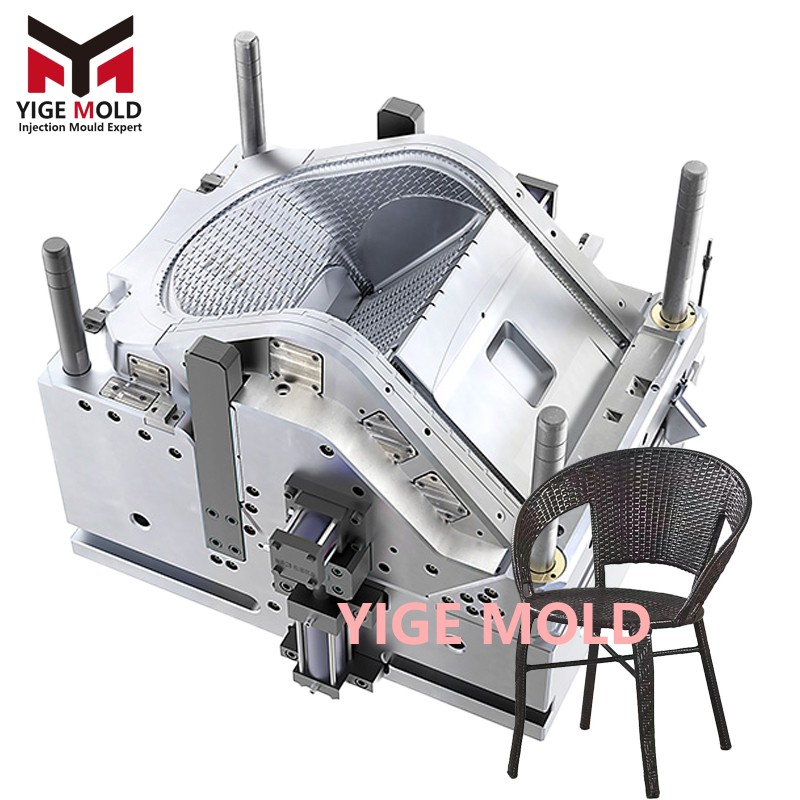
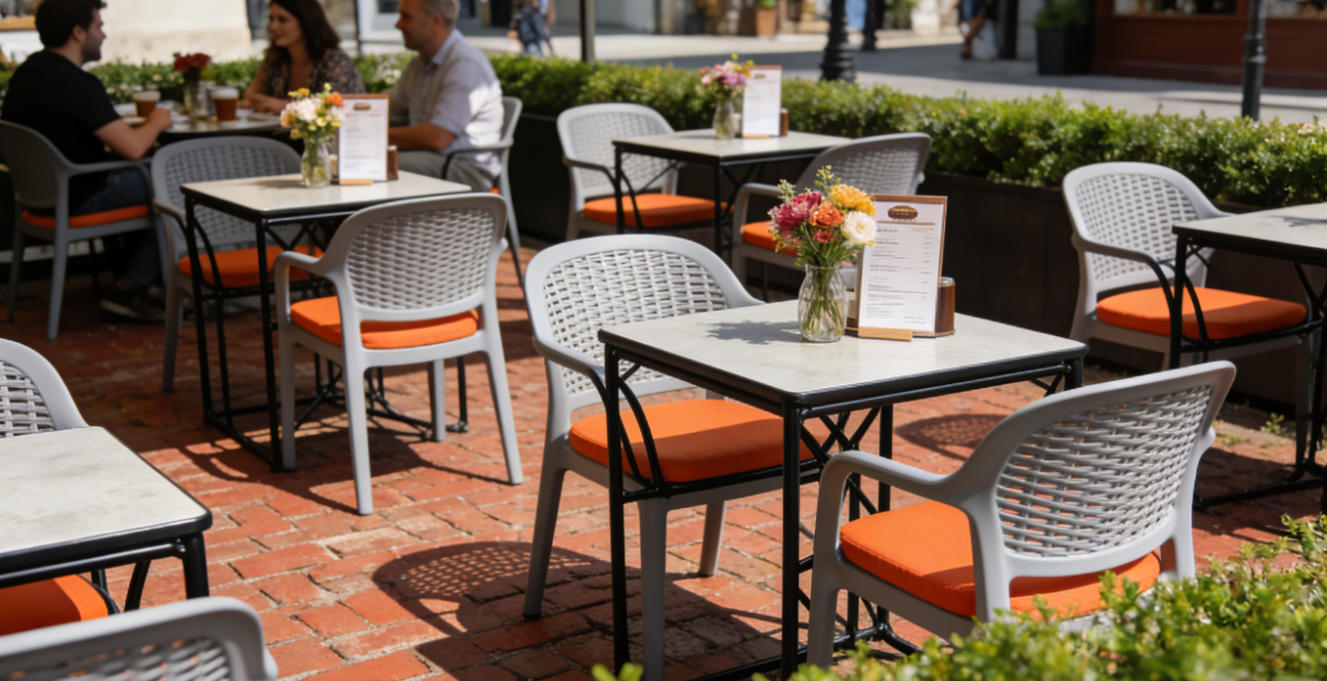
The imitation rattan chair mold is specialized molding equipment used to produce plastic chairs that exhibit the appearance of natural rattan. The core function of this type of mold is to precisely replicate the visual texture and woven structure of rattan products within an industrial manufacturing environment, while also endowing the products with the durability, ease of cleaning, and weather resistance characteristic of plastic materials. The finished products are widely used in outdoor courtyards, balconies, restaurant patio areas, commercial atriums, and other settings, balancing decorative aesthetics with practical needs.
Typical product features the mold must handle include complex curved chair bodies, imitation hand-woven textures, breathable openwork structures, and internal frameworks ensuring sufficient load-bearing strength. These requirements necessitate that mold design comprehensively considers aesthetic presentation and structural engineering, meeting basic seating ergonomic standards while replicating natural beauty.
II. Core Systems of Mold Construction
Surface Treatment and Texture Creation
The texture on the mold cavity surface is key to achieving the imitation rattan effect. Chemical etching is commonly used to form a rattan grain pattern 0.2-0.5 mm deep on the pre-treated mold steel surface. High-precision film or digital mask technology is required before etching to ensure texture continuity and a natural feel. For areas with strong three-dimensional effects like weave intersections, precision engraving or laser processing may be supplemented. The treated surface requires appropriate polishing to control the gloss of the molded plastic and ensure smooth demolding.
Structural Molding and Core-Pulling Design
The openwork woven structure of imitation rattan chairs requires the mold to have multi-directional moving components. Typically, multiple sliders are needed to form the weaving strips in different directions. The movement direction, stroke, and locking force of these sliders must be precisely calculated to ensure they do not shift under high injection pressure and can smoothly release the product's undercuts. These sliders can be driven by angled leader pins, hydraulic cylinders, or dog-leg pins, with sufficient space reserved for maintenance and lubrication during design.
Gating and Venting System Layout
Due to the complex structure and long flow paths, gates typically use a multi-point hot runner design to ensure plastic simultaneously and uniformly fills all slender woven structures, avoiding weld lines on appearance surfaces or stress areas. Venting is crucial; venting slots or porous inserts must be placed at each melt flow end, slider seam, and deep within the cavity to prevent trapped air from causing burns or short shots. Venting slot depth is typically 0.02-0.04 mm.
Temperature Control Scheme
The product's thin-walled woven structure and potential thick-walled support frames pose challenges for uniform cooling. Cooling channels require differentiated design for areas of varying wall thickness: denser channels in intricate weave areas, and possibly water wells, baffles, or beryllium copper inserts in thick chair legs or frames to enhance cooling. The goal is to achieve consistent temperature across all mold areas, reducing internal stress and warpage caused by uneven cooling.
III. Material and Process Compatibility
Selection of Mold Steels
Cavities and cores primarily use pre-hardened mold steels with good wear resistance and polishability, such as common P20, 718, or NAK80. For areas with complex textures requiring fine etching, steels with superior mirror finish can be selected. Moving parts like sliders and lifters use harder, more wear-resistant steels like H13, with surface nitriding treatment.
Characteristics of Plastic Materials
The most common base materials are weather-resistant High-Density Polyethylene (HDPE) or Polypropylene (PP). These materials need good flowability to fill complex textures and long, narrow runners, while possessing sufficient toughness to withstand impacts during use. Raw materials typically require additives like UV stabilizers, antioxidants, and colorants to ensure long-term outdoor use without fading or embrittlement.
Key Points of Molding Process Parameters
Injection speed is usually set at medium to low to prevent the melt from breaking through thin structures or causing jetting. Injection pressure must be sufficient to ensure solid end-of-fill. Packing pressure and time settings are crucial for minimizing shrinkage and controlling dimensions. Mold temperature should be controlled within the material's recommended range; too low may affect texture replication and flow, while too high extends cycle time and may cause sticking.
IV. Key Points of Quality Inspection
Appearance Quality Assessment
Inspect product surface texture for clarity, completeness, and uniformity under standard lighting. Check for obvious weld lines, sink marks, flow marks, short shots, or flash. Color should be checked against a standard swatch for consistency. Woven structure lines should be smooth, without breaks or deformation.
Dimensional and Structural Verification
Use gauges or Coordinate Measuring Machines (CMM) to inspect critical mounting dimensions, overall profile dimensions, and wall thickness. Check chair symmetry and balance to ensure all four legs sit steadily. Sample measure gaps and thicknesses of the woven structure.
Function and Strength Testing
Perform load testing by applying a specified static weight to the seat and checking the deformation against allowable limits. Perform stability tests, such as front/rear tilt and side tilt, to ensure the chair is not prone to tipping. Drop or impact testing can be conducted to verify toughness.
V. Mold Maintenance and Care
Daily Production Maintenance
After each shift or daily production, clean the mold parting line, venting slots, and debris from within sliders. Inspect and lubricate all moving parts like guide pillars, bushes, and sliders. Confirm cooling channels are clear. Check and tighten any loose screws.
Periodic Maintenance Schedule
Perform in-depth maintenance regularly based on production cycles. This includes disassembling major moving parts like sliders and ejector pins, thoroughly cleaning and inspecting for wear, and replacing seals and other consumables. Inspect and polish cavity surfaces to remove accumulated stains or light rust. Check the heating elements and thermocouples of the hot runner system.
Usage and Storage Specifications
Operators should be trained to follow procedures, avoiding mold damage from improper setup or operation. Use specialized tools for mold transport and hoisting to prevent impacts. For long-term storage, molds should be thoroughly cleaned, rust-proofed, coated with protective oil, and stored in a dry environment.
VI. Control of the Production Process
Process Stability Monitoring
During mass production, monitor and record key process parameters like injection pressure, speed, and temperature at various stages. Use Statistical Process Control (SPC) methods to observe trends in critical product dimensions, providing early warning of potential issues. Regularly weighing product weight is a simple and effective way to monitor filling stability.
Defect Analysis and Handling
Establish a process for analyzing and resolving common defects (e.g., short shots, sink marks, flow marks, warpage). Defects may be related to raw material, mold condition, process parameters, or the injection molding machine, requiring systematic troubleshooting and corrective actions.
Environmental and Safety Management
The injection molding workshop should maintain good ventilation and control temperature and humidity within reasonable ranges. The area around molds should be kept tidy to prevent tripping or slipping hazards. When handling molds or performing maintenance, safety procedures like Lockout-Tagout (LOTO) must be followed to ensure personnel safety.
VII. Application and Market Adaptability
Mold design must consider the end-use environment of the product. Chairs for outdoor use have higher requirements for material weather resistance and structural rust prevention. Chairs for commercial venues (like cafes) place greater emphasis on aesthetics and load-bearing capacity. To cater to aesthetic preferences in different regional markets, texture styles, color choices, and chair shapes require corresponding adjustments. An excellent mold design should possess a degree of flexibility, allowing for adaptation to minor product variations by changing inserts or adjusting processes, thereby extending the mold's lifecycle and value.