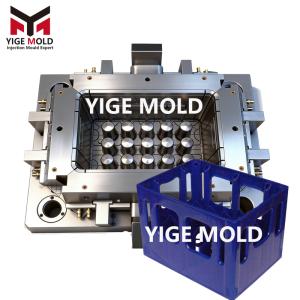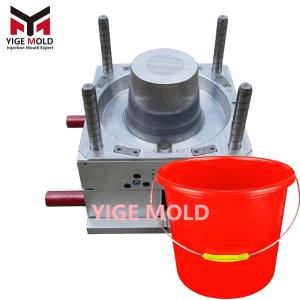
Bucket and Handle Assembly Mold
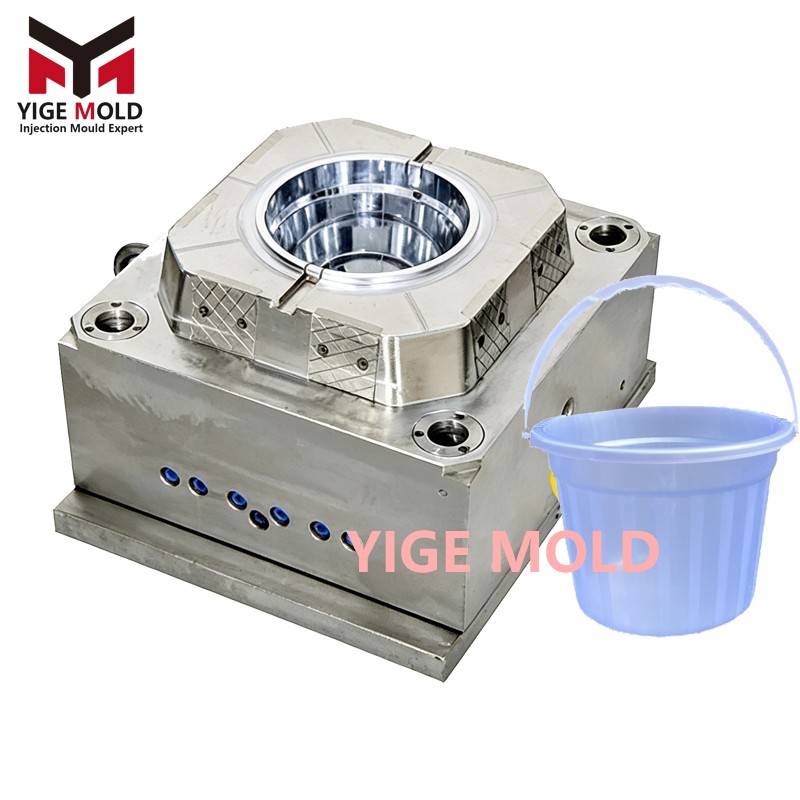
 Introduction to Bucket and Handle Assembly Molds
In the modern plastics industry, the design and manufacturing of container products, such as various buckets, constantly pursue the optimal balance between functionality, cost, and production efficiency. Among these, bucket and handle assembly molds represent a classic, flexible, and highly specialized approach to split-component manufacturing. It is not a single mold but rather a systematic solution focused on independently producing the two core components—the bucket body and the handle—and subsequently assembling them into the final product through a follow-up process.
I. Core Definition and Design Philosophy
The bucket and handle assembly mold essentially consists of two (or more) independent yet functionally related injection molds.
-
Bucket Body Mold: Responsible for forming the main structure of the bucket, including the walls, base, possible reinforcing ribs, stacking slots, spouts, etc. Its design focuses on ensuring volumetric accuracy, uniform wall thickness, structural strength (drop resistance, compression resistance), and smooth demolding.
-
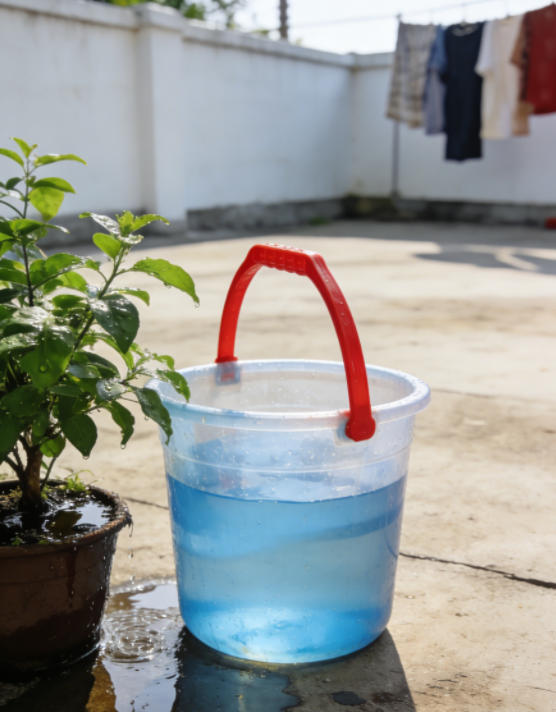
Handle Mold: Specifically used to manufacture the independent handle component. Handle designs vary widely, from simple arched rigid handles to complex engineered handles with moving hinges, ergonomic grips, or built-in locking mechanisms. The core of this mold's design lies in ensuring the handle's mechanical performance (e.g., load-bearing capacity, fatigue resistance), precise connection interfaces with the bucket body, and excellent surface feel.
Design Philosophy: Its core concept is "functional decomposition and specialized manufacturing." It breaks down the complex functionality of a product into two relatively independent sub-components, allowing each to be optimized with the most suitable materials, processes, and mold structures. These are then assembled physically or mechanically to achieve a final product performance where "1+1 > 2."
II. Mold Structure and Technical Key Points
1. Technical Key Points for the Bucket Body Mold:
-
Structural Design: Typically a large-cavity injection mold. The emphasis is on optimizing the cooling system (e.g., conformal cooling channels) to shorten cycle times and prevent warping; the ejection system must cleverly handle deep-cavity demolding and the demolding of internal structures like ribs.
-
Gating System: Given the large projected area of the bucket body, multi-point hot runner gating is often used to ensure balanced melt flow, reduce weld lines, and save material.
-
Surface Treatment: Depending on product requirements, the outer wall may require texturing (e.g., orange peel, fine grain) for enhanced aesthetics and scratch resistance, while the inner wall may need high-gloss polishing for easier cleaning.
2. Technical Key Points for the Handle Mold:
-
High Precision and Durability: Handles, especially those with moving parts, demand extremely high dimensional accuracy and mold lifespan. Critical areas like connecting snaps, shaft holes, etc., require very high machining precision in the mold (typically within ±0.02mm).
-
Complex Ejection Mechanisms: Moving handles often involve complex sliders and lifters to enable the demolding of undercut features. Mold steel in these moving areas requires high-wear-resistant materials (e.g., carbide inserts).
-
Multi-Material Molding Capability: Some high-end handles use two-shot molding, such as overmolding a soft elastomer (TPE/TPU) onto a rigid plastic substrate for a comfortable grip. This demands complex mold structures capable of two-shot or co-injection molding.
3. Collaborative Design of Assembly Interfaces:
This is the crucial element for the success of the bucket and handle assembly mold. The two sets of molds must be precisely coordinated from the initial design phase:
-
Locating Interfaces: Design precise slots, bearing blocks, or mounting posts on the bucket body mold, and perfectly matching hooks, pivots, or mounting holes on the handle mold.
-
Tolerance Matching: The dimensional tolerances of both interfaces must be strictly calculated and controlled to ensure assembly is neither too tight (causing difficulty or stress cracking) nor too loose (causing handle wobble or detachment).
-
Stress Consideration: The design must simulate the force exerted by the handle on the bucket connection points under load and accordingly reinforce the structure at those connection areas on the bucket body.
III. Core Advantages and Application Scenarios
Core Advantages:
-
Great Flexibility in Material Selection: The bucket body can use low-cost, high-rigidity general-purpose plastics (e.g., PP, HDPE), while the handle can independently use specialized engineering plastics with high toughness, fatigue resistance, or a soft touch (e.g., PA, POM, TPE). This is a key advantage unattainable with integral molds.
-
Ultimate Optimization of Function and Performance: As an independent component, the handle can focus entirely on ergonomics, load testing, and durability design without compromise for the bucket body's molding process. For example, it enables the creation of metal-reinforced overmolded handles or spring-loaded self-retracting handles.
-
Flexibility in Production and Maintenance:
-
Production: The bucket body and handle can be produced simultaneously on injection molding machines of different tonnages and locations, maximizing capacity utilization.
-
Mold Maintenance and Updates: Repairing or upgrading the mold for a single component (e.g., a handle redesign) does not affect the production of the bucket body mold, reducing overall downtime risk and iteration costs.
-
-
Cost Control: For high-volume production, the total cost and technical risk of manufacturing multiple relatively simple single-component molds may be lower than that of one extremely complex, large integral mold containing moving handle mechanisms.
-
Repairability: If the handle is damaged in the final product, it can be replaced independently, extending the product's overall lifespan and aligning with sustainable design principles.
Typical Application Scenarios:
-
High-End Household and Commercial Cleaning Buckets: Handles require comfortable grip and long-term durability, often employing two-shot soft-touch or reinforced structures.
-
Industrial and Chemical Containers: The bucket body needs corrosion resistance, while the handle requires high structural strength and safety, demanding different materials.
-
Food-Grade Buckets: The bucket body must meet food contact standards, while the handle may have separate hygiene or ergonomic requirements.
-
Buckets with Complex Moving Mechanisms: Such as foldable handles, rotating handles, or handles with locking seals. These functionalities are best realized through split-component design and assembly.
IV. Comparison with Integral Handle Molds
-
Bucket and Handle Assembly Mold (Split-Type):
-
Advantages: Freedom in material combination, independent performance optimization of components, relatively simplified molds, flexible production, ease of repair and part replacement.
-
Disadvantages: Adds an assembly step and cost; the structural strength at the connection point may theoretically be lower than perfect integral molding; potential for part loss.
-
-
Integral Handle Mold:
-
Advantages: Seamless product connection, strong sense of integrity, high structural strength, saves subsequent assembly costs.
-
Disadvantages: Extremely high demands on mold design and manufacturing (especially for moving hinges), limited material selection (must balance all properties of bucket body and handle), complex, costly molds with high maintenance risk, and local damage may render the entire product unusable.
-
V. Conclusion
The bucket and handle assembly mold is by no means a simple alternative but a strategic manufacturing choice based on systems thinking, pursuing the optimal balance of function and efficiency. It represents a mature model of high specialization and collaboration within the plastic mold industry. For bucket products requiring differentiated material properties, complex handle functionalities, cost-effective mass production, or easy maintenance, the split-component assembly solution and its supporting molds provide irreplaceable engineering value. The choice between split-type and integral type ultimately depends on product positioning, cost structure, performance requirements, and deep considerations of the supply chain. The bucket and handle assembly mold, with its exceptional flexibility and professionalism, consistently holds a crucial position in the field of container manufacturing.