Plastic Poultry Crate Mold
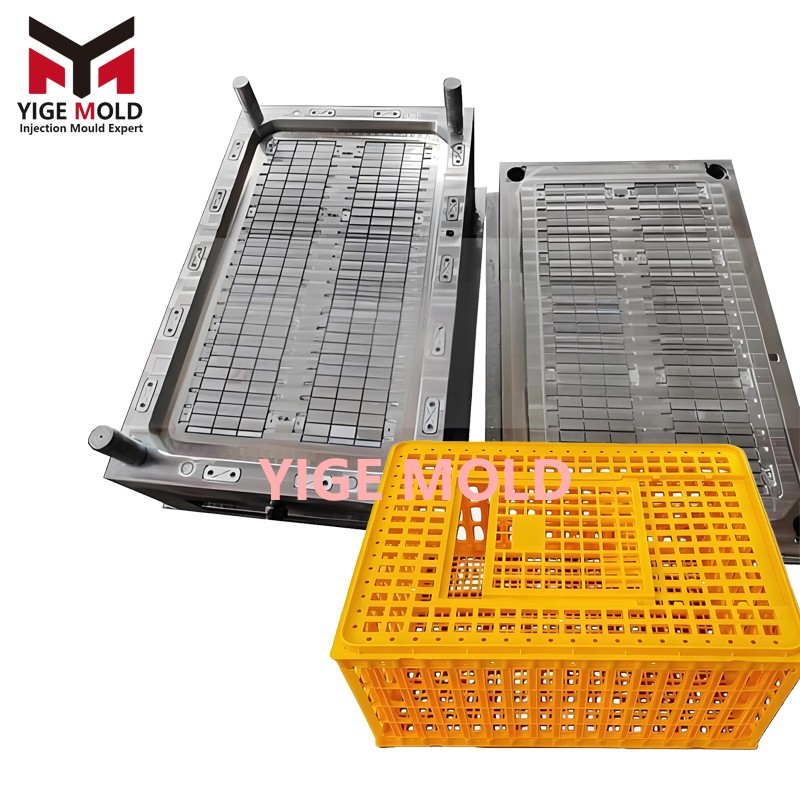
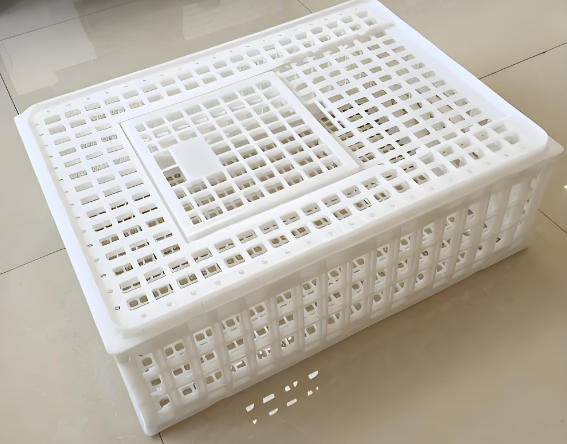
The Mold for Plastic Poultry Transport Crates: The Core Cornerstone of Efficient Operations in the Breeding Logistics
As the modern breeding industry accelerates towards large-scale and intensive development, poultry transportation serves as a critical link connecting breeding production with market circulation. Its efficiency, safety, and cost control directly determine the operational effectiveness of the entire industry chain. With outstanding advantages such as being lightweight and durable, easy to clean and disinfect, and cost-controllable, plastic poultry transport crates have gradually replaced traditional wooden and metal containers, becoming the mainstream choice for breeding transportation. As the core carrier for the large-scale production of this essential transport equipment, the technical level, manufacturing precision, and adaptability of the plastic poultry transport crate mold not only determine the quality and performance of the transport crate but also deeply influence the standardized and efficient development of breeding logistics, making it a vital cornerstone supporting the upgrading of the breeding industry.
I. Core Value: Molds Drive the Standardized Transformation of Breeding Logistics
The core mission of the plastic poultry transport crate mold is to transform plastic raw materials into standardized containers that meet the requirements of breeding transportation through precise molding processes, fundamentally addressing many pain points of traditional transportation methods and building an underlying framework for the efficient operation of breeding logistics. From the perspective of industrial logic, the mold is the core link connecting raw material supply, equipment manufacturing, and terminal application, and its value runs through the entire breeding logistics chain.
On one hand, the precision and stability of the mold directly determine the production efficiency and quality consistency of the transport crate. High-quality molds can achieve continuous and stable large-scale production, ensuring that every transport crate maintains uniformity in core indicators such as dimensions, structural strength, and hygiene performance. This avoids transportation losses and safety hazards caused by product quality fluctuations, helping breeding enterprises reduce procurement costs and operational maintenance pressure. On the other hand, the customization design capability of the mold can precisely match the differentiated needs of different breeding species and transportation scenarios, promoting the transformation of breeding logistics from an experience-based, rough adaptation model to a precise, standardized matching model, thereby greatly improving the efficiency and safety of the transportation link.
As the breeding industry's requirements for transportation efficiency, animal welfare, and cost control continue to rise, the technological iteration of molds has become the core engine driving the modernization of breeding logistics. Currently, the demand for transportation equipment in the breeding industry is upgrading from basic functionality to high quality and specialization. As the source of production, the market demand and technological upgrading pace of molds are accelerating continuously, providing solid equipment support for the standardized transformation of breeding logistics.
II. Technical Core: Precision Manufacturing Solidifies the Foundation of Quality
The technical system of the plastic poultry transport crate mold is built around three core goals: precise molding, durability and reliability, and scenario adaptation. Through the coordinated effort of material selection, structural design, and process refinement, it forms the core competitiveness that supports product quality.
In terms of material selection, molds generally use high-quality mold steel, such as 718H and P20. These steels combine high hardness, strong wear resistance, and excellent corrosion resistance, enabling them to withstand the rigorous tests of long-term high-intensity injection molding operations. The support of high-quality mold steel ensures that the mold has a stable service life of over one million molding cycles, fully meeting the long-term mass production needs of large-scale breeding enterprises and effectively reducing the mold cost per unit product, thus providing a guarantee for the cost control of breeding enterprises.
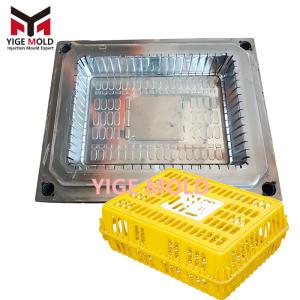
Structural design is the core of the mold's technology, which needs to balance the functional requirements of the transport crate with molding efficiency. For poultry transportation scenarios, molds generally adopt a square locking system to ensure that the transport crate has a stable structure after assembly, effectively resisting bumps and compression during transportation and preventing the crate from deforming or collapsing. At the same time, a multi-parting surface design is used to precisely match the complex structure of the transport crate, ensuring smooth demolding and greatly improving production efficiency. To meet the transportation needs of different breeding species, the cavity layout of the mold can be flexibly adjusted. A single-cavity design is suitable for small-batch customized production, while a multi-cavity design meets the needs of large-scale mass production, achieving a balance between flexibility and efficiency.
In terms of process refinement, mold manufacturing relies on mature processes such as CNC machining centers, EDM (Electrical Discharge Machining), and wire cutting to control the mold's dimensional accuracy within the micron level, ensuring the dimensional consistency and structural stability of the transport crate. Some high-end molds also adopt hot runner technology to optimize the raw material flow path, reduce molding waste, improve raw material utilization, and at the same time reduce product internal stress, enhancing the impact resistance of the transport crate. In surface treatment, the high polishing process not only improves the surface smoothness of the mold but also makes the transport crate's appearance flat and smooth, facilitating cleaning and disinfection, and reducing the risk of bacterial growth from the source, meeting the hygiene standards of breeding scenarios.
III. Scenario Empowerment: Precise Adaptation to Diverse Breeding Needs
The application of the plastic poultry transport crate mold is deeply embedded in multiple core links of the breeding industry chain, covering key scenarios such as live poultry transportation, feed turnover, and live animal transfer. Through customized design, it precisely matches the needs of different scenarios, becoming an important guarantee for the efficient operation of breeding.
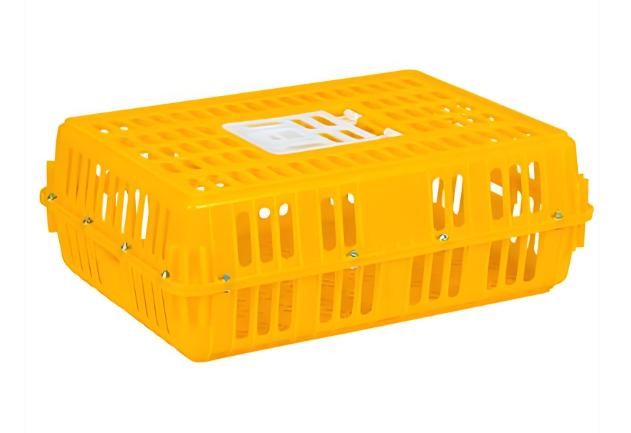
In live poultry transportation scenarios, the mold focuses on animal welfare and transportation safety, improving the crate's air permeability and load-bearing stability through structural optimization. For the body characteristics of different poultry, molds can customize transport crates of different sizes. The side walls of the crate are equipped with evenly distributed ventilation holes, whose diameters are precisely calculated to ensure air circulation while preventing poultry from escaping. The bottom of the crate adopts a reinforcing rib structure, greatly improving the load-bearing capacity to avoid the crate deforming and squeezing poultry during transportation, effectively reducing live transportation losses and protecting animal welfare while improving transportation efficiency.
Feed turnover scenarios place higher demands on the load-bearing and corrosion-resistant performance of the transport crate. The mold optimizes the crate wall thickness and internal support structure, enabling the transport crate to carry more than 100 kilograms of feed. At the same time, it is compatible with food-grade PP or high-density polyethylene raw materials to ensure that the crate is wear-resistant and corrosion-resistant, capable of long-term adaptation to humid and dusty breeding environments, avoiding feed waste caused by crate cracking and leakage, and ensuring the safety and efficiency of feed transportation.
For live animal transfer scenarios such as fish fry and young poultry, the mold needs to have special functional designs. Some molds can incorporate removable partitions to divide the transport crate into independent spaces, preventing live animals from squeezing each other and improving survival rates. To meet the convenience needs of short-distance transfer, molds can also develop foldable structures, which greatly reduce the volume of the transport crate when folded, saving storage and return transportation space, reducing logistics costs, and meeting the flexible transfer needs of small-scale breeding entities.
IV. Industry Challenges: Breaking Through the Dual Bottlenecks of Adaptation and Service
Although the technology of plastic poultry transport crate molds has matured, facing the complex and changing needs of the breeding industry, it still faces core challenges such as insufficient specification adaptation, lagging service response, and inadequate performance matching, which restrict the deep integration of molds and breeding scenarios.
Insufficient specification adaptation is the most prominent shortcoming at present. Currently, mold production mainly focuses on industrial warehousing scenarios, and the specification design is difficult to match the diverse needs of the breeding industry. Transport crates produced by traditional large-sized molds will cause transportation space waste when used for short-distance transportation of fish, shrimp, and young poultry, significantly increasing the single transportation cost. Meanwhile, some small and medium-sized mold enterprises lack customization capabilities and cannot adjust the mold structure according to the special needs of breeding enterprises, forcing breeding enterprises to choose standardized products with low adaptability, making it difficult to guarantee loading and unloading efficiency and transportation safety, thereby increasing operational costs and risks.
Lagging service response further exacerbates the operational pressure of breeding enterprises. Breeding enterprises are mostly distributed in remote counties and towns, while the service networks of most mold suppliers are concentrated in core cities, leading to slow response and high logistics costs for enterprises in remote areas. The average response time of suppliers in non-core regions exceeds 72 hours, and the proportion of logistics costs in procurement costs is much higher than that in core regions. Moreover, the fulfillment rate of rapid response is low, making it difficult to meet the operational needs of breeding enterprises to cope with sudden demands and emergency replenishment, restricting the stable operation of enterprises.
The degree of matching between performance and scenario needs still has room for improvement. In breeding scenarios, transport crates need to frequently come into contact with water bodies, feed residues, and livestock and poultry manure, requiring extremely high corrosion resistance and impact resistance. However, transport crates produced by some ordinary molds use conventional plastic raw materials with insufficient corrosion resistance, and cracking and deformation occur after only a few months of use, with a service life far lower than that of products from specialized molds. For special needs such as air permeability and load-bearing stability in live transportation, some molds have not been optimized accordingly, resulting in high transportation loss rates that cannot meet the demand of breeding enterprises for high-quality transportation equipment.
V. Future Direction: Customization, Greening, and Value Upgrading in Parallel
With the continuous improvement of the scale and standardization of the breeding industry, the plastic poultry transport crate mold will accelerate its evolution towards customization, greening, and value enhancement, adapting to the high-quality development needs of the breeding industry with more precise designs, more environmentally friendly concepts, and more complete services.
Customization will become the core direction of mold development. In the future, mold enterprises will deeply root themselves in breeding scenarios and provide full-process customized mold solutions for different breeding species, transportation distances, and cargo characteristics. For example, developing micro-breathable molds for shrimp fry transportation, designing anti-leakage structure molds for livestock and poultry manure transportation, and customizing lightweight foldable molds for short-distance transportation in mountainous areas. By precisely matching scenario needs, the pain point of insufficient specification adaptation will be completely solved, providing more efficient transportation equipment support for breeding enterprises.
The concept of greening will run through the entire life cycle of the mold. On one hand, mold manufacturing will increasingly use environmentally friendly mold steel to reduce energy consumption and pollution during production. On the other hand, mold design will focus on the efficient utilization of raw materials, reducing waste during production by optimizing flow channel structures and improving raw material utilization. At the same time, the modular design concept of molds will gradually become popular. Through a modular structure that can be disassembled and repaired, the service life of the mold will be extended, the difficulty of recycling after mold scrapping will be reduced, and resource waste will be minimized, meeting the needs of the breeding industry for green and sustainable development.
Value upgrading will drive mold enterprises to transform from single manufacturing to comprehensive services. In the future, mold enterprises will no longer be limited to mold production but will provide full-process services centered on the core needs of breeding enterprises, ranging from demand research, mold design, manufacturing, to after-sales maintenance. By establishing service networks covering counties and towns, response times will be shortened, logistics costs will be reduced, and service fulfillment capabilities will be improved, providing timely and efficient service guarantees for breeding enterprises. With a complete service system, the core value of molds will be strengthened, helping breeding enterprises reduce costs and increase efficiency.
VI. Conclusion
As the core support for breeding logistics equipment, the technological evolution and industrial value of the plastic poultry transport crate mold are deeply embedded in the process of the modernization of the breeding industry. From precise material selection and structural design, to precise adaptation to diverse breeding scenarios, and continuous breakthroughs in facing industry challenges, the mold is not only the core carrier for the production of transport crates but also a key force in promoting cost reduction and efficiency improvement in breeding logistics and ensuring breeding safety.
In the future, with the in-depth advancement of large-scale and standardized development of the breeding industry, the plastic poultry transport crate mold will accelerate its transformation towards customization, greening, and value enhancement. With technology and services that are more in line with breeding needs, it will consolidate the equipment foundation for the high-quality development of the breeding industry. Only by focusing on the core pain points of breeding scenarios, continuously breaking through technical bottlenecks, and optimizing service models can mold enterprises stand firm in the wave of industrial upgrading. They will work hand in hand with the breeding industry to build an efficient, safe, and green modern logistics system, injecting lasting momentum into the high-quality development of the breeding industry.