Bakery crate mold
Introduction to Bakery Returnable Tote Molds
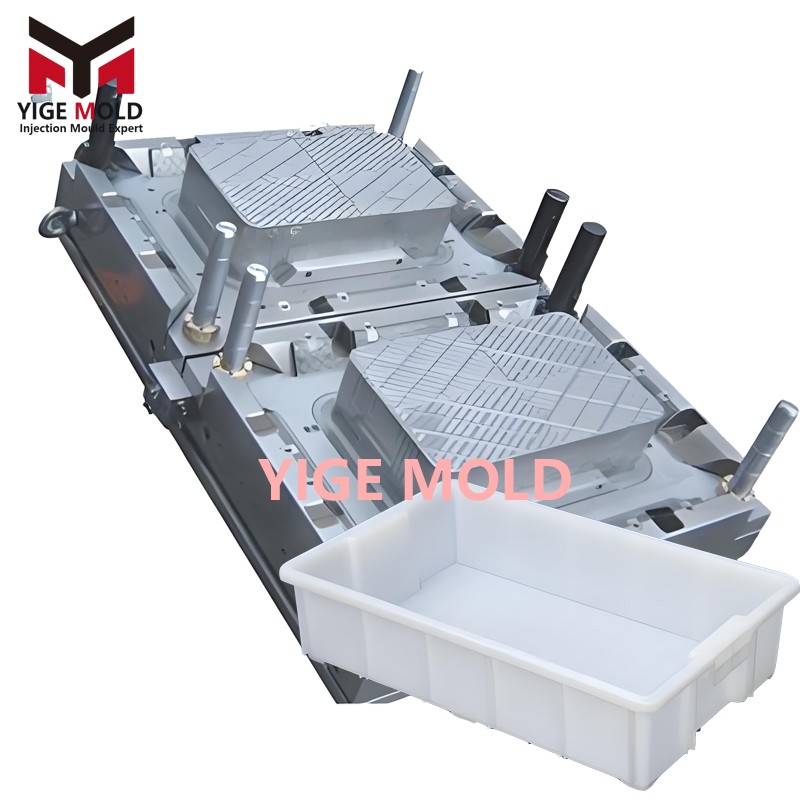
The term "Bakery Returnable Tote Mold" specifically refers to the industrial injection mold used for mass-producing standardized logistics containers designed for the bakery industry. The resulting products are not baking implements but are essential for handling finished goods throughout the supply chain—from post-production cooling, through distribution and warehousing, to in-store display. This mold is a foundational tool for building a closed-loop, efficient, and hygienic logistics system, with its quality dictating the durability, functionality, and cost-effectiveness of the totes.
I. Product Definition: A Specialized Container for a Delicate Industry
Bakery returnable totes are engineered to solve unique logistical challenges. Unlike general-purpose containers, they must accommodate the specific physical properties of baked goods: fragility, susceptibility to crushing, high hygiene requirements, and the need to maintain proper conditions to preserve freshness. Containers produced by these molds are built for scenarios such as distributing bread and pastries from a central facility, transferring delicate cake layers internally, temporarily storing products, and facilitating standardized store deliveries.
II. Engineering Principles in Mold Design: Protection, Efficiency, and Cleanability
The mold's design translates operational needs into physical form. Every structural feature serves a specific purpose in real-world handling.
-
Structural Protection Design:
-
Internal Compartmentalization: The mold forms precise internal dividers or product slots. These are not simple walls; their dimensions and radii are calculated to secure items, prevent in-transit movement and abrasion, and avoid creating pressure points that could mar soft products. This demands reliable action from the mold's core-pulling and ejection mechanisms in tight spaces.
-
Load Management and Rigidity: The totes must support multi-layer stacking when fully loaded. Mold design employs a strategic three-dimensional grid of reinforcing ribs in sidewalls and a robust pattern (like a "checkerboard") on the base to prevent bulging and sagging. Achieving this requires a perfectly balanced mold cooling system to ensure uniform solidification and prevent warpage or stress points in areas of varying thickness.
-
Impact and Environmental Guarding: Integrated support feet raise the container bottom, allowing airflow, preventing water entrapment, and enabling forklift access. Reinforced, rounded corners absorb impacts from common bumps and drops.
-
-
Operational Efficiency Design:
-
Precision Stacking System: The mold forms interlocking guide posts and sockets on the top and bottom of each tote. This allows secure, aligned stacking, even during transport, and includes features to prevent incorrect stacking orientation. Ergonomic handholds and balanced lid latches—secure yet easy to open—facilitate manual handling.
-
Integration with Workflow: Molded-in features like card slots or label holders allow for easy identification and tracking without adhesives or tags that can be lost.
-
-
Hygienic Design:
-
Seamless Construction: Optimal design uses a single mold cavity to form the tote body, minimizing parts. Complex mold actions create a smooth, continuous interior with rounded corners, eliminating crevices where soil and bacteria can accumulate.
-
Material and Finish: Molds are crafted from approved steels and the cavity is polished to a high-gloss finish. This ensures the molded plastic surface is ultra-smooth, non-absorbent, and easily cleaned with water or sanitizers, meeting food safety standards.
-
III. Mold Manufacturing: Precision for Performance and Longevity
These molds are high-precision, durable tools built for high-volume production.
-
Material Selection:
-
Primary mold components use pre-hardened steels for a balance of machinability, hardness, and wear resistance. Critical moving parts like sliders and ejector pins are often made from tougher, wear-resistant alloys and may receive surface hardening treatments.
-
-
Cooling System Engineering:
-
This is critical for large, flat parts. An efficient conformal cooling channel network follows the contours of the mold cavity. This ensures rapid, uniform heat removal, which is essential for controlling the production cycle time and preventing warpage—the main cause of which is uneven cooling.
-
-
Systems for Quality and Reliability:
-
Precise venting at the parting line and around inserts prevents trapped air from causing burn marks on the plastic. A robust, balanced ejection system ensures the large, flat part is cleanly and consistently released from the mold after each cycle.
-
IV. Economic and Operational Value
-
Total Cost Reduction: While the initial outlay is higher than for disposable packaging, the reusability over hundreds of trips drives the per-use cost far below that of single-use boxes, eliminating recurring purchase and disposal expenses.
-
Dramatic Reduction in Product Damage: Custom-fit compartments and robust construction minimize handling damage, directly preserving product quality, appearance, and saleable yield—especially critical for high-value, decorated, or fragile items.
-
Enhanced Handling Efficiency: Standardized dimensions enable optimized warehouse storage, seamless integration with pallets and transport vehicles, and efficient "wheel-to-shelf" handling, reducing labor and time.
-
Hygiene and Safety Compliance: The durable, non-porous, and easy-to-clean nature of the totes supports high hygiene standards, reduces contamination risk compared to fibrous cardboard, and aids in audit and traceability protocols.
In summary, bakery returnable tote molds produce the fundamental building blocks of a modern, efficient bakery supply chain. The investment in such a mold is an investment in a tangible asset that drives continuous value by reducing loss, saving labor, and upholding quality standards from production to point of sale.