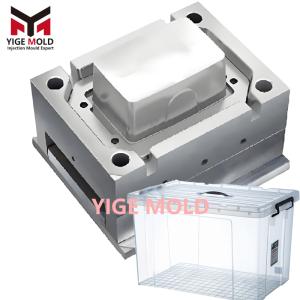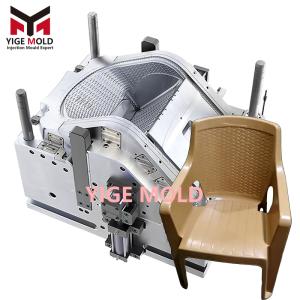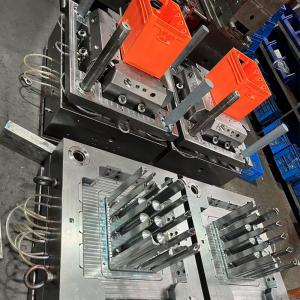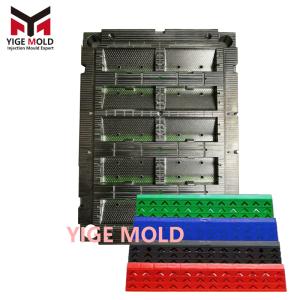
Poultry Container Mold
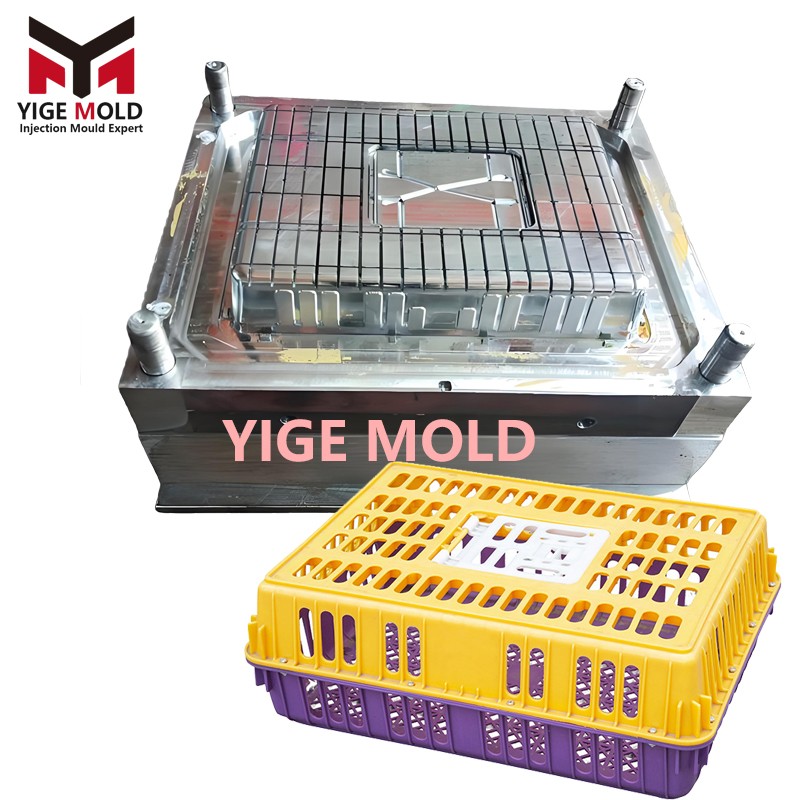
Poultry Container Mold: The Versatile Load-Bearing Unit in Poultry Industry Processes
A poultry container mold is a forming tool used to manufacture plastic containers that serve a load-bearing function across various stages of poultry handling, from rearing and transport to processing. Unlike single-purpose turnover boxes, its finished products must perform reliably in diverse environments, meeting the specific demands of multiple phases such as catching, transfer, holding, and pre-slaughter management. The conception of this mold stems from a meticulous analysis of actual poultry operation workflows, aiming to simplify procedures and reduce losses through a versatile, widely adaptable carrier.
I. Core Function: Practical Load-Bearing for Multi-Stage Processes
The value of containers produced by this type of mold lies in their ability to handle various practical tasks within poultry operations:
-
Process Linkage: Their structure and dimensions facilitate easy transfer and movement between different sites, vehicles, and equipment.
-
Functional Adaptability: Capable of adapting to different contents, such as live birds or products, through simple adjustments or add-on components.
-
Durability and Reliability: Able to withstand repeated use, washing, stacking, and the stresses of bird activity.
Therefore, the design goal of the mold is to create a multifunctional load-bearing unit that is sufficiently robust, well-designed, and convenient for use in common poultry industry settings.
II. Key Design Considerations: Practicality, Reliability, and Ease of Use
The mold design focuses on several practical and crucial requirements:
-
Structural Robustness and Adaptability
-
Reinforced Frame and Adjustable Interior: The main container frame is sturdy, with provisions for movable or removable partitions and liners. The mold must precisely form these slots and connection points to ensure they are secure yet easy to adjust manually, accommodating birds of different sizes or product separation needs.
-
Balancing Ventilation and Protection: Container walls feature well-distributed ventilation holes, with additional structural reinforcement at key points (like corners) to prevent damage from impacts and protect the contents. The size and shape of ventilation holes should allow effective air exchange while preventing birds from protruding their heads or feet and causing injury.
-
-
Operational Convenience and Ergonomic Design
-
Easy Movement and Handling Features: The mold must form easy-to-grip handholds, a base structure suitable for hand truck搬运, and forklift entry pockets compatible with common fork tines. The placement and shape of these features should align with ergonomic principles to reduce labor strain.
-
Clear Identification Areas: Provide flat, prominent identification areas on the container sides or ends for easy marking with pens or labels to record batch, quantity, etc., preventing mix-ups.
-
-
Durability and Ease of Maintenance
-
Impact and Wear Resistance Design: Molded container corners are reinforced, and the base structure evenly distributes stacking pressure. Material selection and wall thickness ensure the container can endure long-term use and repeated cleaning.
-
Easy-to-Clean Structure: The container interior avoids hard-to-reach corners, with smooth, rounded transitions. Drainage holes are designed to prevent water pooling after rinsing, allowing for quick drying and maintaining hygiene.
-
III. Manufacturing Considerations: Precision and Reliability
The manufacturing of the mold emphasizes realizing practical functions and long-term durability:
-
Precision of Key Features: Ensuring dimensional accuracy of critical mating parts like slots, forklift pockets, and stacking guides to guarantee smooth interaction between containers and with handling equipment.
-
Surface Finish: The cavity surface treatment (like polishing or texture etching) must balance smooth demolding, ease of cleaning the product surface, and providing some anti-slip effect.
-
Sturdiness and Reliability: The mold itself is structurally sound, with reliable operation of moving parts (like sliders for complex features), capable of withstanding long production runs.
IV. Practical Application Value
Containers produced by this type of mold offer direct benefits in daily poultry operations:
-
Improved Operational Efficiency: Uniform specifications and well-designed containers facilitate mechanized handling and stacked storage, saving labor and time.
-
Reduced Loss of Birds and Products: Robust construction and proper protection minimize physical damage during transport and handling.
-
Easier Management and Cleaning: Clear identification and easy-clean features help maintain site hygiene and enable batch management.
Summary: The starting point of the poultry container mold is understanding and solving the practical load-bearing challenges in poultry handling processes. What it produces is not a product chasing complex concepts, but a practical tool that strives to be sturdy, user-friendly, capable of handling various situations, and built for long service life. Its value is ultimately realized in the reliability and convenience of daily use, making it a dependable assistant in poultry operations.