Takeaway Food Container Mold
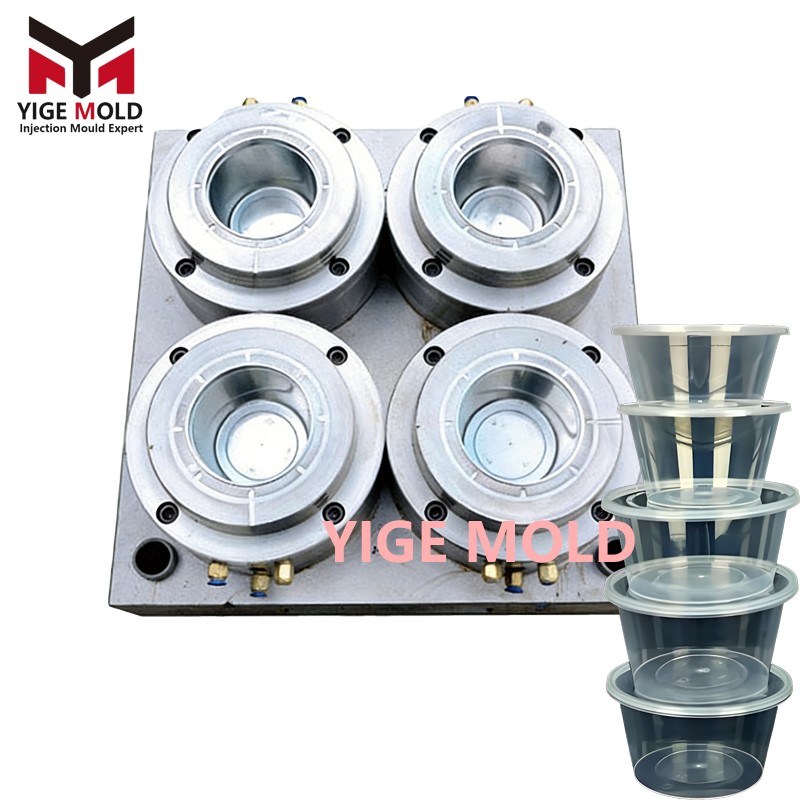
Takeout Food Container Mold: The Precision Catalyst of the Dining Ecosystem
Prologue: The Underrated Industrial Art
Amidst the hustle and bustle of the city, tens of millions of meals are delivered daily in takeout containers. These modest vessels carry not just food, but the very rhythm of modern life. The starting point for all of this often lies in a set of precision molds. The takeout food container mold, a little-known field of industry, is in fact a critical bridge connecting culinary needs with manufacturing technology.
I. The Vessel of Functional Aesthetics
1. The Precise Expression of Structural Mechanics
An excellent takeout food container mold must first be a practitioner of structural mechanics. Designers must balance multiple functional requirements within a limited space:
Optimized Load-Bearing: Through computational analysis, radial reinforcing ribs are designed on the container's base. These ribs not only increase the bottom's load-bearing capacity but also help distribute liquids evenly, preventing deformation from localized pressure. The height, width, and angle of these ribs are strictly calculated to maximize mechanical performance.
Sealing Innovation: Modern container sealing systems have evolved from simple clasps to multi-layer protection. Molds must precisely form composite structures like primary sealing ribs, auxiliary sealing grooves, and anti-spill rims. The fit precision of these structures needs to be at the 0.03mm level to prevent leakage during the jostles of transport.
Stacking Science: To optimize storage and logistics efficiency, molds must ensure the produced containers can be stacked perfectly. This requires precise control of the gap between stacked containers and the design of anti-sticking features on the sidewalls to prevent vacuum adhesion during stacking.
2. The Perfect Realization of Material Characteristics
Containers made from different materials require differentiated mold solutions:
Polypropylene (PP) Containers: Require designs for rapid cooling systems, utilizing the material's high heat deflection temperature to shorten molding cycles. Mold surfaces need high-gloss polishing to showcase the material's inherent luster.
Paper Laminated Containers: Mold structures are relatively specialized, requiring larger draft angles and rounded corners to prevent tearing of the paper substrate. Control of molding temperature and pressure must be more refined.
New Composite Materials: Eco-friendly materials like starch-based blends or PLA have significantly different flow properties and shrinkage rates than traditional plastics. Molds need adjustments to gate design, cooling channel layout, and even ejection mechanisms to adapt to the new material properties.
II. The Legacy of Precision in Manufacturing Craft
1. The Tempering of Steel
The choice of mold steel determines its service life. Takeout container molds commonly use steels like P20, 718, and S136, each with its specific role:
Main Plates: Use pre-hardened plastic mold steel with hardness controlled between HRC 30-35, ensuring sufficient rigidity while facilitating machining. This steel undergoes heat treatment before leaving the factory, preventing deformation during later processing.
Moving Components: Frequently moving parts like sliders and lifters are made from tougher steel grades and undergo surface treatments like nitriding, achieving surface hardness above HRC 60 while maintaining a tough core, significantly improving wear resistance.
Core Components: Parts enduring high pressure, like sprue bushings and ejector pins, require high-hardness materials like tungsten steel. Although more difficult to machine, they can withstand millions of cycles.
2. The Art of Accumulating Precision
Mold manufacturing is a process of continuously approaching perfection:
Establishing Datums: All machining uses the mold's datum corners as the origin. This set of perpendicular datum surfaces must be precision-ground to 90 degrees, with errors not exceeding 0.005mm, serving as the reference for all subsequent operations.
Sequential Processing: From roughing to finishing, material allowance is progressively reduced. Roughing removes most of the stock, semi-finishing leaves about 0.1mm, and finishing achieves the final dimensions. Aging treatment to relieve machining stress is often performed between stages.
The Art of Fit: The perfect mating of hundreds of components is key to the mold's success. Fitting clearances for sliding parts are typically controlled between 0.01-0.02mm, ensuring smooth movement while preventing plastic seepage and flash.
III. The Hub of Industry Collaboration
1. The First Stop for Requirement Translation
Every requirement communicated between container manufacturers and food service businesses must ultimately be realized in the mold:
Brand Presentation: Custom containers for chain restaurants, with their specific logos, colors, and special features, need to be implemented at the mold stage. Mold surfaces can be textured through processes like etching or EDM to create leather, woodgrain, or cloth patterns, enhancing brand recognition.
Integrated Functionality: Innovative designs like adjustable dividers, built-in sauce cups, or integrated handles all require innovation in mold structure. This demands that mold engineers be not just manufacturing experts, but also structural designers.
Cost Control: A significant portion of the per-unit container cost is determined during the mold design phase. The number and placement of gates determine material utilization; cooling efficiency determines cycle time; mold life affects amortized costs. Excellent design can lower costs by 15%-20% without compromising function.
2. The Critical Fulcrum in the Supply Chain
Molds are at the beginning of the food packaging supply chain; their quality directly impacts all downstream processes:
Production Stability: A robust mold can produce millions of containers continuously without major repairs. This is crucial for the production planning and inventory management of container manufacturers.
Quality Consistency: From the first to the millionth container, dimensions, weight, and appearance should remain stable. This consistency is a prerequisite for automated packaging and robotic palletizing.
Rapid Response: When a food service business needs to launch a new product or adjust packaging, the mold modification cycle directly impacts market response speed. Modular, standardized design can significantly shorten modification time.
IV. The Full Process of Quality Control
1. Quality Anchors in the Manufacturing Process
Mold quality control runs from start to finish:
Incoming Material Inspection: Verification of steel grade, hardness, and flaw detection (like die penetrant testing) ensures base material conformity. Checking dimensions and material of standard parts guarantees purchased component quality.
Process Control: Each manufacturing step has clear inspection criteria. Post-milling dimensional checks, post-heat-treatment hardness tests, and post-EDM surface inspections are all essential.
Assembly Verification: During assembly, the fit of each component is checked as it is installed. The perpendicularity of guide pins/bushings, the conformity of parting surfaces, and the concentricity of the ejection system must all be confirmed individually.
2. Comprehensive Validation through Trial Molding
Trial molding is the mold's "final exam":
Process Window Exploration: By adjusting parameters like injection speed, holding pressure, and cooling time, the optimal molding conditions are sought. This process can last days, involving hundreds of data sets.
Full Dimensional Inspection: The first sample parts are measured comprehensively using a Coordinate Measuring Machine (CMM), comparing each dimension against the design drawings. Critical dimensions like sealing areas and clasp structures must fully meet specifications.
Functional Testing: Seal tests, stacking tests, drop tests, and load-bearing tests simulate real-world usage scenarios. The mold is only released for mass production after passing these tests.
V. The Bearer of Innovation Trends
1. Direct Response to Environmental Upgrades
Global environmental policies are reshaping the container industry:
Lightweighting Design: Reducing material usage through structural optimization while ensuring functional strength. The latest mold technologies can reduce the weight of a single container by 10%-15%, saving hundreds of tons of plastic annually.
Material Adaptability: Molds need design adjustments to accommodate various biodegradable materials. For example, PLA requires faster cooling, and paper-based materials require larger draft angles.
Recycling-Friendly Design: Mold design is beginning to consider end-of-life recyclability. Avoiding combinations of difficult-to-separate materials and reducing secondary processes like labeling and printing.
2. Continuous Optimization of User Experience
Consumer demand for upgrades drives functional innovations in containers:
Human-Centric Details: Easy-tear openings, anti-scald features, and spill-prevention designs—these micro-innovations must be realized in the mold. A small improvement might require adding several moving components.
Integrated Functions: Composite functionalities like microwaveability, freezer-safety, and reusability place higher demands on molds. For instance, microwave-safe containers must avoid metal inserts, and lids must withstand heating steam pressure.
Smart Packaging: While this article doesn't cover electronic intelligence, basic functions like physical anti-counterfeiting or traceability markings also need planning at the mold design stage.
Epilogue: The Silent Guardian
When a takeout meal reaches the consumer, the mold's mission is complete. People see the well-made container, experience the convenience, but rarely think of the precise mold behind it. Yet, it is the precise assembly of those thousands of components, the rigorous execution of hundreds of manufacturing steps, and the persistent pursuit through tens of thousands of adjustments that make it all possible.
The mold industry possesses a unique aesthetic: using the hardest steel to shape the most commonplace gentleness; employing the most precise calculations to support the most everyday needs. The takeout food container mold, this link hidden deep in the supply chain, is shaping the modern living experience in its own way.
Every crisp click of a container closing, every time soup arrives intact, is the best reward for the mold engineers. In an era chasing rapid change, the mold industry still maintains that steadfast commitment to precision, quality, and promise. It is this commitment that makes modern life more reliable, allowing the light of industrial civilization to shine into every ordinary day.