Plastic Grille Mold
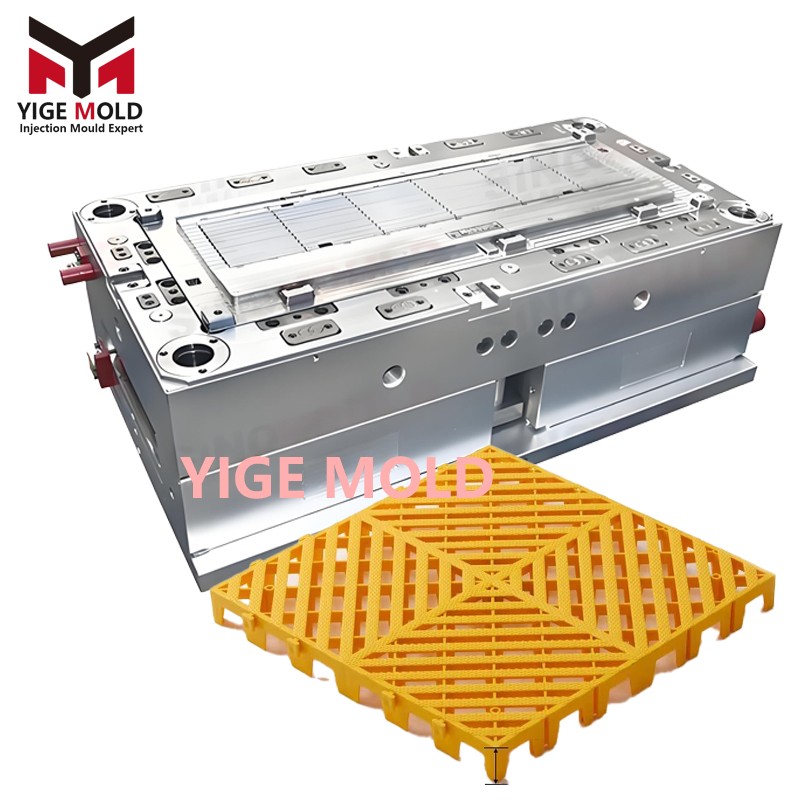
Plastic Grille Mold: Industrial Shaping of Grid Forms
Preface: The Engineering Foundation of a Grid World
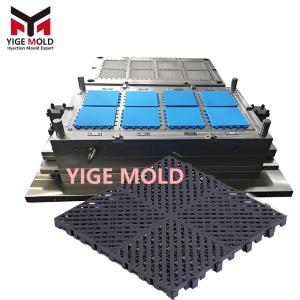
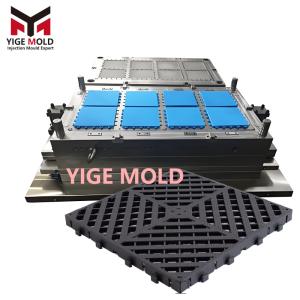
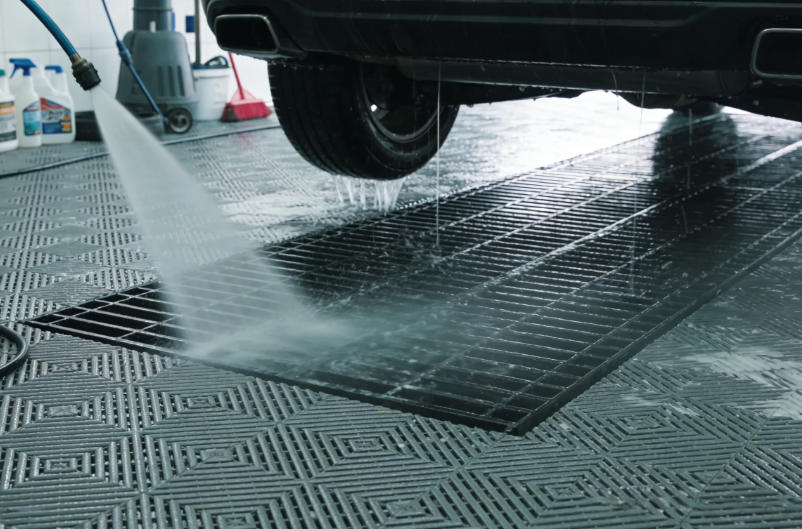
In modern architecture, industrial equipment, and home design, plastic grilles serve multiple functions—ventilation, protection, partitioning, and decoration—through their regularly arranged geometric forms. The plastic grille mold, as the key tool for realizing this grid structure, faces a series of unique challenges in its design and manufacture: how to precisely form thin, tall ribs; how to ensure uniform filling and cooling of dense grids; and how to achieve smooth demolding of complex structures. This mold system is the product of the intersection of structural mechanics, material processes, and precision manufacturing technology.
I. The Structural Logic of Grid Design
1. Geometric Planning of the Grid System
Mold design begins with a deep understanding of the grid cell structure:
Determination of Unit Parameters: The basic parameters of a rectangular grille must be calculated precisely. Rib width typically ranges from 1.5-3.0 mm, determined by the strength of the mold core and plastic flow properties. Rib height is generally 3-5 times the width to ensure sufficient rigidity. The cell size (distance between adjacent ribs) to rib width ratio is often between 1.2:1 to 2:1, balancing open area and structural strength. In mold design, the dimensional tolerance of each unit is controlled within ±0.05 mm.
Reinforcement of Rib Connection Points: Rib intersections require special treatment. The mold forms reinforcing structures at these points, typically using localized thickness increases of 30-50%. Cross intersections use radius transitions: internal radii R1.0-1.5 mm, external radii R2.0-2.5 mm, to distribute stress. T-junctions have added triangular reinforcing ribs, with a height 1.2-1.5 times the rib width.
Molding Solutions for Non-Standard Grilles: Diamond or hexagonal grids require special mold structures. Hexagonal grid molds typically use a three-direction parting, with a set of sliders for each direction moving at 120-degree angles. Curved grills require calculating the curvature change for each rib, with mold cores using a progressive form design, limiting the curvature change rate to no more than 3% per 100 mm.
2. Engineering Considerations for Structural Stability
The rigidity of thin-walled ribs must be ensured from the mold design stage:
Optimization of Rib Cross-section: Ribs molded by the tool often have I-beam or T-shaped cross-sections. The web thickness is 20-25% of the total width, and the flange width is 1.5-2 times the web. Long ribs have circumferential stiffening ribs every 80-120 mm, with a height 10-15% of the rib height. This design ensures bending stiffness while reducing weight.
Anti-Deformation Design: Accounting for differential shrinkage of the plastic during cooling, the mold pre-compensates key dimensions. Dimensions are enlarged 1.8-2.0% along the melt flow direction and 1.5-1.8% perpendicular to it. Rib free ends are pre-set with 0.2-0.3 mm of upward warp to counteract downward bending during cooling. The overall plane is pre-set with 0.1-0.15 mm of reverse curvature so the finished product meets flatness requirements.
Stress Management in Connection Structures: Rib intersections use smooth transitions, with internal radii no less than 0.5 mm. Wall thickness in nodal areas changes gradually, transitioning smoothly from the standard thickness 't' to 1.3t-1.5t at the node. At high-stress nodes, the mold forms additional reinforcing posts, 1.5-2.0 mm in diameter, slightly taller than the rib plane.
II. Critical Processes in Mold Manufacturing
1. Precision Machining of the Cavity
Grille mold cavities contain numerous deep, narrow structures, making machining difficult:
Fine Electrode Fabrication: Machining rib gaps requires making precision electrodes. Roughing electrodes are undersized by 0.3-0.4 mm per side, made of copper, with dimensional tolerance ±0.01 mm. Finishing electrodes are undersized by 0.1-0.15 mm per side, made of graphite, with surface roughness Ra ≤ 0.4 µm. For exceptionally fine features, corrective electrodes are made for local finishing.
Core Manufacturing: Rib-shaped cores often use a split-insert structure. Each rib corresponds to an independent insert. Insert material is high-hardness tool steel, heat-treated to HRC 52-56. Insert width tolerance is controlled within ±0.005 mm, height tolerance ±0.01 mm. Inserts and plates use a tapered fit, taper 1:50, ensuring positioning accuracy.
Surface Treatment Processes: Mold surfaces require treatment based on grille function. Decorative grilles require a high-gloss finish, needing mirror polishing to a final roughness Ra ≤ 0.01 µm. Functional grilles need specific textures achieved through etching, with a depth of 0.05-0.2 mm. Wear-resistant grilles undergo surface hardening treatments like nitriding or PVD coating to increase mold life.
2. Design of Venting and Cooling Systems
Dense grille structures have special requirements for venting and cooling:
Venting System Layout: The mold has multi-level venting. Vents are machined on the parting line: depth 0.02-0.03 mm, width 5-8 mm, total area 0.5-1% of the projected area. Porous vent inserts are installed inside the core, made of sintered metal with 20-30% porosity. Ejector pins also serve a venting function, with a fit clearance of 0.01-0.015 mm between pin and hole.
Cooling Channel Layout: The cooling system is designed based on grille density variation. In dense rib areas, cooling channels are 8-10 mm from the cavity surface, channel diameter Φ8 mm, water velocity 2-3 m/s. In sparse rib areas, channels are 12-15 mm from the surface, diameter Φ10 mm, velocity 1.5-2 m/s. Critical areas have high-conductivity inserts, like beryllium copper, to accelerate heat extraction.
Temperature Control Strategy: The mold uses zoned temperature control: rib area 50-55°C, gap area 45-50°C, frame area 40-45°C. The cooling process is staged: rapid cooling for the first 10 seconds to prevent surface defects; medium cooling speed for 10-30 seconds to control shrinkage; slow cooling after 30 seconds to balance internal/external temperature difference. Total cooling time is based on the thickest section: 8-12 seconds per mm of wall thickness.
III. Technical Solutions for Demolding Mechanisms
1. Demolding Methods for Complex Structures
Grille molds must solve demolding problems like deep cavities, thin walls, and undercuts:
Multi-Directional Core Pulls: Non-standard grilles require multi-directional core pulls. Hydraulic core pull mechanisms can achieve pulls at any angle from 0-180 degrees, with stroke 20-80 mm and adjustable speed. Mechanical core pulls use angle pins, typically 15-25 degrees. Core pull mechanisms have mechanical interlocks to ensure correct actuation sequence.
Gas-Assisted Demolding: Micro gas vents are placed at the bottom of deep cavities, diameter Φ0.3-0.5 mm. During demolding, 0.3-0.5 MPa compressed air is injected to help the part release from the core. Vents are arranged in a pattern, spacing 15-25 mm. Gas actuation time is precisely synchronized with the ejection stroke, with timing error not exceeding 0.1 seconds.
Elastic Ejection Device: Ejector pin tips are fitted with elastic cushion heads made of polyurethane, hardness Shore A 80-90. During ejection, the cushion contacts the part first, evenly distributing the ejection force. Ejection is in two stages: Stage 1 slow ejection, speed 10-20 mm/s, to break vacuum adhesion; Stage 2 fast ejection, speed 50-100 mm/s, to complete demolding.
2. Guiding and Positioning Systems
Grille molds have very high requirements for motion precision:
High-Precision Guiding: Guide pillars use high-hardness steel, surface hard-chrome plated, hardness HRC 60+. Guide bushings use oil-impregnated bronze for self-lubrication. Guide fit clearance is 0.005-0.01 mm, ensured by selective fitting. Guide length to diameter ratio is no less than 1.5:1, ensuring guiding stability.
Dual Return Protection: The mold has both mechanical and hydraulic return systems. Mechanical return uses early return pins, return accuracy ±0.005 mm. Hydraulic return uses hydraulic cylinders, pressure 5-10 MPa, with precisely controllable force. The two systems are electrically interlocked for safety and reliability.
Positioning Mechanism: The mold has precision locating blocks made of tool steel, hardness HRC 58-62. Locating surfaces are ground, flatness ≤0.005 mm. Tapered locating mechanisms have a taper of 1:10, fit clearance 0.005-0.008 mm. Locating mechanisms have wear compensation, allowing accuracy restoration via adjustment shims.
IV. Stability Control in the Production Process
1. Optimization of Process Parameters
Grille molds require fine-tuning of process parameters:
Injection Process Control: Injection speed is controlled in multiple stages. Stage 1: Slow injection, filling 20-30% of the cavity, speed 20-40 mm/s. Stage 2: Medium speed, filling to 70-80%, speed 60-80 mm/s. Stage 3: Fast injection, completing fill, speed 100-150 mm/s. Injection pressure is also staged accordingly to ensure uniform filling.
Packing Pressure Setting: Packing is in three stages. Stage 1: 60-70% of injection pressure, time 3-5 seconds. Stage 2: 50-60% pressure, time 5-8 seconds. Stage 3: 40-50% pressure, time 8-12 seconds. The switch point is based on cavity fill percentage, typically switching at 95-98% full.
Temperature Parameter Management: Barrel temperatures are set in zones, gradually increasing from rear to front, differential 10-20°C. Mold temperature is controlled by zone, difference between zones not exceeding 5°C. Hot runner temperatures are controlled independently, difference between nozzles not exceeding 3°C. Process parameters are recorded and archived for traceability and quality analysis.
2. Quality Control and Maintenance
Ensuring long-term stable production:
Dimensional Accuracy Inspection: First articles undergo full dimensional inspection using a CMM to measure key dimensions. Periodic sampling during batch production focuses on monitoring rib width, gap size, flatness, etc. Inspection data is recorded in charts to monitor process stability.
Mold Condition Monitoring: Regular checks for mold wear, focusing on core, slider, and guiding areas. Measure changes in key dimensions, establish wear trend charts. Regular mold cleaning to remove vent clogging and keep cooling channels clear.
Preventive Maintenance Plan: Develop a detailed maintenance schedule. Minor maintenance every 50,000 cycles: cleaning, lubrication, tightening. Medium maintenance every 200,000 cycles: check condition of wear parts. Major maintenance every 500,000 cycles: comprehensive inspection, repair, or replacement of worn components.
Conclusion: Industrial Replication of Structural Order
The plastic grille mold, a tool that transforms geometric rules into physical structures, plays a unique role in modern manufacturing. It must not only accurately replicate the form of each grid cell but also ensure the integrity and stability of the overall structure composed of thousands of cells. From the mechanical calculations in the design phase, to the precision machining in manufacturing, to the parameter optimization in production, each step embodies the rigor and precision of engineering technology.
When the plastic melt solidifies and forms within the mold, what emerges is not merely a change in material form, but the materialization of structural logic. The straightness of each rib, the firmness of each node, the precision of every detail—all are the mold technology's direct response to functional requirements. In this world permeated by grids, the plastic grille mold, with its tangible technical capabilities, supports the production of countless products and interprets the manufacturing industry's profound understanding of the relationship between form and function.