Succulent Planter Mold
Introduction to Injection Molds for Succulent Planters
As the trend of succulent plant care sweeps across the globe, these petite and charming plants have not only become the "healing staples" in homes and office spaces, but the planters that house them have also evolved from mere containers into decorative carriers that showcase aesthetics and adapt to different scenarios. From minimalist geometric styles to vintage carved designs, from single pots to combination sets, the market demand for succulent planters continues to soar. The injection mold for succulent planters stands as the core equipment that underpins the standardized, large-scale, and high-quality production of such planters, injecting strong momentum into the supply chain of the green plant industry.
I. Core Definition: An Industrial Powerhouse Enabling Precise Forming of Succulent Planters
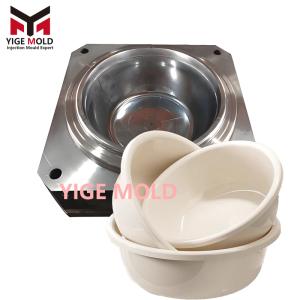
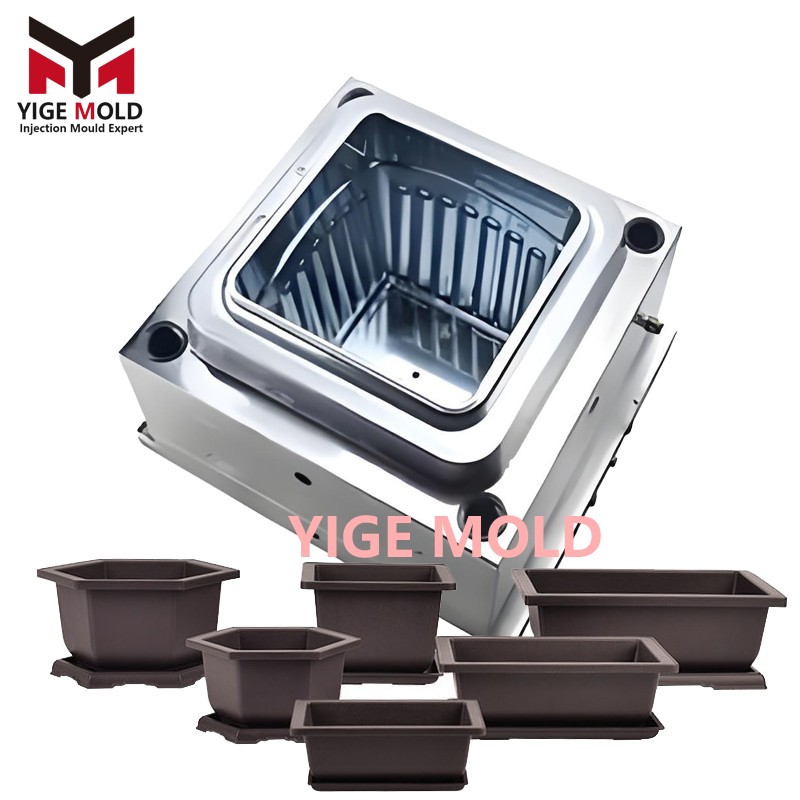
The injection mold for succulent planters is a specialized injection molding tool tailored for succulent planters. It relies on the precisely machined cavity structure made of steel and works in tandem with an injection molding machine to complete the production cycle. Its core principle involves heating and melting granular plastic raw materials, then precisely injecting the molten plastic into the mold cavity under high pressure. Once the plastic cools and solidifies, the planter is ejected from the mold, resulting in a finished product with uniform shape and stable structure.
Compared with traditional planter production methods such as manual making and cement casting, the core advantage of injection molds lies in the dual breakthroughs in standardization and efficiency. It not only ensures high consistency in the dimensions, wall thickness, and weight of planters in the same batch, addressing the pain points of size deviations and unstable yield in traditional crafts, but also enables high-speed mass production. A single set of molds, when paired with an injection molding machine, can produce dozens or even hundreds of planters per hour. This perfectly caters to scenarios such as bulk purchases by flower shops, large-scale supply by home decor brands, and massive online retail orders, providing solid support for the commercialization of succulent planters.
II. Structural Design: A Refined Layout Tailored to the Characteristics of Succulents
The design of the injection mold for succulent planters always revolves around the growth habits of succulent plants and the practical needs of the planters. Every structural detail is ingeniously crafted to balance molding efficiency and finished product quality.
The gating system serves as the "transportation artery" of the mold. Composed of a sprue, runners, and gates, its core function is to guide the molten plastic to fill the cavity evenly and rapidly. Given the small size and relatively simple structure of succulent planters, the design of the gate is particularly crucial. Pin-point gates or side gates are mostly adopted, which can precisely control the flow rate of the plastic to avoid flash formation caused by overly fast filling, and minimize the traces of gate residue. This ensures a clean appearance of the planter, eliminating the need for secondary polishing and enhancing the aesthetic appeal of the finished product.
The molding system is the "core skeleton" of the mold, directly determining the shape and dimensions of the planter. The core shapes the interior space of the planter, while the cavity outlines the exterior, and they fit together seamlessly to form a complete cavity. Considering the characteristic of succulents being averse to waterlogging, the mold is designed with a precise structure for forming drainage holes. This eliminates the need for secondary hole-drilling later, which not only avoids damaging the integrity of the planter but also ensures smooth drainage, safeguarding the health of the succulent roots from the source. Meanwhile, to accommodate the shallow root system and the need for loose soil in succulents, the cavity design optimizes the wall thickness, ensuring uniform wall thickness of the planter. This guarantees structural strength while preventing local water accumulation caused by uneven thickness.
The ejection system is key to ensuring smooth demolding, and it mostly adopts a combination design of ejector pins and a push plate. Succulent planters are small in size and have a moderate depth. During ejection, the force must be evenly distributed to prevent deformation or cracking of the planter due to uneven stress. By reasonably arranging the positions of the ejector pins and coordinating with a precise ejection stroke, the mold can smoothly push the planter out of the cavity after the plastic has fully cooled. The entire process is smooth and efficient, greatly improving production continuity.
In addition, the mold is equipped with a precise temperature control system. Cooling channels are used to regulate the temperature of the mold, ensuring a uniform cooling rate of the plastic. This reduces internal stress in the finished product, preventing issues such as cracking and deformation of the planter over time, while also shortening the molding cycle and boosting production efficiency.
III. Materials and Craftsmanship: Laying the Foundation for Mold Durability and Precision
The performance of injection molds for succulent planters directly depends on material selection and processing craftsmanship, which are the core guarantees of mold lifespan, molding precision, and finished product quality.
In terms of material selection, the molds mostly use high-quality mold steel, such as P20 steel and 718 steel. P20 steel has moderate hardness and excellent machinability. After quenching and tempering treatment, it boasts outstanding wear resistance and fatigue resistance, meeting the mass production needs of conventional succulent planters. Its mold lifespan can reach 300,000 to 500,000 shots, and it is compatible with common plastic raw materials like ABS and PP. 718 steel is an optimized version of P20 steel, with higher purity and stronger toughness. Its hardness and wear resistance are further enhanced, allowing it to handle raw materials that have higher requirements for the mold, such as PC and PA. The mold lifespan is extended to 500,000 to 800,000 shots, making it suitable for producing high-precision and high-quality succulent planters, especially for high-end home decoration scenarios.
Processing craftsmanship is crucial to ensuring mold precision. Mold production undergoes multiple rigorous procedures, from 3D design and CNC machining to EDM (Electrical Discharge Machining) forming and polishing. Each step is meticulously executed. 3D modeling is carried out using CAD/CAM software to accurately simulate the planter shape and mold structure, preemptively avoiding design flaws. CNC machining centers perform high-precision cutting on the steel, ensuring that the dimensional error of the cavity is controlled within an extremely small range. EDM is used to handle complex surfaces and fine textures, such as vintage carvings and stone-like patterns. Finally, mirror polishing is performed to reduce the surface roughness of the cavity, making demolding smoother while enhancing the surface finish of the planter, making the finished product more textured.
IV. Application Scenarios: Unleashing Diverse Value Across the Full Chain
The application of injection molds for succulent planters spans the entire chain from the production to the distribution of succulent planters, unleashing diverse value in different scenarios.
In the scenario of large-scale production, it is the core equipment for planter manufacturing enterprises. Faced with massive orders from e-commerce platforms, home decor stores, and flower shops, injection molds, when paired with automated injection molding production lines, enable 24-hour uninterrupted production. This greatly boosts production capacity while reducing labor costs and raw material waste. It helps enterprises quickly respond to market demand and seize market share.
In the scenario of customized demand, the mold can be flexibly adjusted through modular design. To meet customers' personalized needs for planter colors, textures, and shapes, enterprises can quickly switch production styles by replacing mold inserts and adjusting gate positions, without the need to open a new mold. This greatly shortens the customization cycle and caters to niche and differentiated market demands.
In the scenario of supply chain assurance, the stability of injection molds solidifies the foundation of the succulent industry supply chain. The stable performance of the mold ensures consistent quality of planters, avoiding impacts on the survival rate of succulent plants due to fluctuations in planter quality. This safeguards the stable operation of downstream sectors such as flower shops and gardening bases, and promotes the efficient operation of the entire succulent industry chain, from planting, production to sales.
With its precise structure, high-quality materials, and efficient production capacity, the injection mold for succulent planters has become the core support for the large-scale and standardized production of succulent planters. It not only brings succulent planters of diverse shapes and stable quality into countless households, but also helps the succulent industry achieve efficient development, building a solid bridge for the integration of green plant aesthetics and commercial value.