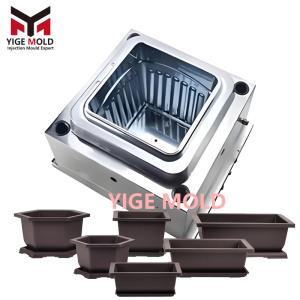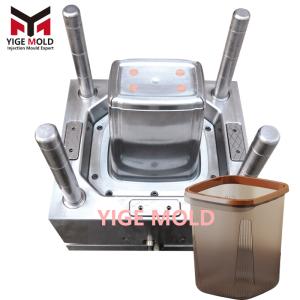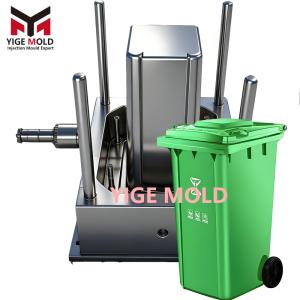
Recycling bin mold
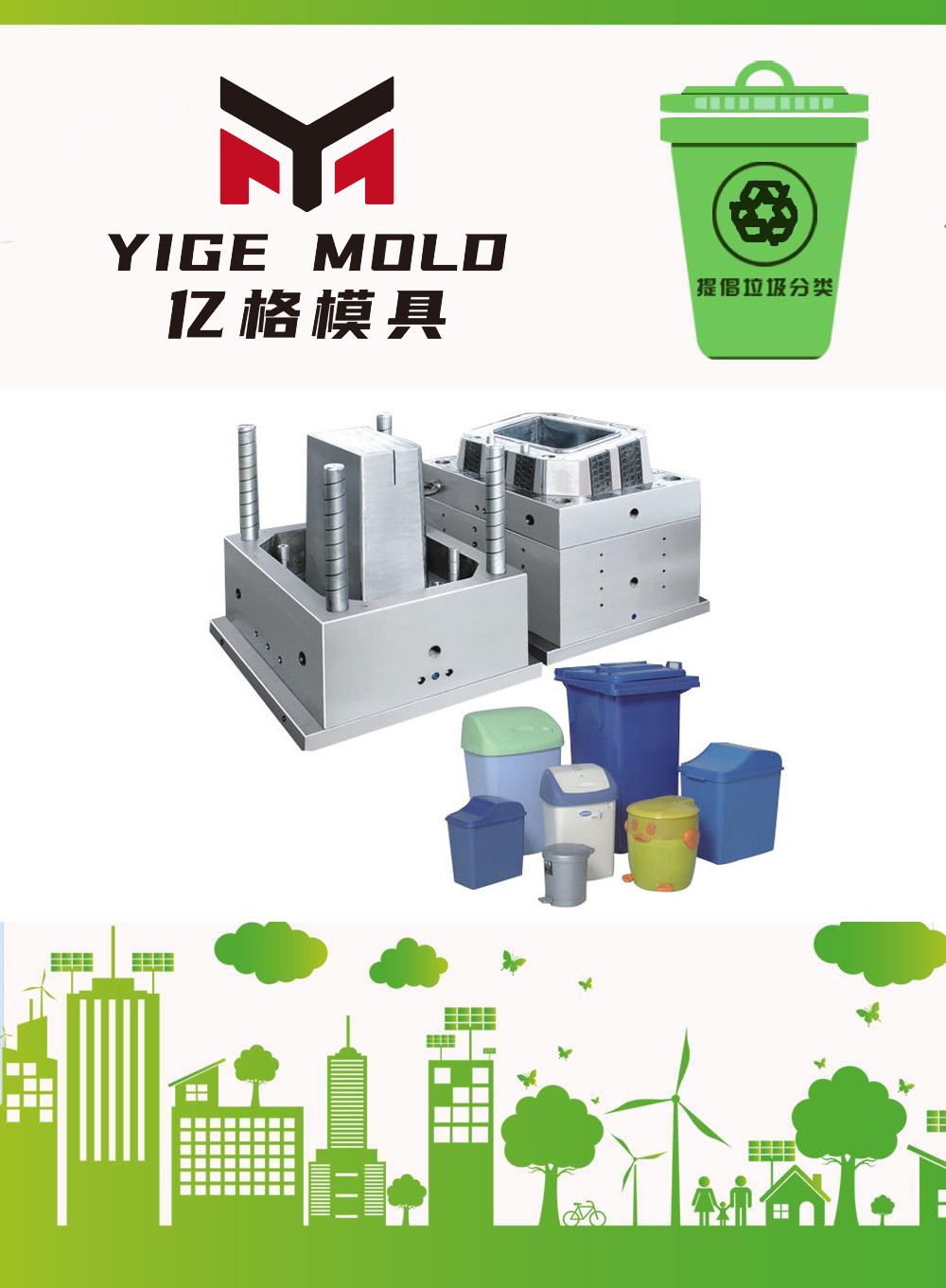
Recycling Bin Molds: The Industrial Manufacturing Core of Urban Waste Management Systems
In the context where waste separation has become a cornerstone of modern urban management, recycling bins have evolved from simple containers into critical infrastructure that carries public policy, guides citizen behavior, and ensures recycling logistics. The design and manufacturing of their molds must transcend the scope of a single product, systematically addressing compound challenges such as serialization, functional integration, outdoor durability, and efficient production. Recycling bin molds are, in essence, precision manufacturing systems that provide standardized, industrialized components for the upstream segment of the urban environmental protection industry chain.
I. Design Philosophy: Engineering Definition Based on System Function and Usage Scenarios
The design of a recycling bin mold begins with a deep deconstruction of the end-use scenario, translated into specific engineering language:
-
Series and Modular Design: A mature mold solution must often cover different categories like "Recyclables," "Food Waste," "Residual Waste," and "Hazardous Waste." This necessitates a high degree of modularity and convertibility in mold design. For instance, by exchanging localized inserts for the lid or body, different category graphics/text, aperture shapes, and colors can be switched rapidly, achieving diversity while controlling mold cost.
-
Embedded Outdoor Durability Structure: The product must withstand long-term exposure to sun, rain, temperature fluctuations, and mechanical impact. The mold must "pre-embed" durability genes into the product structure:
-
UV & Aging Resistance Structure: Rational layout of reinforcing ribs and optimized wall thickness minimize stress concentration, preventing premature material embrittlement and cracking in outdoor environments.
-
Drainage and Ventilation System: The bin base requires drainage holes. Their location, quantity, and the mold's ejection system must be co-designed to prevent water accumulation and pest breeding. Corresponding mold structures must ensure smooth hole edges without stress cracks.
-
-
Ergonomics and Collection Compatibility: Design must consider both public disposal and sanitation collection interfaces.
-
Disposal Interface: The size, angle, and anti-pinch design of the aperture must be precisely realized by the mold's slides or lifters.
-
Collection Interface: Functional structures like forklift pockets on the sides, caster mounting sockets on the base, and lifting lugs for automated truck interfaces impose complex requirements on the mold's core-pulling, ejection, and cooling systems.
-
II. Challenges of the Mold System's Composite Architecture
Recycling bins are typically large-capacity (common 120L-660L) with complex structures, making their molds classic examples of large, complex, thin-wall product tooling.
-
Multi-Actuation System Coordination:
-
A single mold may integrate mechanisms for lid opening/closing, pedal linkage (for step-on bins), and inner bucket handles. The mold becomes a platform for molding "functional assemblies," not just a bin body. Complex motion interference and timing logic exist between the cores for these internal moving parts, requiring comprehensive kinematic simulation during the design phase.
-
Mechanical transmission elements like hydraulic cylinders, gears, racks, and linkages are introduced into the mold interior, making their mounting space, lubrication, sealing, and durability key design focuses.
-
-
"Anti-Warpage" Engineering for Large Planar Surfaces:
-
The side panels of recycling bins are often large, flat surfaces highly prone to warpage from uneven shrinkage, affecting aesthetics, sealing, and stackability. The mold's counter-strategy is a systems engineering approach:
-
Gating Strategy: Employ multi-point hot runner balanced gating to ensure synchronized melt flow fronts, reducing orientation stress.
-
Cooling Strategy: Must utilize high-density conformal cooling channels to ensure highly consistent cooling rates across the entire large planar area, often supplemented by high-conductivity inserts (e.g., beryllium copper) in critical zones for enhanced heat extraction.
-
Structural Compensation: Incorporate a slight反向 curvature (typically 0.2%-0.5%) on the mold cavity to offset deformation caused by plastic shrinkage, requiring precise shrinkage prediction and engineering experience.
-
-
-
Deep Cooling and Venting of Rib Networks:
-
Dense rib networks designed for rigidity are "black holes" for cooling and "traps" for air. Traditional channels cannot reach rib bases. Solutions include:
-
Implanting heat pipes or cooling pins within the core corresponding to the ribs to efficiently extract heat.
-
Installing dedicated vent inserts or utilizing insert seams at rib ends for enhanced venting, preventing burning or short shots in ribs.
-
-
III. Specificity of Materials and Process
-
Adaptability to High-Toughness, Weather-Resistant Materials: Bin bodies often use High-Density Polyethylene (HDPE) or Polypropylene (PP) with high loadings of UV stabilizers, color masterbatch, and recycled content. These materials have unstable flow characteristics and shrinkage, with a narrow processing window. Molds must possess stronger filling capability, wider process tolerance, and higher abrasion resistance (to handle potential impurities in recycled content).
-
Coordinated Production Logic for "Color" and "Material": Bins are often different colors for categorization. The mold system must consider quick color change solutions, such as designing runners with minimal residence volume, or employing sequential valve-gated hot runner technology for two-shot or co-injection, combining color and functional layers.
-
Precision Assurance for Assembly Fit: The fit between bin body and lid, caster axles and sockets, and inner/outer bins directly impacts user experience. The mold must guarantee the dimensional accuracy, perpendicularity, and surface finish of these mating surfaces, typically requiring precision CNC machining and manual fitting.
IV. Scale Effects in Manufacturing and Quality Control
-
Dimensional Control for Large Molds: Mold weight can reach tens of tons. Controlling deformation during machining, handling, and heat treatment is the primary challenge, requiring techniques like segmental machining, stress relieving, and laser tracking measurement to ensure final assembly accuracy.
-
Durability Design for Millions of Cycles: High product demand as public infrastructure dictates extreme mold life requirements. All moving friction pairs (e.g., slides, guide pillars) require high-hardness, wear-resistant materials with special surface treatments (e.g., nitriding, hard chrome plating) and efficient centralized lubrication systems.
-
Trial Run Standards Based on Functional Validation: Mold approval involves not just appearance and dimensions but also functional validation tests simulating real use, such as stacking, drop, open/close fatigue, and caster load tests, with results feeding back into mold design corrections.
Conclusion
The recycling bin mold is the "conversion interface" connecting the plastic raw material industry with the urban solid waste management system. Its technical essence lies in translating and solidifying the specific requirements of public policy, the complex and variable outdoor environment, the economics of mass production, and end-user behavior patterns into a precision system made of steel. Every standardized bin it produces is a robust, reliable, and functionally clear "industrial node" in the city's resource circulation chain. Therefore, the evolution of such molds represents not only progress in injection molding technology but also a concrete manifestation of refined urban governance capabilities at the manufacturing end.