Plastic Bar Stool Mold
Comprehensive Technical Analysis of Plastic Bar Stool Molds
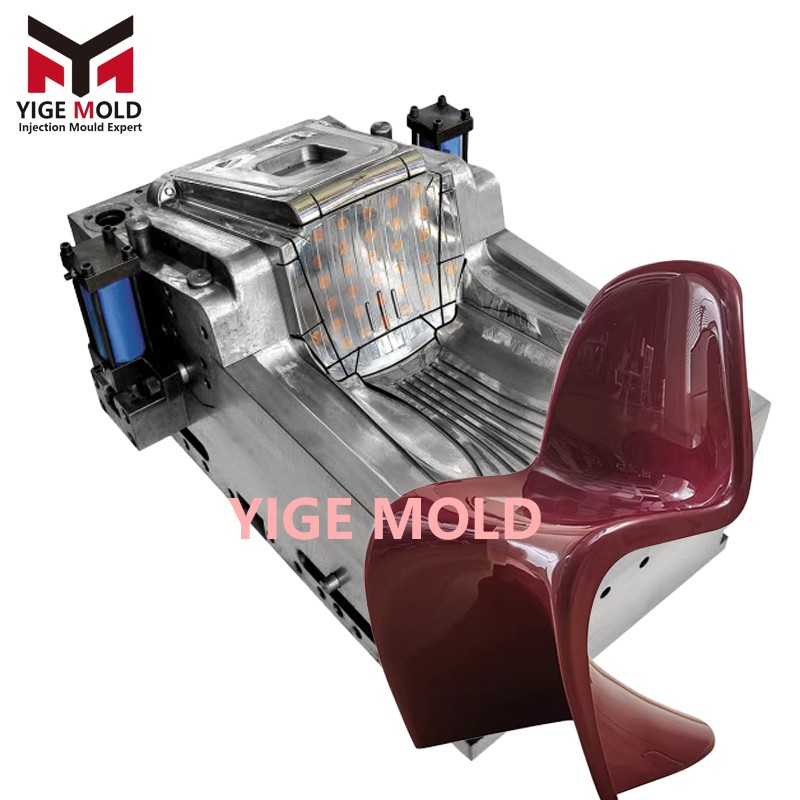
Plastic bar stool molds are precision injection molding equipment specifically designed for producing high-stool seating used in bars, restaurants, and commercial spaces. Their technological core lies in resolving the synergistic contradictions between the stability of a high-center-of-gravity structure, the ergonomic support of contoured surfaces, and the durability required for high-frequency use. Compared to conventional chair molds, this type of mold must achieve a deep integration of mechanical performance and aesthetic expression within a limited support footprint, representing a specialized mold category in commercial furniture that combines high technical content with high added value.
I. Product Function and Mold Design Positioning
As high-frequency-use commercial seating, bar stools' specific usage scenarios impose systematic requirements on mold design:
-
Dynamic Stability Mechanics System:
-
The mold must construct a three-level anti-tip structure: the tapered design of the leg splay angle at the base (8-12°), the mesh layout of cross-bracing ribs in the mid-section, and the dome structure of the support plate beneath the seat. Finite element analysis optimizes rib orientation, enabling the finished product to limit deformation to within 3mm under a 150kg lateral force, with a center of gravity offset angle ≤2.5°.
-
-
Commercial-Grade Durability Engineering:
-
To withstand a daily usage frequency of 200+ cycles, the mold employs a design optimized for glass fiber reinforced nylon materials. The runner system ensures the oriented distribution of glass fibers in stress concentration areas. Key connection points feature cavities designed for overmolding metal inserts, achieving a molecular-level bond between plastic and metal, increasing screw pull-out resistance by 3 times compared to conventional designs.
-
-
Hygiene and Maintenance Optimization Design:
-
The seat surface and footrest ring utilize a seamlessly blended curved surface, with all corners featuring a radius of R≥5mm. The surface texture, created via a 5000-grit fine satin etching process, forms a microscopic hydrophobic structure (contact angle >110°), causing spilled liquids to bead and roll off, improving cleaning efficiency by 60%.
-
II. Core Mold Structure and Innovative Solutions
To achieve stable demolding and efficient production of the high-stool form, the mold employs multi-dimensional innovative design:
-
Inverse Taper Reverse Demolding System:
-
Addressing the bar stool's characteristic top-heavy, bottom-light structure, a two-stage pneumatic-hydraulic ejection mechanism was developed: the first stage uses 12 nitrogen gas springs for overall pre-ejection (20mm stroke), and the second stage employs hydraulically driven petal-style split core slides to complete lateral separation. The entire process finishes within 4 seconds without ejection marks.
-
-
Gradient Density Control Technology:
-
The seat area uses variable cross-section conformal cooling technology, employing 3D-printed conformal channels for rapid cooling (reducing cycle time by 30%), while the support column area uses slower cooling to enhance crystallinity. This differential cooling process gives the finished product gradient mechanical properties: seat surface Shore D hardness 75 vs. support column hardness D85.
-
-
Multi-Function Integrated Molding Solution:
-
The mold integrates in a single cycle the formation of the footrest anti-slip pattern (array of 0.8mm deep diamond protrusions), brand logo浮雕 (0.3mm bas-relief process), and cable management channels (concealed 25mm diameter wire routing grooves). Through sequential control of 32 hot runner nozzles, simultaneous filling of the complex structure is achieved.
-
III. Manufacturing Process and Validation System
Mold manufacturing establishes quality standards specific to commercial furniture:
-
Ergonomic Validation Platform:
-
Based on data collected by a pressure mapping system, the saddle-shaped seat curve is optimized. The final surface achieves pressure <15kPa in the ischial tuberosity area and a pressure distribution gradient <5kPa/cm in the thigh support area, reducing pressure fatigue value by 42% after 4 hours of continuous sitting.
-
-
Special Surface Treatment Process:
-
The cavity surface undergoes nano-composite coating technology: first, a CrAlN coating is deposited via PVD (3-5μm thick, hardness HV2300), followed by a Diamond-Like Carbon (DLC) film (1-2μm thick, friction coefficient 0.15). This results in a surface wear rate of <0.01% after 5 million usage test cycles.
-
-
Extreme Condition Testing System:
-
A full-scenario validation system is established, including dynamic fatigue testing (1 million load-bearing lift cycles), chemical resistance testing (immersion in alcohol, acid, alkali reagents), low-temperature impact testing (1.5m drop at -20°C), and flame retardancy testing (UL94 V-0 standard).
-
IV. Technological Innovation and Commercial Value
This mold technology drives commercial seating towards higher performance and durability:
-
Commercial Space Efficiency Revolution:
-
Structural optimization reduces single stool weight by 25% while increasing load capacity to 200kg and improving stacking density by 40%. Modular design allows seat surface/color replacement within 30 minutes, meeting the rapid refurbishment needs of commercial spaces.
-
-
Total Lifecycle Cost Optimization:
-
Enhanced durability extends product service life from an industry average of 3 years to 8 years, reducing maintenance frequency by 70%. Over its lifespan, a single mold can produce 500,000-800,000 units, with per-unit production cost reduced by 18% compared to traditional processes.
-
-
Breakthrough in Commercial Aesthetic Expression:
-
Achieves precise replication from classic wood grain to metal brushed effects, supporting accurate color rendition within the RGB system (ΔE <1.5). Can integrate LED light guide structures, forming light-diffusing microstructures within the stool legs for integrated commercial ambient lighting.
-
Current technology is evolving towards integrated smart interaction (pressure-sensing seat pads, wireless charging modules), adaptive structures (pneumatic seat height adjustment), and sustainable circularity (100% disassemblable and recyclable design). Plastic bar stool molds have become a key indicator of a commercial furniture manufacturer's capabilities across the entire chain from structural design to application. Their technological evolution path profoundly illustrates the modern manufacturing philosophy of "supporting commercial experience through engineering innovation."