

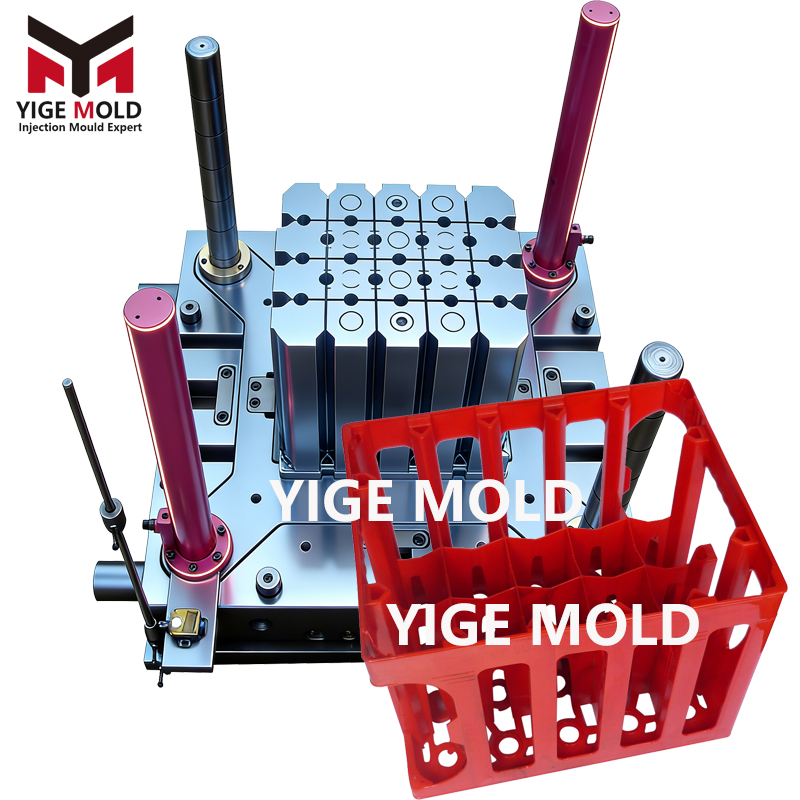
 When it comes to plastic injection molding, mold design is the foundation of final product quality, production stability, and overall cost control. A well-designed mold not only ensures smooth injection molding but also extends service life, reduces defects, and lowers long-term production costs. In this guide, we break down the most critical factors in injection mold design, from structure and material selection to cooling systems and ejection mechanisms, to help engineers, purchasers, and product developers make informed decisions.
1. Understanding Product Requirements Before Mold Design
Before starting any mold design, it is essential to clarify product specifications, including material type, wall thickness, appearance requirements, dimensional tolerance, expected production volume, and application environment. Different plastic materials have different shrinkage rates, flowability, and temperature resistance, which directly affect mold structure.
For example, PP and PE materials have high shrinkage and require reasonable compensation in mold design. Engineering plastics such as ABS, PC, and PA have higher rigidity and temperature resistance, so mold strength and cooling efficiency must be enhanced. Ignoring product requirements at the early stage often leads to molding defects, frequent mold modifications, and increased costs.
2. Proper Wall Thickness Design
Uniform wall thickness is one of the most important principles in injection mold design. Uneven wall thickness causes uneven cooling, resulting in sink marks, warpage, shrinkage, and internal stress. In general, plastic product wall thickness ranges from 0.8mm to 4mm.
If the product structure requires varying thickness, smooth transitions should be used instead of sudden changes. Proper wall thickness not only improves molding quality but also shortens cycle time and reduces material consumption.
3. Gate Design: Location, Type and Size
The gate is where molten plastic enters the mold cavity, and its design directly affects filling balance, appearance, and deformation. Common gate types include:
- Edge gate
- Pin gate
- Submarine gate
- Hot runner gate
- Fan gate
The gate location should be set at the thickest section of the product to ensure smooth filling. For multi-cavity molds, balancing flow among all cavities is critical. Improper gate design can lead to short shots, burn marks, flow marks, and high residual stress.
4. Cooling System Design for Stable Cycle Time
The cooling system accounts for a large portion of the injection cycle. A well-designed cooling channel can reduce cycle time by 30% to 50%, greatly improving production efficiency. Key points include:
- Evenly distributed cooling channels
- Appropriate distance from the cavity surface
- Balanced water flow to avoid dead zones
- Separate circuits for core and cavity
Molds without effective cooling often suffer from long cycles, inconsistent dimensions, and warpage. For high-speed production molds, conformal cooling or enhanced cooling layouts are highly recommended.
5. Venting System to Avoid Burning and Short Shots
During injection, air inside the mold cavity must be discharged smoothly. Poor venting leads to trapped air, resulting in burn marks, bubbles, weld lines, and incomplete filling.
Vents are usually placed at the end of the flow path, deep rib areas, and areas where melt fronts meet. The vent depth depends on the plastic material, typically between 0.02mm and 0.05mm. Proper venting improves surface quality and reduces rejection rates.
6. Ejection System Design
The ejection system pushes the finished product out of the mold. Common ejection methods include ejector pins, ejector sleeves, stripper plates, and air ejection. The design should ensure:
- Balanced ejection force
- No deformation or damage to the product
- Suitable pin position and quantity
- Avoiding visible marks on appearance surfaces
Unbalanced ejection causes warping, sticking, or even product breakage.
7. Shrinkage Compensation
Different plastics have different shrinkage rates. Mold cavities must be enlarged according to the material’s shrinkage ratio to ensure final product dimensions meet requirements. Common shrinkage rates:
- PP: 1.6%–2.0%
- ABS: 0.5%–0.8%
- PC: 0.5%–0.7%
- PA66 with glass fiber: 0.3%–0.8%
Accurate shrinkage calculation avoids dimensional deviation and repeated mold modification.
8. Mold Steel Selection
Mold steel directly impacts mold life, surface quality, and cost. Commonly used steels:
- P20, 718H: for general plastic molds, medium life
- NAK80: for high-gloss, mirror-finish products
- S136, STAVAX: for corrosion-resistant, high-polish, medical or food-contact molds
- H13: for high-temperature engineering plastics
Choosing the right steel balances cost and performance.
9. Mold Flow Analysis
Mold flow simulation (CAE) helps predict filling behavior, pressure distribution, temperature changes, and potential defects before actual mold manufacturing. It reduces trial times, avoids design risks, and optimizes cycle time. Professional mold manufacturers always perform mold flow analysis for complex or high-precision products.
Post time:2026-04-15