PET transparent fish tank mold
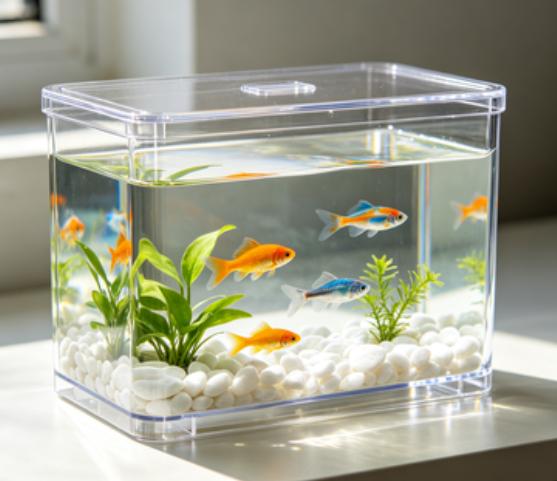
PET Transparent Aquarium Molds
I. Overview of PET Transparent Aquarium Molds
1.1 Definition of PET Transparent Aquarium Molds
As the name suggests, PET transparent aquarium molds are specialized tools made from Polyethylene Terephthalate (PET) for manufacturing aquariums. PET is a common plastic polymer renowned for its excellent properties and wide range of applications. When used to manufacture aquarium molds, it imparts unique value and significance to the production process.
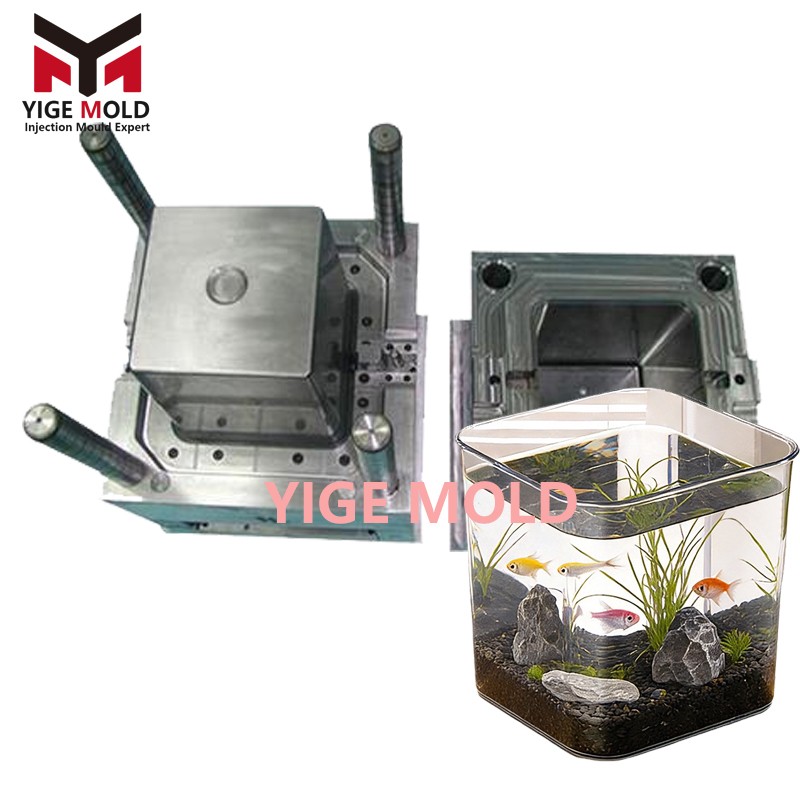
The mold serves as the "master template" for the aquarium, dictating its external shape, specifications, and intricate details. During production, molten plastic is injected into the PET transparent aquarium mold. Following cooling and solidification, the aquarium takes its preliminary form. The advent of these molds has facilitated the mass production of diverse and uniquely shaped aquariums, meeting the growing demand for fish keeping and home decoration.
1.2 Characteristics of PET Transparent Aquarium Molds
PET transparent aquarium molds possess several distinct advantages that make them highly favored in production:
-
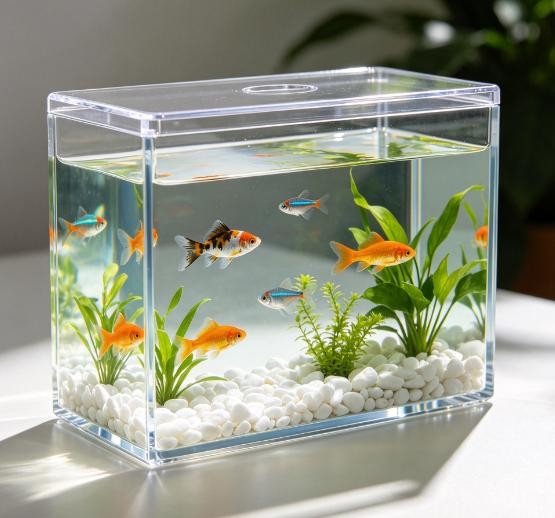
High Transparency: Comparable to glass, PET offers exceptional clarity, allowing viewers to observe fish and aquatic plants vividly, creating an immersive visual experience.
-
Chemical Corrosion Resistance: Aquariums often contain water conditioners and decorations. PET resists chemical erosion, ensuring the structural integrity and longevity of the tank.
-
Lightweight: Significantly lighter than glass tanks, PET molds facilitate easier transportation, installation, and repositioning.
-
Easy Processability: PET can be readily cut, carved, and thermoformed, allowing for the creation of unique, customized shapes to meet diverse market demands.
II. Material Advantages of PET Transparent Aquarium Molds
2.1 Transparency Advantage of PET
The transparency of PET stems from its unique molecular structure. PET exhibits a high degree of crystallinity and orderly molecular chain arrangement, minimizing light interference and allowing a high percentage of light to pass through. With a light transmittance rate of over 80% and a haze as low as 0.5–4%, its clarity rivals that of glass. This ensures that the movement of fish, swaying plants, and colorful decorations are presented with stunning realism, transforming the aquarium into a captivating focal point in homes or commercial spaces.
2.2 Chemical Corrosion Resistance of PET
PET demonstrates outstanding chemical corrosion resistance due to its stable molecular structure, particularly the ester groups within its chains. It effectively resists reactions with water conditioners, disinfectants, and metabolic secretions from microorganisms. This stability extends the aquarium's service life, reduces the frequency of replacements, saves costs for users, and minimizes resource waste and environmental pollution. This property ensures a safe and stable habitat for aquatic life while preserving the tank's aesthetic value.
2.3 Lightweight Nature and Processability of PET
PET is notably lightweight, with a density of only 1.3–1.38 g/cm³, significantly lower than traditional glass. This facilitates easier handling during mold manufacturing and transportation, reducing labor costs.
Furthermore, PET is a thermoplastic with excellent processability. It can be shaped into various forms—round, square, or irregular—using methods such as injection molding, extrusion, and thermoforming. This flexibility allows designers to respond quickly to market trends and consumer preferences, enhancing the competitiveness of PET molds in the aquarium market.
III. Design Key Points of PET Transparent Aquarium Molds
3.1 Aquarium Size and Shape Design
Designing the size and shape requires a comprehensive consideration of multiple factors:
-
Size: Small tanks (30–50 cm) suit desktop placement for goldfish or small tropical fish. Large tanks (over 1 meter) are necessary for larger species like Arowana or Koi to ensure adequate swimming space.
-
Shape: Circular tanks offer panoramic viewing but lower space efficiency. Rectangular tanks are versatile and complement most decor styles. Square tanks provide a modern look, while irregular shapes (triangles, hexagons) serve as artistic decorative highlights.
3.2 Mold Structural Strength Design
Ensuring structural strength is critical. The mold must withstand the high pressure and impact of molten plastic during injection. Scientific mechanical analysis is required to calculate stress distribution. Wall thickness must be optimized—too thin causes deformation, too thick increases cost. Reinforcing ribs should be strategically placed to enhance rigidity. Selecting high-strength engineering plastics or alloy materials, along with robust connection mechanisms, ensures the mold maintains its integrity over long production cycles.
3.3 Mold Ejection Design
Ejection design directly impacts production efficiency and product quality.
-
Draft Angle: Must be set appropriately based on PET’s properties. Simple shapes require a draft of 0.5°–1.5°, while complex shapes with undercuts require larger angles to prevent sticking.
-
Mechanisms: Ejector pins or stripper plates should be incorporated to apply mechanical force for removal.
-
Surface Finish: Applying release agents or designing polished surfaces reduces friction, ensuring smooth ejection without damaging the aquarium's appearance or precision.
IV. Manufacturing Process of PET Transparent Aquarium Molds
4.1 Material Preparation and Pre-treatment
Material preparation is vital. High-purity PET granules or sheets must be selected to avoid impurities. Due to PET's hygroscopic nature, drying is essential to prevent hydrolysis and maintain melt flow. Typically, PET is dried in an oven at 120°C–150°C for 4–6 hours until moisture content drops below 0.02%. It must then cool to room temperature before processing. Recycled PET requires crushing and washing to remove contaminants, ensuring the mold meets quality standards.
4.2 Mold Forming Process
-
Injection Molding: The most common method. Dried PET is melted and injected into the mold cavity under high pressure (60–100 MPa) and temperature (260°–300°C). Parameters are precisely controlled to ensure the material fills the cavity completely before cooling and solidification.
-
Blow Molding: Suitable for hollow aquariums. A parison (tube) is extruded, placed in the mold, and inflated with compressed air to conform to the cavity shape.
-
Thermoforming: Used for simpler, thicker-walled molds. PET sheets are heated until soft and pressed into shape.
4.3 Post-processing and Inspection
Post-processing includes deburring and polishing to ensure smooth surfaces. Quality inspection involves:
-
Dimensional Inspection: Using calipers and micrometers to verify critical dimensions.
-
Appearance Inspection: Visual checks for cracks, bubbles, or dents.
-
Performance Testing: Simulating high-pressure or corrosive environments to validate durability and stability.
V. Market Applications of PET Transparent Aquarium Molds
5.1 Home Aquarium Market
In the home market, demand is rising steadily. PET aquariums are popular for their aesthetic appeal and practicality.
-
Families with Children: Small tanks provide educational entertainment.
-
Young Adults: Sleek, minimalist designs enhance living spaces.
-
Seniors: Lightweight tanks are easy to move and maintain.
The ability to produce diverse shapes and sizes allows PET molds to cater to various home decor styles, making them a staple in residential settings.
5.2 Commercial Applications (Aquariums, etc.)
Commercial venues benefit significantly from PET molds:
-
Visual Impact: High transparency creates immersive underwater viewing experiences.
-
Customization: Large, irregularly shaped tanks can be produced for massive installations, while smaller ones suit boutique displays.
-
Durability: Chemical resistance ensures longevity despite complex water treatments.
-
Flexibility: Lightweight construction allows for easy rearrangement of exhibits, enhancing operational efficiency.
VI. Development Trends of PET Transparent Aquarium Molds
6.1 Application of New Materials and Processes
Future advancements will focus on innovation.
-
New Materials: Development of composites combining high transparency with enhanced impact strength and chemical resistance.
-
Advanced Manufacturing: Additive manufacturing (3D printing) will enable complex, organic designs previously impossible with traditional methods. Digital simulation will optimize mold flow and cooling, reducing defects and lead times.
6.2 Personalization and Customization Trends
Consumer demand for uniqueness is driving customization.
-
Bespoke Designs: Integrating digital design tools to create aquariums matching specific interior themes (e.g., ocean, rainforest).
-
Rapid Prototyping: Utilizing 3D printing for fast mold creation.
-
Market Segmentation: Catering to niche markets with specialized shapes and functions, elevating the aquarium from a container to a piece of art.