Transparent Bathtub Mold
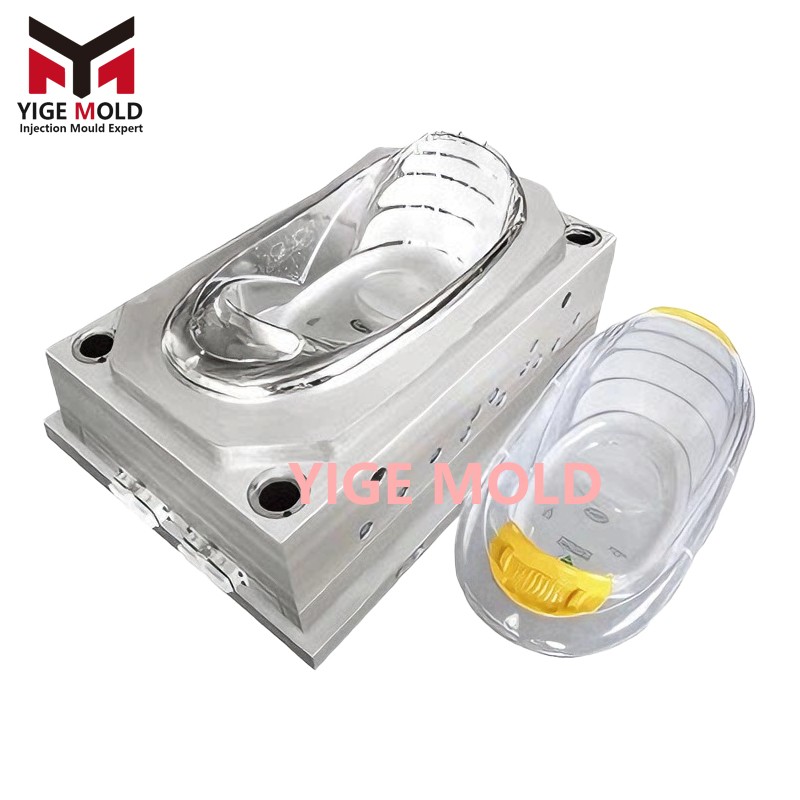
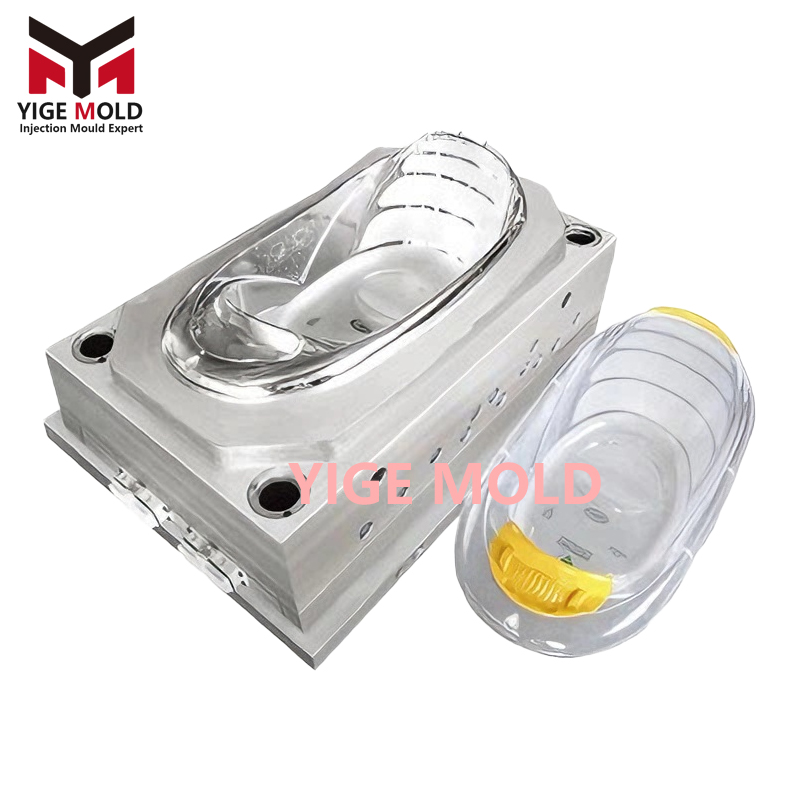
Transparent Bathtub Injection Mold: The Optical Sculptor and Alchemist of Light and Shadow in Sanitary Ware
In the evolution of modern high-end sanitary ware design, the bathtub has long transcended its functional definition as a mere water container, transforming into a core sculpture that carries spatial aesthetics and sensory experiences. The transparent bathtub, with its unique translucent texture, breaks the dullness and enclosure of traditional materials, perfectly fusing the fluidity of water with the metamorphosis of light and shadow, creating an almost immersive bathing ritual. However, the industrial system that translates this extreme visual transparency from design blueprints into physical reality is a set of tooling with almost fanatical requirements for optical precision—the Transparent Bathtub Injection Mold. It is not merely a tool for manufacturing sanitary products but a precision alchemy furnace of light and shadow. Through the coldness of steel and the flow of plastics, it constructs a complex balance of purity, strength, and aesthetics between the microscopic and the macroscopic, standing as the most dazzling pearl in the crown of the sanitary ware industry.
The Ultimate Polishing of Mirror Steel: The Steel Oath of Optical Purity
The soul of a transparent bathtub mold lies in its absolute pursuit of "flawlessness." Unlike ordinary sanitary molds that only need to focus on structural forming, the cavity surface of a transparent mold must achieve an optical-grade mirror standard. This is not just for aesthetics but for the propagation of light. Any microscopic scratch, pitting, or machining mark will be amplified during the injection molding process, causing light to diffuse as it passes through the bathtub wall, turning what should be a crystal-clear product into a murky and blurred object.
Therefore, the selection of mold steel often points to high-grade corrosion-resistant mirror steels like S136H, which must undergo extremely complex polishing processes until the surface roughness reaches the ultimate realm of Ra≤0.05μm. This is not only a limit challenge for metal machining technology but also a steel oath regarding purity. Mold engineers must ensure that during the long injection cycles, this "steel mirror" remains spotless, resisting the scouring and corrosion of high-temperature, high-pressure plastic melts. Every mold opening is the redemption of this optical promise, ensuring that every bathtub produced is as clear as crystal, allowing the bather to feel the flow and breath of light and shadow on their skin through the layers of water.
Precision Meshing with Zero Gaps: The Micron-Level Game to Prevent Flash
In the realm of transparent injection molding, flash (burrs) is an absolute taboo. For opaque products, flash might be concealed through post-trimming, but on a transparent bathtub, any excess overflow acts like an ugly scar, destroying the overall visual coherence and even creating glaring refractive highlights under illumination. This requires that the parting surface and insert fits of the transparent bathtub mold achieve a sealing precision at the micron level.
Mold design must adhere to the "zero gap" principle, with parting surface fit tolerances controlled within 0.01mm, and even employing vacuum suction structures in key areas to enhance sealing. This precision meshing is not only a test of machining accuracy but also a precise calculation of the thermal expansion coefficient of the mold steel. In the high-temperature injection environment, the mold steel undergoes microscopic deformation; designers must predict this change and, through mold flow analysis and structural optimization, ensure that the moment the mold closes and locks, it forms an impregnable sealing defense line. This is a game played on a micron scale; only by winning this game can the轮廓 (contour) of the bathtub edge be ensured to be as sharp and clear as a knife cut, preventing the sense of lightness of the transparent material from being dragged down by any traces of excess plastic.
Conformal Cooling and Stress Elimination: The Invisible Nemesis of Optical Distortion
The greatest invisible enemy of transparent bathtubs is internal stress. If the mold's cooling system is improperly designed, leading to uneven cooling of the bathtub wall thickness, residual stress will be generated within the product. This stress may be invisible in appearance, but under a polariscope, it presents colorful stripes, seriously affecting optical performance and even leading to stress cracking during future use. This issue is particularly prominent for bathtub structures with large variations in wall thickness.
To this end, transparent bathtub molds introduce advanced conformal cooling channel designs. These channels, like blood vessels, closely fit the complex curved contours of the bathtub, ensuring that the cooling medium evenly carries away heat from every spot, strictly controlling mold temperature fluctuations within ±1℃. This uniform heat exchange mechanism effectively avoids shrinkage unevenness and refractive index variations caused by temperature differences, eliminating optical distortion and stress concentration from the source. In addition, the mold's venting system is precisely calculated, with micron-level venting slots placed in deep cavities and ends to prevent burns and silver streaks caused by trapped air. Through this precise control of thermodynamics and rheology, the mold endows the transparent bathtub with an inner tranquility and stability, allowing it to maintain the constancy and purity of its optical performance even when bearing hundreds of kilograms of water and body weight.
Conclusion
The transparent bathtub injection mold is the ultimate romance that industrial manufacturing bestows upon sanitary spaces. With the ultimate polishing of mirror steel, it makes a vow of optical purity; with precision meshing of zero gaps, it performs a micron-level perfectionism; with the wisdom of conformal cooling, it eliminates invisible internal stress. Behind every transparent bathtub stands a silent yet magnificent mold system. It does not directly touch the water, yet it defines the water's form; it does not directly refract light, yet it paves the path for light and shadow. It is the optical sculptor of the sanitary ware industry, silently casting dreams of purity, transparency, and luxury in every injection cycle.