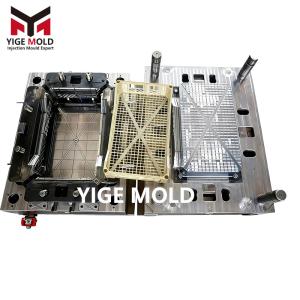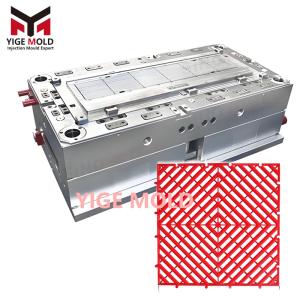
Transparent trash can mold
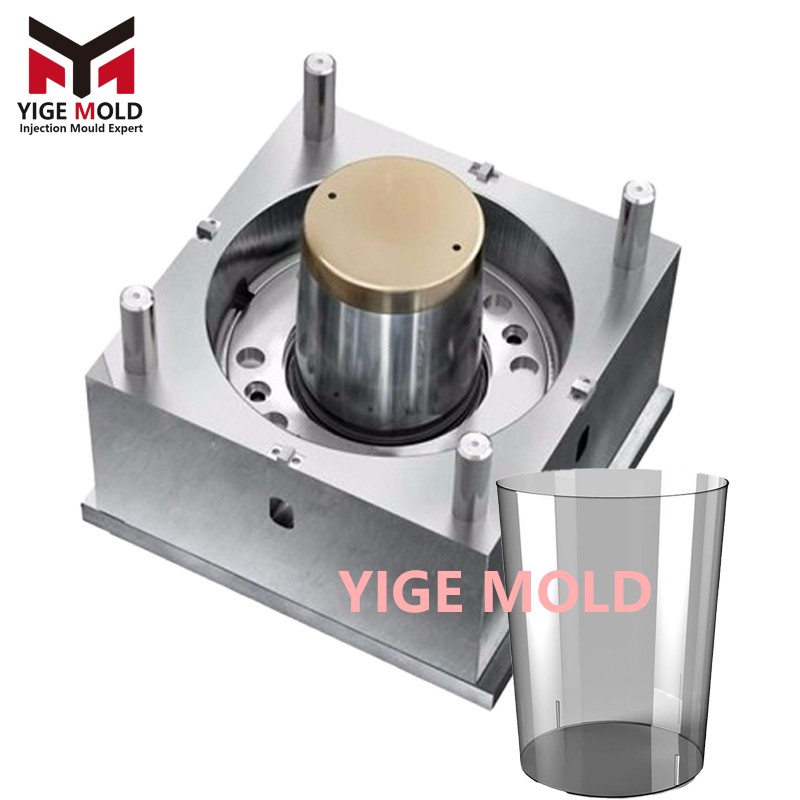
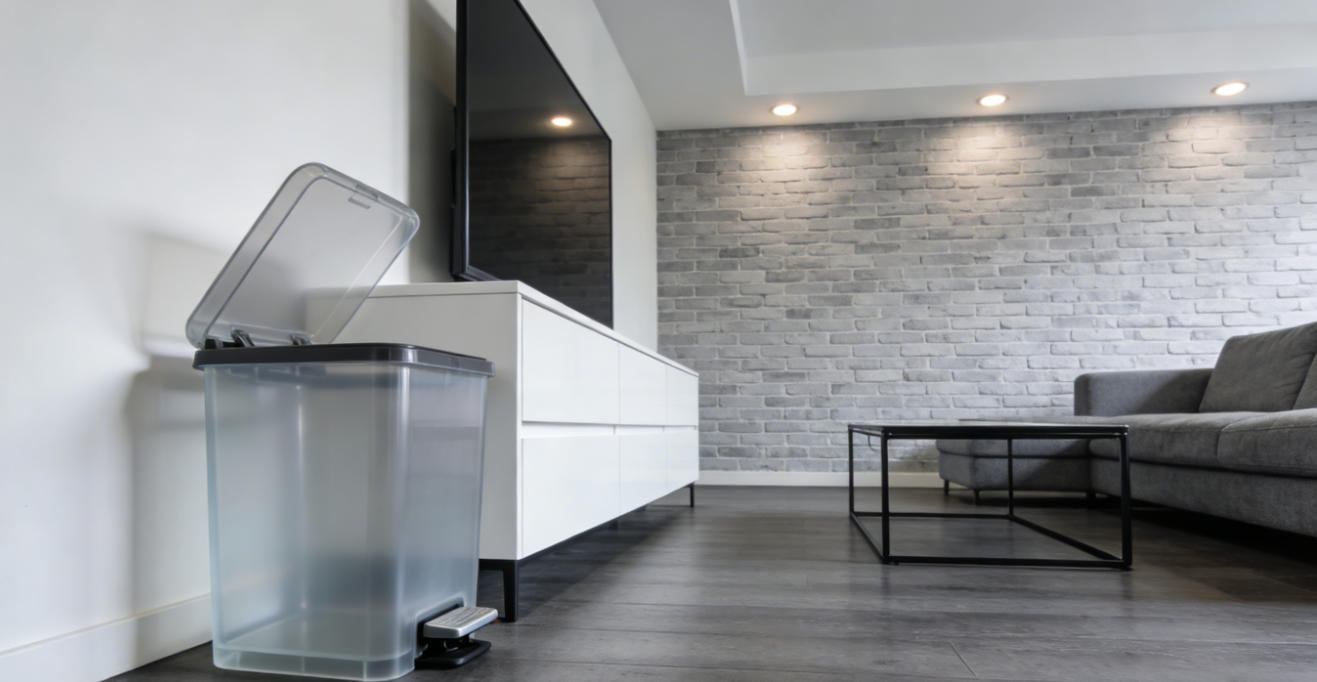 Transparent Trash Can Mold: Precision Fusion of Optical Aesthetics and Functional Structure
I. Industry Positioning and Process Challenges
The transparent trash can mold represents one of the most technologically complex categories within the plastic household products sector. Its core value lies in transforming a functional container into a home furnishing item with visual aesthetics. This type of mold must not only achieve conventional structural molding but also overcome three major technical hurdles: maintaining transparency, controlling surface gloss, and eliminating stress marks. The precision grade of the mold directly determines the product's premium pricing capability in the consumer market, and its manufacturing standard serves as a key benchmark for measuring the technical prowess of household plastic mold enterprises.
II. Optical-Grade Surface Treatment Technology System
1. Ultra-Mirror Polishing Process
The mold cavity must achieve #A1 mirror finish standards (surface roughness Ra ≤ 0.012 μm), employing a seven-stage progressive polishing process:
-
Rough Polishing Stage: Uses 600# diamond paste to eliminate machining marks.
-
Medium Polishing Stage: Employs 3 μm diamond paste for homogenization.
-
Fine Polishing Stage: Uses 0.5 μm aluminum oxide suspension for preliminary mirror finish.
-
Ultra-Fine Polishing Stage: Utilizes silicon dioxide nano-polishing fluid to achieve final glossiness.
Critical curved surface areas require magnetorheological polishing technology to ensure surface reflectivity deviation ≤ 2%.
2. Micro-Texture Control Technology
Develops differentiated surface solutions for various transparency requirements:
-
Crystal Clear Effect: Achieved via electron beam polishing with surface waviness < 0.05 μm.
-
Frosted Translucent Effect: Created through sandblasting to form a uniform roughness of 0.8-1.2 μm.
-
Graduated Transparency Effect: Produced using laser micro-texturing to create graduated texture bands of 0.3-0.5 mm.
3. Anti-Fouling Coating Process
After polishing, a Diamond-Like Carbon (DLC) coating is applied (thickness 0.8-1.2 μm), imparting the following properties:
-
Surface hardness increased to above HV2500.
-
Friction coefficient reduced to below 0.1.
-
Resistance to plastic additive adhesion improved by 300%.
III. Structural Design and Optical Optimization
1. Wall Thickness Balancing System
An optical compensation model for wall thickness is established, considering the light-transmitting properties of transparent materials:
-
Main wall thickness controlled within 2.0-2.5 mm range, tolerance ±0.1 mm.
-
Rib thickness is 40-50% of the main wall, with R1.5 fillets at the roots.
-
Corner areas employ a graduated thickening design with a thickness change rate < 15% per 10 mm.
-
Weld line positions are optimized via mold flow analysis to ensure they occur in non-visible areas.
2. Innovative Runner Design
A hybrid system combining hot and cold runners is utilized:
-
Main runner uses an open hot runner with diameter φ12-16 mm.
-
Ends employ pin-point gates with diameter φ0.8-1.2 mm.
-
Gate location is set at the center of the trash can base, with filling balance controlled by optimizing the runner length ratio.
-
Tapered progressive cold runners are developed to achieve smooth melt flow turning, eliminating flow marks.
3. Innovative Venting System
A four-stage, three-dimensional venting network is established:
-
Stage 1: Parting line vents with 0.015 mm depth, coverage >85%.
-
Stage 2: Ejector pins with 0.02 mm clearance for auxiliary venting.
-
Stage 3: Porous metal vent inserts (35% porosity) installed in core inserts.
-
Stage 4: Vacuum-assisted venting in critical areas achieving -0.095 MPa vacuum.
IV. Precision Temperature Control System
1. Zoned Precision Temperature Control
The mold is divided into 12 independent temperature control zones:
-
Gate Area: Uses pulsed temperature control with accuracy of ±0.5°C.
-
Main Body Area: Features conformal cooling channels 8-10 mm from the cavity surface.
-
Base Area: Employs beryllium copper inserts with water mist cooling, improving heat dissipation by 40%.
-
Edge Area: Equipped with independent closed-loop temperature control, maintaining temperature variation within 2°C.
2. Temperature Gradient Management
A 3D temperature field simulation system is implemented:
-
Inlet zone temperature set at 85-90°C.
-
Central zone maintained at 80-85°C.
-
End zone controlled at 75-80°C.
-
Internal stress is eliminated via gradient control, achieving birefringence < 15 nm/cm.
V. Material Compatibility Technology
1. Multi-Material Compatible Design
The mold is adapted to the characteristics of mainstream transparent materials:
-
GPPS Material: Shrinkage 0.4-0.7%, requires fast cooling solutions.
-
AS Material: Shrinkage 0.2-0.6%, demands high mold temperature control (60-80°C).
-
PC Material: Shrinkage 0.5-0.7%, needs more extensive venting systems.
-
PMMA Material: Shrinkage 0.3-0.8%, requires ultra-high surface finish.
2. Recycled Material Adaptation Optimization
Specialized runners are developed for recycled materials to meet environmental requirements:
-
Gate size increased to 120% of standard.
-
Venting area increased to 150% of conventional design.
-
Cooling channel layout optimized, extending cooling time by 20%.
-
Wear-resistant coatings applied to counter impurity abrasion in recycled materials.
VI. Quality Control System
1. Optical Inspection Standards
A light transmittance grading system is established:
-
Grade A: Transmittance ≥ 88%, Haze ≤ 1.5%.
-
Grade B: Transmittance 85-88%, Haze 1.5-2.5%.
-
Grade C: Transmittance 80-85%, Haze 2.5-3.5%.
An integrating sphere photometer is used for sampling every cycle, with automatic data recording and analysis.
2. Stress Detection Solution
A polarized light detection system is employed:
-
Four sets of polarized light sensors are installed for real-time monitoring.
-
A thermal map database for stress distribution is created.
-
A stress threshold alarm system is configured, with maximum stress ≤ 25 MPa.
-
A stress relief process package is developed, reducing residual stress by 30% through post-processing.
3. Dimensional Stability Verification
Full lifecycle dimensional monitoring is implemented:
-
First article inspection uses CMM with ≥200 sampling points.
-
Key dimensions are rechecked every 1,000 cycles.
-
After 100,000 consecutive cycles, key dimensional change rate ≤ 0.15%.
-
A dimensional change prediction model is established with accuracy of ±0.05 mm.
VII. Production Efficiency Optimization
1. Rapid Molding Technology
Cycle time is shortened through process innovation:
-
Packing curve optimization reduces packing time by 25%.
-
Variotherm mold temperature technology improves cooling efficiency by 30%.
-
A quick mold opening/closing system reduces dry cycle time to 3.5 seconds.
-
Automated part removal implementation controls total cycle time within 35 seconds.
2. Yield Improvement Solutions
A defect prevention system is established:
-
Surface defect预警 accuracy ≥ 95%.
-
Automatic dimensional anomaly adjustment response time < 10 seconds.
-
Material switchover adaptation time reduced to 15 minutes.
-
Overall yield stabilized above 99.2%.
VIII. Innovative Application Expansion
1. Smart Feature Integration
Multi-functional transparent trash can molds are developed:
-
Integrated sensor mounting structures with ±0.1 mm accuracy.
-
Concealed battery compartment design with ≤5% volume error.
-
LED light strip installation channels with ±0.05 mm width tolerance.
-
Positioning structures for smart weighing modules.
2. Structural Innovation Design
Differentiated product series are introduced:
-
Floating Structure: Bottom visual floating effect with minimum support surface of only 15 mm.
-
Modular Design: Wet/dry separation achieved by更换 inner buckets.
-
Thin-Wall Lightweighting: 1.8 mm wall thickness achieves equivalent strength, reducing weight by 25%.
-
Artistic Forms: Geometric cut designs with refractive index variation controlled within 3%.
IX. Economic Benefit Analysis
Investment returns for transparent trash can molds are reflected in multiple dimensions:
-
Product Premium Ability: Transparent series command 30-50% premium over standard products.
-
Production Efficiency: Molding cycle time is 20% shorter than conventional molds.
-
Material Savings: Wall thickness optimization reduces raw material consumption by 15%.
-
Service Life: High-quality mold life can reach 1.5 million cycles.
-
Maintenance Costs: Modular design reduces maintenance expenses by 40%.