Bottle Cap Mold
Bottle Cap Mold: The Micro-Level Sealing Art and the Precision Concerto of High-Speed Injection Molding
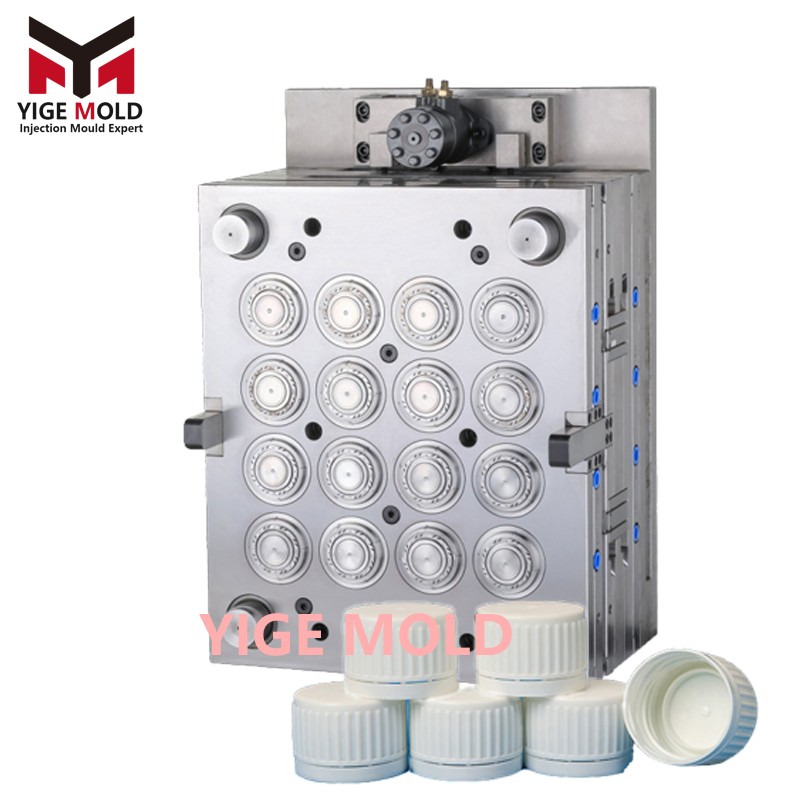
In the grand blueprint of the fast-moving consumer goods industry, the bottle cap, though existing in a minute form, undertakes the core mission of sealing, tamper-evidence, preservation, and interaction. It is the gatekeeper of the liquid world, the first point of contact between the consumer and the product, and the ultimate embodiment of precision and efficiency in the injection molding industry. And the entity that endows this minute component with life and function is the Bottle Cap Mold—a precision manufacturing system integrating micro-level machining accuracy, high-speed hot runner systems, and complex demolding mechanisms. It is not merely a metal cavity but a miniature factory that completes melting, molding, cooling, and demolding within milliseconds, performing an industrial aesthetic concerto with its steel body, transforming plastic particles into a sealing art that guards quality in every high-speed cycle.
Micro-Level Thread Precision: The Steel Oath of Sealing Performance
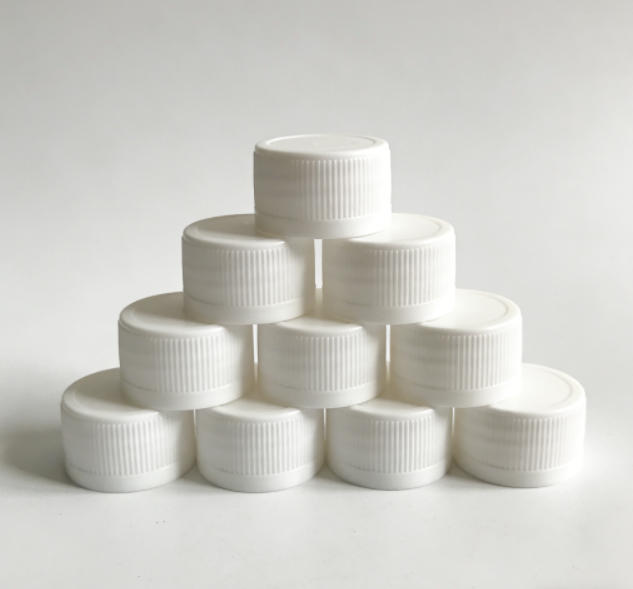
The core value of a bottle cap lies in sealing, and the key to sealing lies in thread precision. Whether it is the internal pressure sealing of carbonated beverages or the tamper-evident ring design of mineral water, the mold is required to achieve zero error at the micro-level. The core and cavity of the bottle cap mold jointly construct a negative thread space, with tolerances controlled within ±0.02mm, ensuring that the produced caps can perfectly mate with the bottle necks, neither leaking nor cracking.
To achieve this precision, the mold steel must undergo vacuum heat treatment and cryogenic treatment to eliminate internal stresses, ensuring dimensional stability during the thermal expansion and contraction of high-speed injection. The cavity surface requires mirror polishing and diamond-like carbon coating to reduce the friction coefficient, allowing the plastic melt to smoothly fill every minute corner of the thread, avoiding short shots and burrs. At the same time, the mold's cooling system adopts a conformal cooling channel design, arranged closely along the thread contour to ensure uniform heat dissipation and prevent thread deformation caused by uneven cooling. This ultimate pursuit of micro-level precision is the steel oath the bottle cap mold makes to sealing performance, allowing every cap to become a reliable guardian of the liquid world.
High-Speed Multi-Cavity Collaborative Production: The Dynamic Balance of Efficiency and Stability
As a typical fast-moving consumer good, bottle caps have a demand calculated in the hundreds of millions, requiring the mold to possess extremely high production efficiency and stability. Modern bottle cap molds typically adopt a multi-cavity design, with one mold producing 32, 64, or even 128 cavities. Paired with high-speed injection molding machines, they can produce hundreds of caps per minute. This high-speed production mode places strict collaborative demands on the mold's hot runner system, cooling system, and demolding mechanism.
The hot runner system must employ a valve gate design, using precise sequence control to ensure that the plastic melt fills every cavity simultaneously, avoiding weight deviations caused by flow differences. The cooling system requires zone-independent temperature control, combined with conformal cooling channels and baffle designs, keeping the temperature fluctuation of each cavity within ±1℃ to minimize the molding cycle. The demolding mechanism uses a rotating demolding or side core-pulling design, rotating the cap to disengage from the thread via mechanical or pneumatic means at the moment of ejection, avoiding thread damage caused by forced ejection. This high-speed multi-cavity collaborative production is the dynamic balance the bottle cap mold finds between efficiency and stability, making large-scale production possible while ensuring consistent quality for every cap.
Structural Innovation of Tamper-Evident Rings and Easy-Peel Lids: The Steel Expression of Function and Experience
As consumer demands for user experience increase, bottle cap functional designs are becoming increasingly complex, with structures like tamper-evident rings, easy-peel lids, and child-safety locks emerging one after another. The realization of these innovative structures is inseparable from the complex slider, lifter, and insert designs inside the mold. Taking the tamper-evident ring as an example, the mold needs to design a horizontally movable slider at the bottom of the cavity, which moves before the main core after injection to form the undercut structure of the tamper-evident ring, causing the ring to break upon first opening, leaving a clear sign of tampering.
For easy-peel lid structures, the mold needs to design extremely thin tear-line inserts at the top of the cap, with thickness controlled within 0.1mm, ensuring sealing performance while allowing consumers to easily tear it open. These inserts must be made of high-hardness tungsten steel, undergoing precision grinding and EDM to ensure the sharpness and consistency of the tear lines. At the same time, the mold's venting system must be designed in the minute gaps of the sliders and inserts to prevent burns and short shots caused by trapped air, ensuring the perfect forming of complex structures. This steel expression of function and experience makes the bottle cap mold not just a molding tool but a driver of product innovation, endowing minute components with a humanized touch.
Conclusion
The bottle cap mold is the caster of micro-level sealing art in the fast-moving consumer goods industry. With micro-level thread precision, it guards the quality and safety of liquids; with high-speed multi-cavity collaborative production, it supports the demands of large-scale manufacturing; with the structural innovation of tamper-evident rings and easy-peel lids, it enhances the consumer's user experience. Behind every bottle cap lies a profound understanding of precision, efficiency, and innovation by mold engineers. It does not directly touch the liquid, but it provides reliable sealing for every beverage; it does not directly participate in consumption, but it conveys care and convenience through humanized design. It is the precision caster of minute components, silently guarding the quality and trust of the fast-moving consumer goods world in every high-speed injection molding cycle.