Collapsible bathtub mold
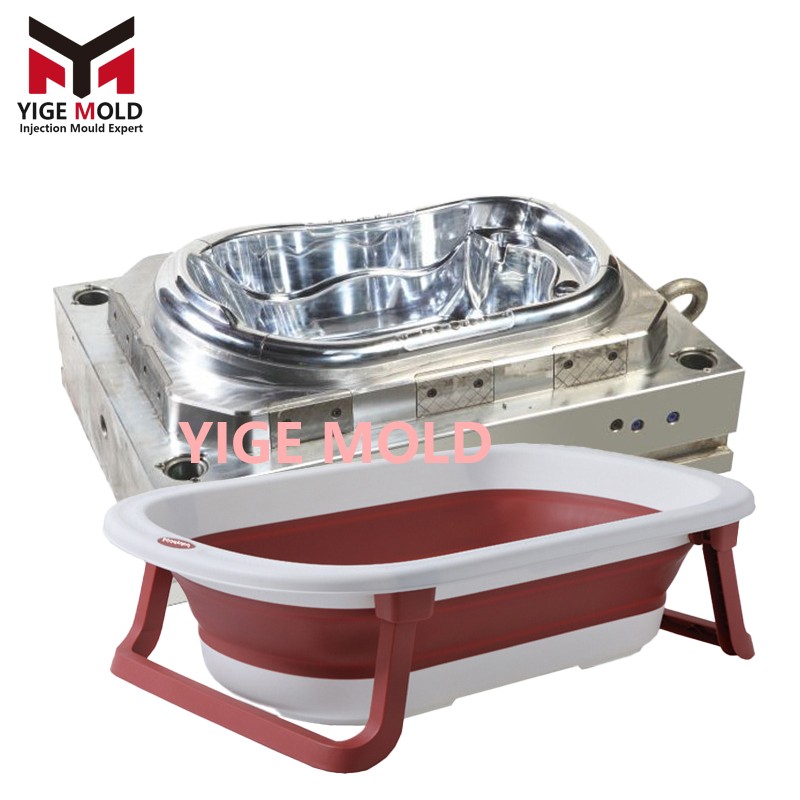
Comprehensive Introduction to Collapsible Bathtub Molds: The Fusion of Innovative Design and Precision Manufacturing
In today's market trend that pursues spatial efficiency, convenient living, and personalized bathroom experiences, the collapsible bathtub is rapidly evolving from an innovative concept to a household staple. The core industrial tool enabling this transformation from blueprint to reality is the collapsible bathtub mold. It is not merely a basic tool for plastic forming but a masterful integration of engineering design intelligence, material science, and precision manufacturing processes. This introduction will provide a systematic overview of this specialized field, covering multiple dimensions including design characteristics, structural classification, manufacturing techniques, material selection, as well as industry challenges and development trends.
I. Core Definition and Product Positioning
The collapsible bathtub mold specifically refers to the specialized molding tool used for the mass production of collapsible bathtubs. The final product is typically made from highly flexible thermoplastic materials (such as TPU, TPE, PVC) or composites. Through precise mold design, the finished product incorporates pre-set folding lines, hinge structures, or compressible wall thickness designs, achieving the core functionality of being quickly collapsed and significantly reducing storage volume after use. The mold's positioning directly determines the product's durability, leak-proofness, tactile feel, and safety performance.
II. Design Characteristics and Technical Challenges
The design of a collapsible bathtub mold far exceeds that of a traditional rigid bathtub mold, with its complexity and innovativeness primarily reflected in the following aspects:
-
Moving Mechanisms and Parting Line Design:
-
Complex Parting: To realize the "articulated" structure at the folding points of the tub, the mold must employ multiple-slide lateral core-pulling mechanisms and complex parting surfaces. This means the mold does not simply open from top/bottom or left/right; its interior may contain components moving in multiple directions to ensure the complex geometries forming the folding joints can be cleanly ejected during mold opening without damaging the part.
-
Zero-Draft Angles and Texture Processing: To maintain flexibility at collapsing areas, these sections are often designed with "zero-draft angles" or minimal draft, placing extremely high demands on mold polishing and the ejection system. Simultaneously, the design of non-slip textures on the inner surface must balance functionality with demolding feasibility.
-
-
Wall Thickness Control and Cooling System Optimization:
-
Variable Wall Thickness: The wall thickness of a collapsible bathtub is dynamically designed. Support areas (e.g., bottom, rim) require thickening for load-bearing and rigidity, while folding areas need thinning to reduce bending stress and enhance flexibility. The mold cavity must accurately reflect this gradual wall thickness variation, posing a significant challenge to machining precision and subsequent injection molding stability.
-
Efficient Conformal Cooling: Non-uniform wall thickness极易 leads to uneven part shrinkage, warpage, or internal stress concentration, affecting collapsing lifespan and sealing. Therefore, the mold must utilize 3D-printed conformal cooling channels or milled spiral cooling channels, ensuring coolant flows close to the cavity surface for rapid, uniform heat dissipation. This is key to guaranteeing dimensional stability and consistent product quality.
-
-
Sealing Structure Molding and Surface Finishing:
-
Integrally Molded Seals: High-end collapsible bathtubs often feature integrally molded soft gaskets at the drain-body interface. The mold must enable "two-shot/overmolding" or "insert molding," requiring precise rotary mechanisms or secondary clamping positioning systems.
-
Combination of High-Gloss and Textured Finishes: The exterior often demands a high-gloss finish for easy cleaning, while the interior may require a fine leather grain or anti-slip stipple texture for improved feel and safety. Achieving multiple surface finishes on a single mold presents comprehensive requirements for steel selection, polishing, and texturing (etching) processes.
-
III. Main Types and Corresponding Production Processes
Collapsible bathtub molds are primarily categorized based on the production process they are designed for:
-
Injection Molds: This is the primary and most mature production method, suitable for medium to small collapsible bathtubs made from materials like TPU or modified PP. Characteristics include high production efficiency, excellent surface finish, and precise dimensions. The mold structure is the most complex and costly.
-
Rotational Molds (Rotomolds): Suitable for larger, relatively simple-shaped collapsible bathtubs with uniform wall thickness (e.g., adult soaking tubs). The mold is typically a simple two-part aluminum or steel mold with lower cost, but product detail and dimensional accuracy are slightly inferior to injection-molded parts.
-
Thermoforming/Vacuum Forming Molds: Used for producing ultra-thin, portable disposable or low-frequency-use collapsible bathtubs. The mold is usually a single-sided mold (male or female) for PE or PVC sheets. Characteristics are the lowest mold cost and fast production speed, but product strength and durability are limited.
Currently, the majority of durable collapsible bathtubs on the market are produced using precision injection molds.
IV. Mold Materials and Core Components
-
Mold Base and Plates: Made from high-strength pre-hardened mold steels (e.g., P20, 718, S136) to ensure overall structural stability under long-term high-pressure injection.
-
Cores and Cavities: The "heart" of the mold. Given that collapsible bathtub production often involves high-elasticity materials and potentially reinforced fibers, wear resistance is paramount. Therefore, critical areas frequently use high-hardness, high-wear-resistant steels (e.g., H13, 2344) and undergo nitriding or PVD coating to extend service life and prevent corrosion and abrasion.
-
Moving Components: Slides, lifters, and other moving parts also require wear-resistant steel and heat treatment to ensure precise positioning after hundreds of thousands of molding cycles.
V. Overview of the Manufacturing Process
The creation of a high-quality collapsible bathtub mold follows a rigorous process:
-
Product Analysis and DFM Report: Close collaboration between mold engineers and product designers for manufacturability analysis and product structure optimization.
-
3D Design and Mold Flow Analysis: Complete 3D mold design using software like UG, Pro/E, coupled with simulation (e.g., Moldflow) of the injection process to predict filling, cooling, and warpage issues, optimizing the design before manufacturing.
-
Precision Machining: Translating the design into a physical mold by combining CNC milling, Electrical Discharge Machining (EDM), deep-hole drilling (for cooling channels), wire cutting, etc.
-
Assembly and Trial (T1): Precision assembly of all components followed by a "first article" trial run on an injection molding machine. Initial samples are produced by adjusting process parameters (temperature, pressure, speed, time) and undergo comprehensive testing for dimensions, functionality (repeated collapsing tests), leak-proofness, etc. The mold is then fine-tuned based on the results.
VI. Industry Challenges and Development Trends
-
Challenges:
-
Balancing Cost and Efficiency: Complex molds entail significant initial investment. Optimizing design to reduce cost and shorten lead times is crucial.
-
Longevity vs. High Maintenance: Flexible materials cause faster mold wear, leading to higher maintenance frequency.
-
Multi-Functional Integration: Increasing market demands for product features (e.g., built-in insulation, massage functions, smart water level sensing) pose challenges in integrating these structures into the mold design.
-
-
Development Trends:
-
Smartization and Automation: Integrating sensors into molds for real-time monitoring of temperature, pressure, and wear status, enabling predictive maintenance. Seamless integration with robots and automated production lines.
-
Application of New Materials: Molds need to adapt to the unique processing characteristics of emerging materials like bio-based plastics and higher-performance TPEs.
-
Widespread Adoption of Additive Manufacturing: 3D-printed metal conformal cooling channels will become "standard" for high-end molds, significantly improving cooling efficiency and product quality.
-
Lightweighting and Modular Design: Optimizing the mold's own structure to reduce weight and energy consumption. Developing modular components for quick replacement of wear parts and functional upgrades.
-
Conclusion
A collapsible bathtub mold is far from a simple container-forming tool. It is a complex system that merges industrial design, mechanical engineering, material science, and intelligent manufacturing technology. Its caliber directly determines the market competitiveness, user experience, and brand value of the collapsible bathtub product. As demand for portable bathing solutions continues to grow—driven by the "home economy," glamping, and an aging society—the R&D and manufacturing of higher-performance, longer-lasting, and smarter collapsible bathtub molds will be the core engine propelling the entire industry forward. In the future, it will continue to evolve towards greater precision, efficiency, and sustainability.