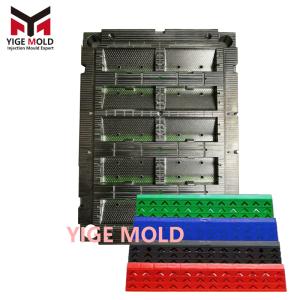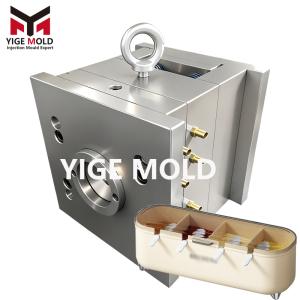
Disposable Turnover Box Mold
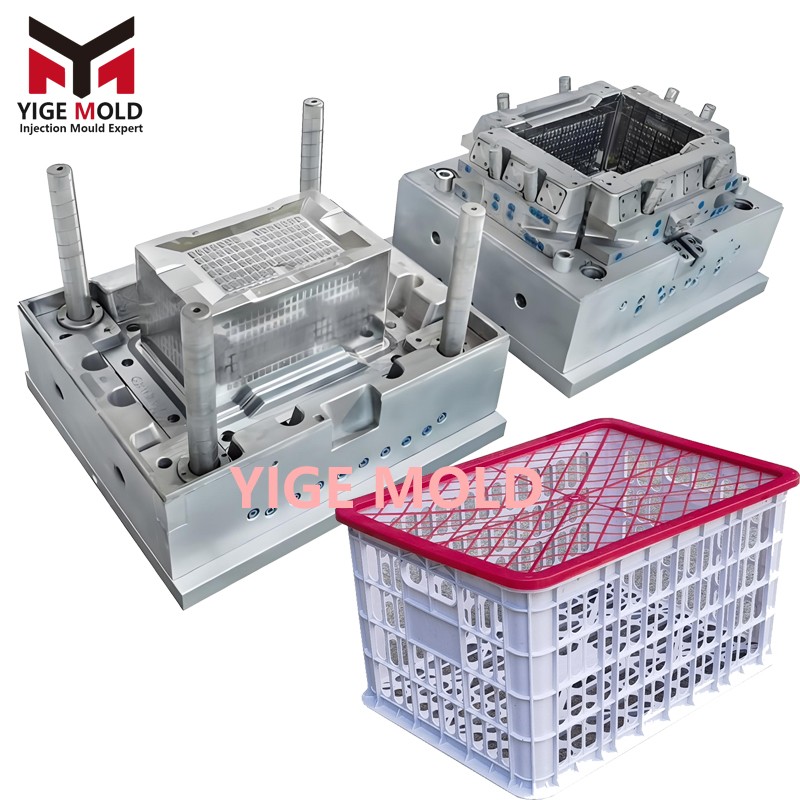
Disposable Turnover Box Mold: The Manufacturing Core of Efficient and Economical Logistics Carriers
In the modern industrialized production and circulation system, turnover boxes are ubiquitous as the basic unit for material storage, transportation, and distribution. Among them, disposable turnover boxes (or "one-way logistics containers") are widely used in specific scenarios due to their outstanding convenience and comprehensive cost advantages. The key supporting their large-scale, standardized production is the disposable turnover box mold. This is not merely a simple tool for manufacturing containers but a precision engineering system deeply integrating materials science, mechanical design, cost control, and market demands.
1. Clear Definition and Market Positioning
A disposable turnover box mold is specifically a dedicated tool for injection molding disposable plastic turnover boxes. Its end products typically possess the following characteristics: standardized structure, lightweight material, limited durability (usually ranging from tens to hundreds of cycles), and extremely low unit cost. This fundamentally differs from durable logistics containers like double-wall pallet boxes or thick-walled crate boxes, which can be reused hundreds or even thousands of times.
Its market positioning is very clear: serving sectors that are extremely sensitive to the initial investment cost of packaging containers, reluctant to bear the cost of recovery and cleaning management, and where the circulation path is relatively one-way or the endpoints are dispersed. The design philosophy of the mold is thus established: It does not pursue century-long durability but aims for the highest production efficiency and the lowest per-unit cost to achieve stable, massive output within the target lifecycle.
2. Core Design Philosophy and Engineering Characteristics
To achieve the above goals, disposable turnover box molds implement a series of unique engineering principles in their design:
-
Ultimate Production Efficiency Orientation
-
Multi-Cavity Design: This is the core method for cost reduction. Mold designers will arrange as many cavities as possible within the limits of the injection molding machine's maximum clamping force and shot volume. From 4, 8, 16, 32 cavities or even more, producing multiple parts per shot spreads fixed costs like equipment, labor, and energy consumption to the extreme.
-
Runner and Hot Runner System Optimization: To serve multi-cavity designs, the runner system must ensure molten plastic fills every cavity simultaneously and uniformly, avoiding uneven shrinkage. Cold runner systems are simple but generate waste sprue material. In contrast, hot runner systems, despite increasing initial mold cost, completely eliminate sprue waste, save raw material, and shorten the cycle time, often proving more economical in ultra-high-volume production.
-
Fast Mold Opening/Closing and Ejection: The design of moving mold components (like sliders, angle lifters, and ejector pins) pursues short strokes and reliable action. Ejection systems often use large-area ejector plates or pneumatic ejection to ensure thin-walled boxes can detach from the cavity quickly, completely, and without distortion, enabling automation with robotic part removal and maximizing production cycle speed.
-
-
Precise Balance Between Cost and Lifespan
-
Tiered Material Usage: The mold is not entirely made of "high-end" materials. Critical areas in direct contact with plastic and enduring high pressure and temperature—cavities, cores, and gate sleeves—must use high-hardness, wear-resistant, corrosion-resistant quality mold steel (e.g., P20, H13, S136), with precision machining and heat treatment to ensure core forming functions and a lifespan of several hundred thousand cycles. For structural components like mold plates, support pillars, and ejector plates, more cost-effective steels that meet performance standards can be used.
-
Standardization and Modularization: Extensive use of standard parts, such as standard mold bases, standard ejector pins, ejector sleeves, guide pins, and bushings. This not only reduces mold manufacturing costs but, more importantly, allows for quick market replacement when wear parts fail, significantly minimizing repair downtime.
-
-
Product-Functionalized Design
-
Lightweight and Nestable/Stackable Design: Product wall thickness is precisely calculated to be minimal while meeting stacking strength requirements, saving material. Box design must incorporate positive stacking and interlocking (nesting) features, ensuring stable stacking both empty and loaded, saving storage and transport space. Corresponding draft angles and fit tolerances on the mold must be extremely precise.
-
Integrated Reinforcement Structures: Features like reinforcing ribs on the box bottom and anti-deformation structures on sidewalls are directly machined into the mold cavity. These ribs not only enhance load-bearing capacity but also guide melt flow and improve shrinkage. Their draft angles and surface finish requirements are high to prevent sticking.
-
Identification and Ventilation Holes: Customer logos, production dates, load capacity markings, and sidewall ventilation holes are all integrated as part of the mold cavity, eliminating the need for secondary processing.
-
3. Analysis of Main Application Scenarios
Products from disposable turnover box molds permeate the capillaries of the national economy:
-
Agricultural Product Logistics: From fields to wholesale markets, disposable fruit and vegetable crates are predominant. They prevent cross-contamination between different produce types, require no return, and can be sold with the goods or discarded at the endpoint market. They require ventilation, breathability, and certain impact resistance and stacking capability.
-
Internal Circulation in Industry: Used for transferring components between processes in factories like automotive parts or electronics assembly. The flow path is fixed and controllable. After a certain number of cycles, they can be scrapped due to wear, avoiding the complex process of cleaning and managing durable containers.
-
E-commerce, Express Delivery, and Warehouse Sorting: During peak periods like "Singles' Day," massive quantities of disposable plastic folding boxes or standard turnover boxes are used for order picking, sorting, consolidation in warehouses, and short-haul transport to distribution points. They are lightweight, low-cost, can handle peak demand, and are subsequently recycled.
-
Catering and Food Distribution: Used by central kitchens delivering prepared ingredients or semi-finished products to chain stores. Single-use ensures food safety and hygiene, eliminating risks of inadequate cleaning. While the per-use container cost increases, comprehensive management costs and risks are reduced.
4. Manufacturing Process and Quality Control
The birth of a high-quality disposable turnover box mold requires a rigorous process:
-
Requirements Analysis and Design: Clarify product specifications (dimensions, capacity, weight, material PP/PE), production capacity requirements (daily/monthly output), and injection molding machine parameters.
-
3D Modeling and Simulation Analysis: Use CAD/CAE software for full 3D design and conduct mold flow analysis to predict plastic filling, cooling, and warpage, optimizing the design from the outset.
-
Precision Machining: Involves CNC milling, Electrical Discharge Machining (EDM) for complex cavities, wire cutting, deep hole drilling (for cooling channels), and high-precision grinding.
-
Assembly and Trial: Assemble all machined parts and purchased standard components. Conduct a trial run on the injection molding machine. Debug process parameters (temperature, pressure, speed, time), inspect the first articles for dimensions, appearance, and weight, and fine-tune the mold until it produces qualified products consistently.
-
Mass Production and Maintenance: After mass production begins, the mold requires regular maintenance—cleaning, lubrication, rust prevention—and timely replacement of worn parts to maintain its long-term, stable production performance.
5. Conclusion
In summary, the disposable turnover box mold is a paradigm of industrialized mass-production thinking combined with refined market segmentation. It transcends the simple concept of "making a box"; it is a systems engineering project with the ultimate goal of "lowest total cost of ownership over its lifecycle." Through ingenious engineering design, it finds the optimal balance among efficiency, cost, lifespan, and functionality. It continuously supplies the "use-and-dispose" cellular units for the modern logistics system, silently supporting the efficient operation of the commodity society. In a sense, behind every rapidly consumed disposable turnover box lies the intelligence and value of a highly specialized mold.