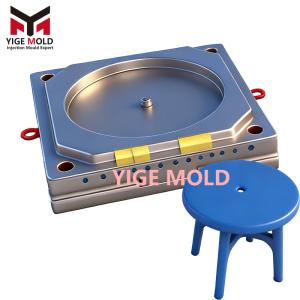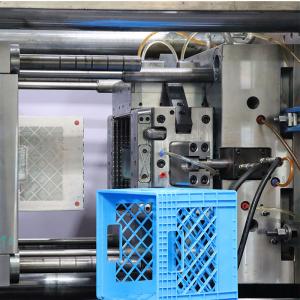
Fruit Turnover Box Mold
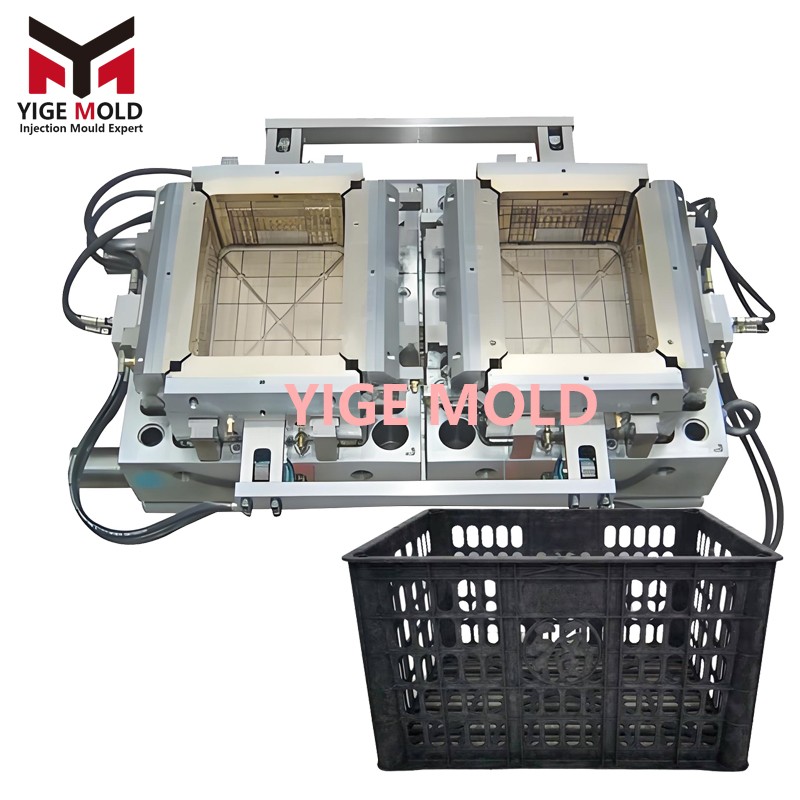
Introduction to Fruit Turnover Box Mold: The Key Forming Equipment in the Fresh Fruit Circulation Chain
1. Core Definition and Scenario Positioning
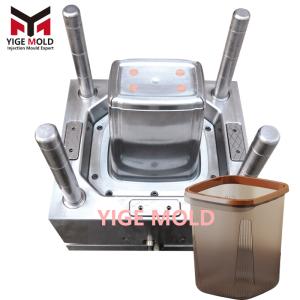
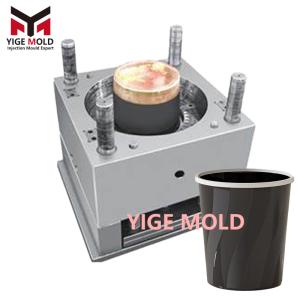
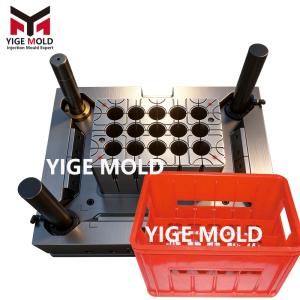
A Fruit Turnover Box Mold is a customized tool specifically designed for the injection molding production of various fruit storage and transportation turnover boxes. Unlike general-purpose logistics boxes, its end products must closely adapt to the circulation characteristics of fresh fruit: protecting delicate produce, adapting to cold chain environments, meeting stacking and ventilation requirements, and withstanding high humidity and potential bio-acid erosion. They are often used in a one-way or short-cycle manner across links like fields, wholesale markets, and supermarkets. The design of this mold is an intersection of agricultural supply chain efficiency, fruit preservation technology, and injection molding processes.
2. Targeted Design Key Points and Engineering Considerations
To ensure the produced turnover boxes perfectly fit the fruit logistics scenario, the mold design must address the following core issues:
-
Precision Ventilation and Protection Structure Design
-
Bionic Ventilation System: The mold must form high-density, scientifically distributed grids or holes on the box's sidewalls and bottom. This is not merely about creating openings; it requires calculating hole size (balancing ventilation with preventing small fruit from falling out), arrangement patterns (guiding airflow evenly), and the layout of reinforcing ribs to achieve maximum ventilation rate while ensuring structural strength, thereby inhibiting ethylene accumulation and extending shelf life.
-
Anti-Crush and Cushioning Structures: For delicate fruits like strawberries, grapes, and tomatoes, the box interior often requires designs like inner liner positioning, compartments, or micro-convex curved surfaces. The corresponding mold core structures are complex, demanding high draft angles and surface polish to ensure the fruit contact surface is smooth and free of burrs, avoiding mechanical damage.
-
-
Material Adaptation and Weather Resistance Enhancement
-
Food Contact and Low-Temperature Resistance: The products typically use food-grade PP (Polypropylene) or PE (Polyethylene). The mold's cooling system design requires special optimization to accommodate the shrinkage characteristics of these materials in cold chain environments, ensuring the box does not deform or become brittle at 0-4°C refrigeration temperatures. Runner and cooling analysis (Mold Flow Analysis) is crucial at this stage.
-
Aging Resistance and Easy Cleaning: To withstand outdoor sun exposure and washing, the box surface molded often needs a fine texture or specific gloss level. This requires specialized texture etching or high-gloss polishing of the mold cavity, enhancing surface hardness against scratches and facilitating water cleaning to prevent stain residue.
-
-
Efficient Stacking and Logistics Optimization
-
Bidirectional Stable Stacking: The mold must enable two stacking modes: "stable when full, space-saving when empty." This requires precise tolerance and fit design: the stacking ribs on the box's upper rim and the bottom grooves must interlock perfectly, with tolerances often controlled within 0.1mm, ensuring multi-layer stacks remain stable. Simultaneously, empty boxes should nest inside each other, reducing reverse logistics volume by over 60%.
-
Lightweighting and Strength Balance: While ensuring stacking load capacity (often needing to support 5-8 layers fully loaded), extreme lightweighting is achieved through variable wall thickness design (thicker at ribs, thinner at flat areas). This requires the mold to differentially control cooling rates in different areas during processing to prevent warpage from uneven shrinkage.
-
-
Modularity and Traceability Integration
-
Branding and Information Marking: The mold can integrate molded-in marking structures for client logos, maximum load weight, production date stamps, traceability QR code frames, etc. This not only enhances brand image but also meets agricultural product traceability requirements, with markings being clear, durable, and resistant to wear during circulation.
-
Interchangeable Module Design: For a series of box sizes (e.g., 5kg, 10kg, 20kg), the mold can adopt a modular sub-insert design. By changing part of the inserts, production can quickly switch between different sizes with similar structures, significantly improving the mold's adaptability and return on investment.
-
3. Typical Manufacturing Process and Quality Control
The birth of a qualified Fruit Turnover Box Mold follows a rigorous journey:
-
In-Depth Requirement Analysis: Clarify fruit variety (berries/citrus/apples, etc.), per-box load weight, stacking height, need for integrated liners, cold chain temperature tolerance, etc.
-
Simulation-Driven Design: Use CAD/CAE for full 3D design, and conduct Mold Flow & Cooling Analysis, Structural Stress Analysis to virtually validate ventilation effectiveness, cooling uniformity, and stacking load capacity. This allows for virtual debugging to mitigate design risks upfront.
-
High-Precision Machining: Utilize high-speed CNC for cavity machining, precision EDM for complex textures and deep cavities, and deep-hole drilling for efficient conformal cooling channels. This ensures even heat dissipation and shortens the molding cycle.
-
Trial Molding and Field Testing: Beyond standard dimensional checks, the first articles from trial production undergo physical stacking tests, loaded drop tests, and simulated cold chain environment tests to ensure their performance meets requirements in real-world use.
4. Core Application Value
The fruit turnover boxes produced by this mold are an indispensable part of modern agricultural logistics. Their value lies in:
-
Reducing Loss & Enhancing Freshness: Through scientific design, transportation loss rates can be reduced from over 15% (with traditional packaging) to under 5%.
-
Improving Efficiency: Standardized boxes facilitate mechanized loading/unloading, automated sorting, and smart warehouse management.
-
Green Circulation: Durable plastic boxes can be reused dozens of times, resulting in a lower carbon footprint over their lifecycle compared to disposable cardboard or foam boxes.
Conclusion: The Fruit Turnover Box Mold transcends the scope of a mere "box-making tool." It is the medium that precisely translates the post-harvest protection needs of agricultural products into engineering language. Its design thinking spans the entire chain from branch to table, with every detail aimed at combating time and damage. It is the invisible cornerstone safeguarding "freshness" and "efficiency" in the modern agricultural supply chain. The value of an excellent mold is ultimately reflected in the fresher, higher-quality fruit in the consumer's hand—its value finds the sweetest realization at the very end of the industry.