Fruit container mold
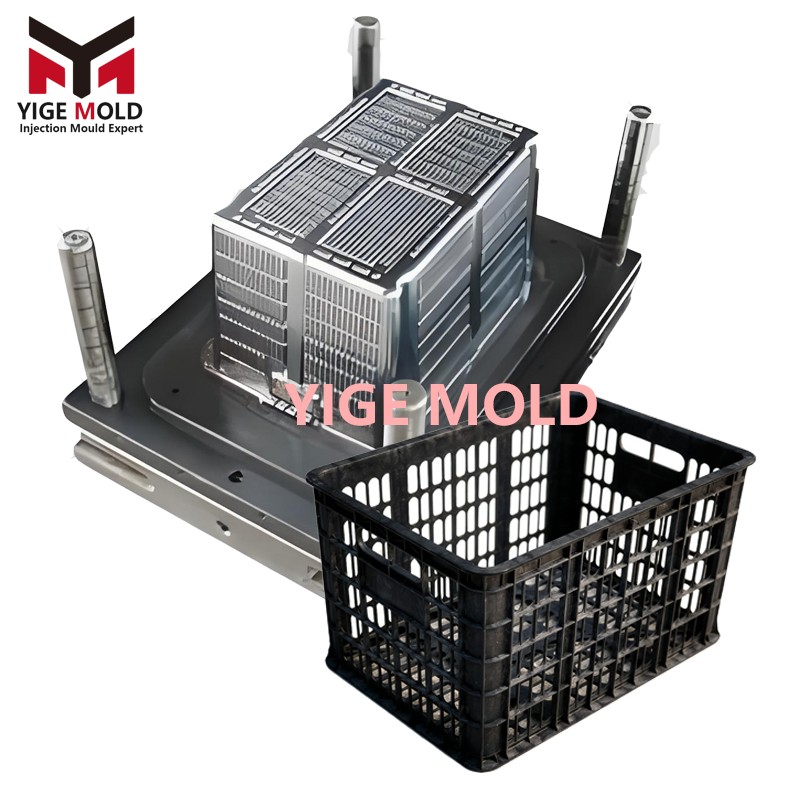
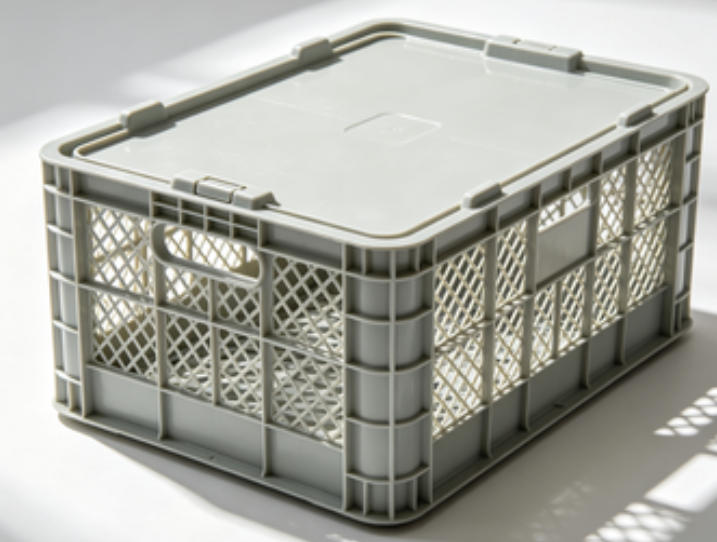
Plastic Fruit Container Mold: In-Depth Analysis of Structural Logic and Manufacturing
I. Product Definition and Industry Context
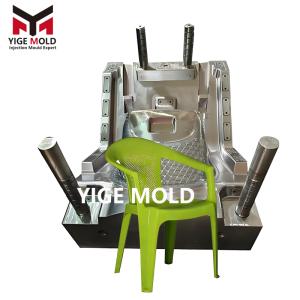
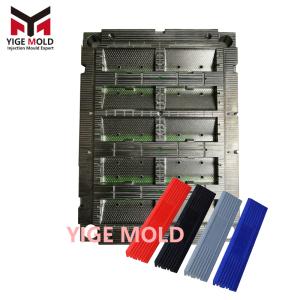
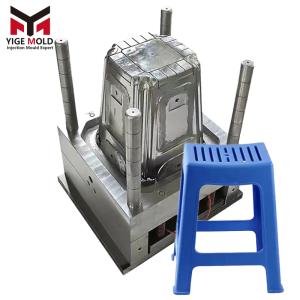
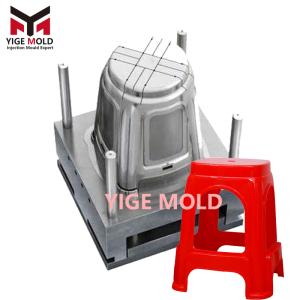
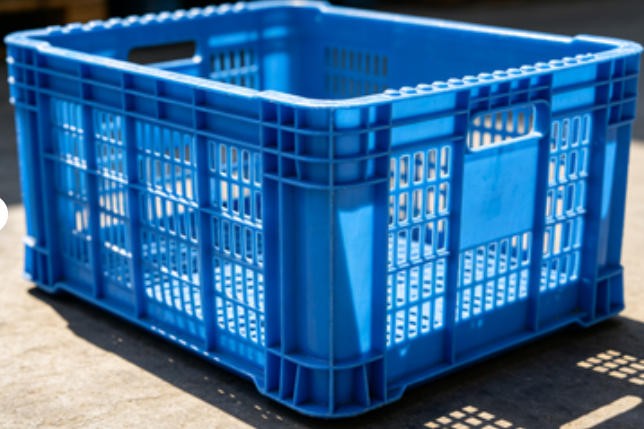
The Plastic Fruit Container Mold, technically referred to as the "Agricultural Produce Crate Injection Mold," is a mass-production tool custom-engineered for the fresh produce and agricultural industry. Unlike the precision-driven molds for home appliances or automotive parts, the core imperative for fruit container molds is extreme cost-efficiency and high-speed production cycles. Finished products primarily serve fruit picking, cold-chain logistics, and supermarket stacking, ranging from small 5L punnets to large 50L crates. Materials are predominantly High-Flow Copolymer Polypropylene (PP-Co) or High-Density Polyethylene (HDPE), selected for their ability to withstand extreme temperature differentials—from tropical orchards to sub-zero freezers.
II. The "Subtraction Philosophy" of Mold Design
The design logic for fruit container molds contrasts sharply with precision components; it adheres to a philosophy of subtraction—"sufficiency over redundancy."
1. The Pursuit of Multi-Cavity Layouts
To amortize unit costs, fruit container molds are synonymous with multi-cavity systems. Common configurations include "1x4," "1x6," and even "1x8" for small punnets.
-
Runner Balancing Challenges: Multi-cavity layouts utilize "H-Type" or "Tree-Type" runner systems. The cross-sectional area of branch runners must decrease strictly following a geometric progression (e.g., primary Φ12 mm, secondary Φ10 mm). This leverages fluid dynamics to balance cavity fill times, ensuring consistent shrinkage rates across all crates and preventing variations in stiffness or brittleness.
2. The Trade-off Between Wall Thickness and Ribs
Fruit containers feature thin walls (typically 2.0–2.5 mm) yet must withstand loads exceeding tens of kilograms. Mold designers compensate for reduced wall thickness by employing "Grid" or "Cross" reinforcing ribs.
-
Draft Angle Strategy: To facilitate rapid ejection, draft angles on all inner walls are typically set at 1.5°–2.0°, larger than conventional plastic parts. This prevents vacuum lock during deep draw and allows products to auto-eject via gravity the moment the mold opens.
III. Core Mechanisms: Reliability for High-Volume Production
1. Simplified Ejection Systems
Given the relatively simple geometry (mostly square or rectangular boxes), complex stripper plate systems are abandoned in favor of the classic "Ejector Pin + Bushing (Sleeve)" combination.
-
Load Point Selection: Pins are strategically placed on the intersections of reinforcing ribs rather than thin sidewalls. This provides sufficient ejection force (often overcoming several tons of vacuum suction) without leaving noticeable "ejector marks" or white stress spots on the product surface.
2. The "Brute Force" Aesthetics of Venting
Rather than pursuing micro-precision venting, fruit mold design prioritizes high-volume airflow.
-
Parting Line Venting: On the parting surface, particularly at the four corners, "flood-groove" style vents measuring 0.03–0.05 mm deep and 10–15 mm wide are machined. This allows instantaneous expulsion of hundreds of cubic centimeters of air within milliseconds during high-speed injection (fill time <1 s), preventing burn marks or short shots.
IV. Manufacturing Process: Precision Control Under Rapid Rhythm
1. Material Selection Strategy for Mold Base and Cavity
-
Mold Base: Extensively uses S50C (1050 Steel) forged bases. This medium-carbon steel is low-cost with moderate hardness (HB 180–220). While less wear-resistant than alloy steels, it is entirely sufficient for fruit containers where surface finish is non-critical, and it offers fast machining speeds.
-
Cavity Inserts: Constructed from P20 (3Cr2Mo) pre-hardened steel. This steel maintains a hardness of HRC 28–32 after rough machining, eliminating cumbersome quenching procedures and mitigating the risk of dimensional deviation caused by heat treatment distortion.
2. "Rough" vs. "Fine" in CNC Machining
-
Roughing: Utilizes large-diameter (≥Φ50 mm) indexable carbide cutters with high feed rates (>3000 mm/min) to maximize Metal Removal Rate (MRR).
-
Finishing: Employs small-ball-nose cutters to refine stacking rims and interlocking features, ensuring stacking tolerances remain within ±0.3 mm to prevent jamming or wobbling during transport.
3. Limited Application of EDM
Since surface textures (spark marks or etchings) are permissible—and often desired to increase friction for safe handling—mirror polishing is rare. However, EDM corner clearing is still essential at the roots of deep ribs to prevent stress concentration cracks in the mold steel.
V. Thermal Control System: The Lifeline of Efficiency
Cooling time accounts for over 60% of the total cycle time; hence, the cooling circuit design is critical.
1. Straight-Through Cooling and Baffles
-
Side Walls: Drilled Φ10–Φ12 mm straight-through water channels are positioned 15–20 mm from the cavity surface to form an efficient heat-dissipating layer.
-
Bottom Ribs: Due to deep, narrow rib sections, "Baffle" cooling technology is employed. A partition is inserted into the deep bore, forcing cooling water to jet from the bottom and return upwards (fountain effect), resolving sink marks caused by uneven cooling in slender ribs.
2. The Balancing Act of Mold Temperature
Despite the pursuit of rapid cooling, PP is highly sensitive to mold temperature. Molds are typically equipped with Temperature Controllers (TCUs) to maintain a constant mold temperature of 40–50 °C. Temperatures too low risk brittleness (especially in winter climates), while temperatures too high cause warping upon ejection.
VI. Key Metrics for Trial and Mass Production
The acceptance criteria for a mature fruit container mold are pragmatic:
-
Cycle Time: The sole benchmark for mold quality. An excellent mold can compress the cycle time for a 30L crate to 35–45 seconds.
-
Stacking Interchangeability: Randomly select 10 crates; when stacked, interlocks must engage seamlessly with wobble not exceeding 2 mm.
-
Drop Test: Loaded with 25 kg of weight, the crate must withstand three consecutive free falls from 1.2 m onto a concrete floor without cracking.
Conclusion
The Plastic Fruit Container Mold represents the "Heavy Sword" school of injection molding—unadorned yet devastatingly effective. It operates without the halo of cutting-edge technology but forms the backbone of a trillion-dollar fresh food supply chain. A superior fruit container mold is not merely a stack of steel; it is the ultimate test of balancing material costs, injection efficiency, and durability. Behind every seemingly rough plastic crate lies a mold engineer's profound insight into the philosophy of "mass production, low cost, and high reliability."