Plastic Injection Mold for Vehicle Washing Area Drainage Grating
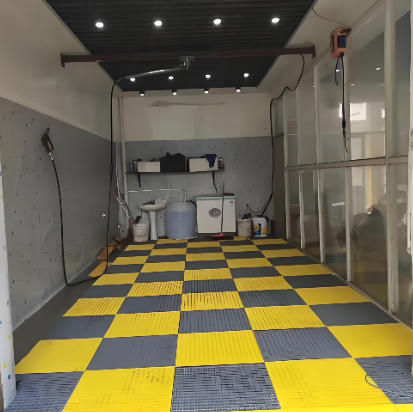
Introduction to Injection Molds for Drainage Grates in Vehicle Washing Areas
I. Industry Background of Plastic Injection Molds
1.1 Current Status of the Plastic Processing Industry
China's plastic processing industry boasts a massive scale and rapid development, occupying a pivotal position in the national economy. The total output of plastic products has ranked first in the world for many consecutive years; in 2023, enterprises above designated size produced 77.716 million tons of plastic products. Regarding growth trends, although affected by multiple factors in recent years leading to a slowdown in growth, the industry maintains an overall upward trajectory. While output in 2023 decreased by 3.0% year-on-year, the decline narrowed by 3.3 percentage points compared to the previous year. The primary application areas are extensive: in packaging, plastic materials are heavily utilized for their lightweight and waterproof properties; in construction, plastic pipes and windows are widely adopted for their corrosion resistance and thermal insulation; in the automotive sector, plastic components help reduce vehicle weight and lower energy consumption; and in electronics and appliances, plastics play a vital role as indispensable components of numerous products.
1.2 Development Prospects of the Plastic Processing Industry
Moving forward, the plastic processing industry will evolve towards green environmental practices, high-performance materials, intelligence, and functionalization. Green sustainability is an inevitable trend, with the application of biodegradable plastics and bio-based materials expanding continuously. Demand for high-performance plastics in fields such as automotive lightweighting and high-performance electronics will continue to rise. Intelligent manufacturing will constantly enhance production efficiency and product quality. The market potential is immense, particularly in emerging sectors like new energy, 5G communications, and aerospace, where the application of plastic materials will keep expanding. As consumer demands for product quality and performance increase alongside continuous technological advancements, the depth and breadth of plastic applications in traditional fields will further broaden, promising vast market prospects.
II. Overview of Drainage Grates for Vehicle Washing Areas
2.1 Function of Drainage Grates
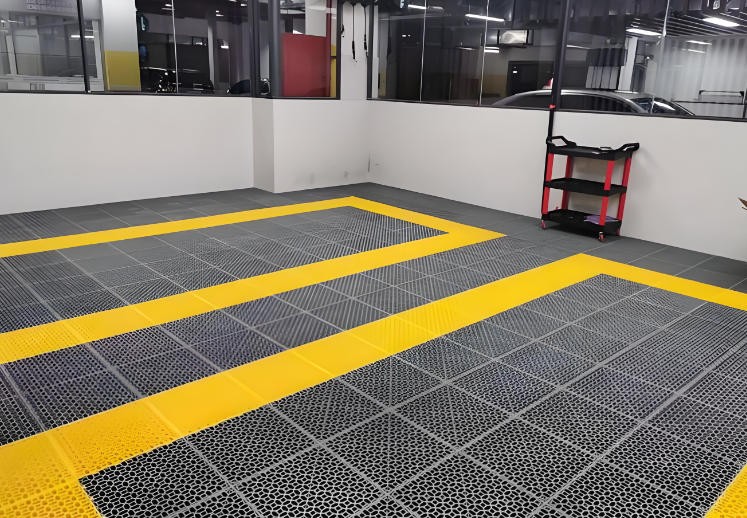
In vehicle washing areas, drainage grates play a crucial role. Their primary function is drainage, ensuring the rapid removal of large volumes of water generated during washing to keep the floor dry and prevent safety hazards associated with ponding. Their filtration capability is equally vital; grates effectively intercept debris such as silt and leaves, preventing blockages in drainage pipes and ensuring smooth operation. They also trap larger particulate matter washed off vehicles, protecting pipes from abrasion and extending the service life of the drainage system. With effective drainage grates, vehicle washing areas maintain optimal drainage conditions, facilitating efficient cleaning operations.
2.2 Material Selection for Drainage Grates
Plastic offers significant advantages as a material for drainage grates. Its outstanding corrosion resistance allows it to withstand aggressive cleaning agents used in vehicle washing, thereby extending service life. The lightweight nature of plastic simplifies installation and transportation, reducing labor costs. Additionally, plastic is relatively low-cost, effectively lowering the construction expenses of washing areas while ensuring performance. Common plastics used include Polypropylene (PP) and Polyethylene (PE). PP offers high strength and hardness with good wear resistance, making it suitable for grates subjected to heavy loads. PE provides better flexibility and excellent low-temperature performance, ensuring reliability in cold climates to meet diverse environmental demands.
III. Introduction to Plastic Injection Molds
3.1 Definition and Classification of Injection Molds
Injection molds are the core equipment in the plastic injection molding process, used to shape molten plastic into finished products of various forms and structures. By definition, they are process tools that facilitate the flow, cooling, solidification, and ejection of plastic melts. In terms of classification, structurally, they can be divided into two-plate molds and three-plate molds. Two-plate molds feature simple structures and lower costs but have longer runners, potentially causing weld lines on parts. Three-plate molds allow for pin-point gate feeding, suitable for parts with high aesthetic requirements, though at a higher cost. Based on the number of cavities, there are single-cavity and multi-cavity molds. Single-cavity molds offer high precision, while multi-cavity molds provide higher productivity but slightly lower precision. According to the type of injection molding machine, molds are designed for horizontal or vertical machines; compatibility with the machine's structure is essential to ensure smooth molding cycles.
3.2 Working Principle of Injection Molds
The working cycle of a plastic injection mold is a precise and orderly process. First, plastic pellets are heated and plasticized into a fluid state within the injection unit—similar to melting sugar into syrup. Subsequently, under high injection pressure, the molten plastic is rapidly forced through the mold's gating system (including sprue, runners, and gates) into the mold cavity—much like squeezing syrup into a shaped mold. Once the cavity is filled, the melt cools and solidifies under controlled mold temperature, transitioning from liquid to solid. After complete solidification, the clamping unit opens the mold, and the ejection system pushes the finished part out, completing one cycle. This process repeats continuously to mass-produce the desired plastic components.
IV. Design of Injection Molds for Drainage Grates in Vehicle Washing Areas
4.1 Mold Structure Design
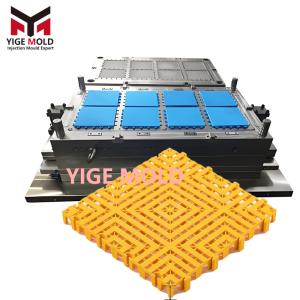
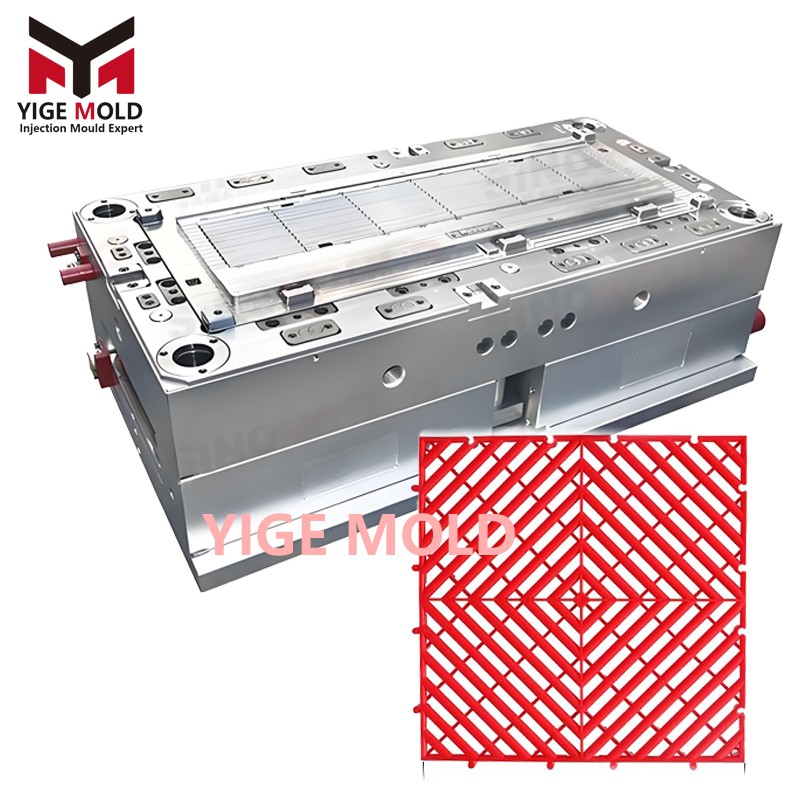
The overall structure of the injection mold for these drainage grates must ensure stability and precision. Cavity layout should be planned based on the grate's geometry, dimensions, and production requirements. For small, simple grates, a multi-cavity layout maximizes efficiency; for large, complex grates, a single-cavity layout may be necessary to guarantee precision. The cooling system design is critical, directly impacting cooling efficiency and product quality. Cooling channels should run close to the cavity surface and be evenly distributed to maintain uniform temperature. Advanced techniques like baffles or bubbler tubes can be employed to enhance cooling performance. Structural design must also incorporate an effective ejection mechanism to ensure smooth part removal, minimizing damage to both the product and the mold.
4.2 Mold Material Selection
Selecting the appropriate mold material requires balancing several factors. Mechanical properties—such as strength, hardness, and toughness—must withstand the high pressures and temperatures of injection molding. Corrosion resistance is crucial, as cleaning agents in vehicle washing areas can degrade the mold; materials must resist chemical attack. Thermal properties are key; high thermal conductivity facilitates rapid cooling and shorter cycle times. Processability is also vital; materials should be easy to machine, polish, and finish to control manufacturing costs. Common choices include pre-hardened steels like P20 and 718, which offer good overall performance, and precipitation-hardening steels like NAK80 and S136, which are suited for high-precision, corrosion-resistant applications.
V. Manufacturing of Injection Molds for Drainage Grates
5.1 Manufacturing Process Flow
The manufacturing process for these molds is complex and precise. It begins with raw material preparation, selecting suitable mold steel per design specs. Rough machining follows, utilizing mills and lathes to remove excess stock and define the basic shape. Next is precision machining, employing CNC machining centers and EDM (Electrical Discharge Machining) to achieve high accuracy on critical features like cavities and cores. Heat treatment is then performed to enhance hardness and wear resistance. Subsequent surface treatments, such as polishing or nitriding, further improve surface quality and durability. Assembly integrates all machined components according to design specifications. Finally, debugging involves trial runs (test molding) to evaluate performance, followed by adjustments to ensure the mold consistently produces qualified drainage grates.
5.2 Quality Control During Manufacturing
Quality control is paramount throughout manufacturing. Raw material procurement must ensure reliable, high-performance steel. During machining, strict adherence to process protocols is required, with rigorous inspection of each step to verify dimensional accuracy and surface finish. Heat treatment parameters (temperature, duration) must be precisely controlled to achieve target mechanical properties. During assembly, fit-up accuracy between components must be ensured to prevent excessive gaps or interference. The debugging phase involves comprehensive testing through trial molding; any issues identified must be rectified promptly. This holistic approach ensures mold precision, longevity, and fitness for purpose in producing drainage grates.
VI. Application and Maintenance of Injection Molds for Drainage Grates
6.1 Mold Application
Injection molds for vehicle washing area drainage grates see widespread application, offering distinct advantages. Multi-cavity molds significantly boost productivity, meeting high-volume demands. When paired with automated injection machines, they enable rapid production cycles. Regarding product quality, the mold's precision ensures accurate geometries, consistent dimensions, and smooth surfaces free from major defects. Effective cooling and ejection systems promote uniform solidification, minimal warpage, and sound mechanical properties. The resulting high-quality grates perform reliably in drainage and filtration, ensuring unobstructed water flow, enhancing operational efficiency, and bolstering safety in vehicle washing environments.
6.2 Mold Maintenance and Care
Proper maintenance is essential for sustaining mold performance. Before use, inspect all components for damage or looseness to ensure readiness. During operation, strictly follow procedures and control parameters (temperature, pressure) to prevent damage from misuse. Regular cleaning is necessary to remove residual plastic or debris from cavities and cores, preventing defects. Routine lubrication of moving parts (e.g., guide pins, bushings) reduces wear and extends service life. Periodic inspections should assess dimensional accuracy and surface condition, addressing any issues promptly. Diligent upkeep ensures the mold remains in optimal working order, guaranteeing uninterrupted production.