Foot Pedal Garbage Bin Mold
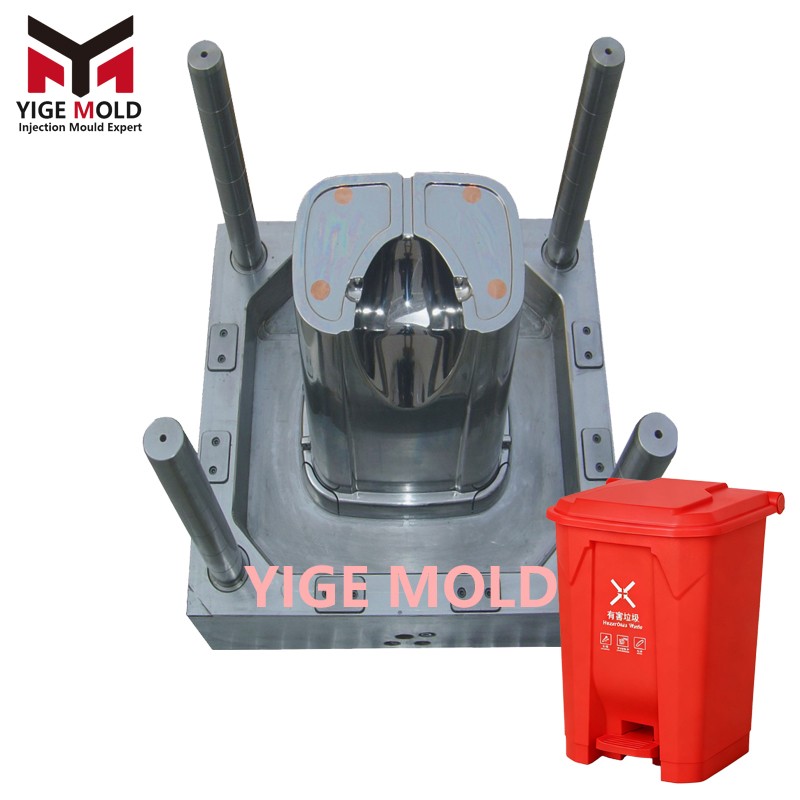
Comprehensive Technical Analysis of Foot-Pedal Garbage Bin Molds
The foot-pedal garbage bin mold is specialized core equipment for producing hygiene containers featuring contactless lid-opening functionality based on lever mechanics. The technological core of this type of mold lies in the deep integration of ergonomics, mechanical transmission structures, and plastic molding processes. Through the precise design of internal mechanisms, it enables the accurate transmission and return of the "step-open" action, representing a specialized mold with a high degree of technological integration in the sanitation and environmental protection sector.
I. Product Function and Mold Design Positioning
As a crucial product for enhancing public hygiene, the functional requirements of foot-pedal bins present systematic challenges for mold design:
-
Human-Machine Interaction Dynamics System:
-
The mold must construct a complete foot-pedal force transmission system, including the pedal surface (conforming to foot arch mechanics), transmission levers (optimized lever ratios), and the push-rod mechanism (precisely controlling the lid-opening angle). The mold achieves single-cycle molding of 16-22 interconnected components, including living hinges and reset spring slots, with a required transmission efficiency exceeding 78%.
-
-
Hygienic Protection Engineering Structure:
-
It employs a fully enclosed inner bin suspension structure. A unique snap-fit hanger design, formed by the mold, achieves complete separation between the inner bin and outer shell. The lid incorporates silicone gasket mounting grooves (precision ±0.1mm), forming a 3mm-compression airtight seal when closed, effectively containing odors.
-
-
Durability Enhancement System:
-
Key transmission points utilize glass fiber reinforced polypropylene structures. The mold employs special runner design to ensure the oriented distribution of reinforcing fibers in hinge areas. The pedal mechanism includes an overload protection structure that automatically disengages when force exceeds 5kg, preventing mechanical damage.
-
II. Core Mold Structure and Innovative Solutions
To achieve the integrated molding of complex transmission mechanisms, the mold adopts a multi-system collaborative design:
-
Four-Dimensional Synergized Demolding System:
-
Addressing the spatially interlocked nature of the transmission, a hydraulically sequenced multi-directional core-pulling system was developed. It utilizes 8 sets of slides to execute sequential movements in 12 directions within 0.8 seconds. A rotating unscrewing mechanism is positioned beneath the pedal for damage-free demolding of threaded reinforcement ribs.
-
-
Mechanical Performance Optimization:
-
Variable cross-section cooling channels are embedded in key stress areas of the transmission levers. Differential cooling controls crystal orientation, increasing the flexural strength in these zones by 40%. The pedal contact surface features a micro-protrusion texture design (300-500 per cm²), achieving an anti-slip coefficient ≥0.6 through mold etching.
-
-
Precision Fit Control System:
-
Clearances between moving parts are dynamically controlled via temperature-compensation technology, maintaining an optimal 0.2-0.3mm gap across varying ambient temperatures. The lid hinge uses a living-hinge slide structure, performing bushing pre-assembly during molding to reduce post-processing steps.
-
III. Manufacturing Process and Validation System
A full-process quality control standard is established for mold manufacturing:
-
Dynamics Simulation Validation:
-
Multi-body dynamics software simulates 100,000 open-close cycles to optimize the lever ratio (typically 1:3.5-1:4.2) and reset spring parameters. Pressure distribution cloud analysis refines the pedal surface curvature to ensure comfortable actuation force.
-
-
Specialized Machining Process Chain:
-
Transmission surfaces are finished using a combination of 5-axis high-speed milling and EDM, achieving a surface finish of Ra 0.4µm. Mating surfaces undergo nitriding treatment (hardness HV1100-1300), providing a wear life meeting a 500,000-cycle test standard.
-
-
Systematic Testing Platform:
-
A comprehensive validation system is established, including fatigue testing (200,000 cycles), load testing (25kg static load), environmental testing (-20°C to 60°C), and hygiene testing (bacterial colony adhesion rate).
-
IV. Technological Innovation and Industry Value
This mold technology drives the sanitation container industry towards intelligence and human-centric design:
-
Public Health Advancement:
-
The contactless design reduces cross-contamination risk. The modular structure supports quick inner bin replacement, meeting high-standard requirements in hospitals, labs, etc.
-
-
Manufacturing Technology Breakthrough:
-
Integrated molding reduces assembly steps by 85%. The service life of the transmission mechanism increases from an industry average of 3 years to 8 years, lowering product failure rates to below 0.3%.
-
-
Contribution to Sustainable Development:
-
Optimized design reduces plastic use per product by 18%, and all components support disassembly for recycling. Over its lifetime, a single mold can produce 600,000-800,000 units, reducing carbon emissions by 22%.
-
Current technology is evolving towards integrated smart sensing (reserved interfaces for sensor modules), material adaptability (compatibility with biodegradable plastics), and universal accessibility design (side-pedal options for users with disabilities). The foot-pedal bin mold has become a significant benchmark for measuring a plastic product manufacturer's capability in mechatronic-plastic integration. Its technological development path fully embodies the modern industrial design philosophy of "user experience-driven precision manufacturing."