Egg Tray Mold
 Introduction to Egg Tray Injection Molds
I. Overview of Egg Tray Injection Molds
1.1 Definition of Egg Tray Injection Molds
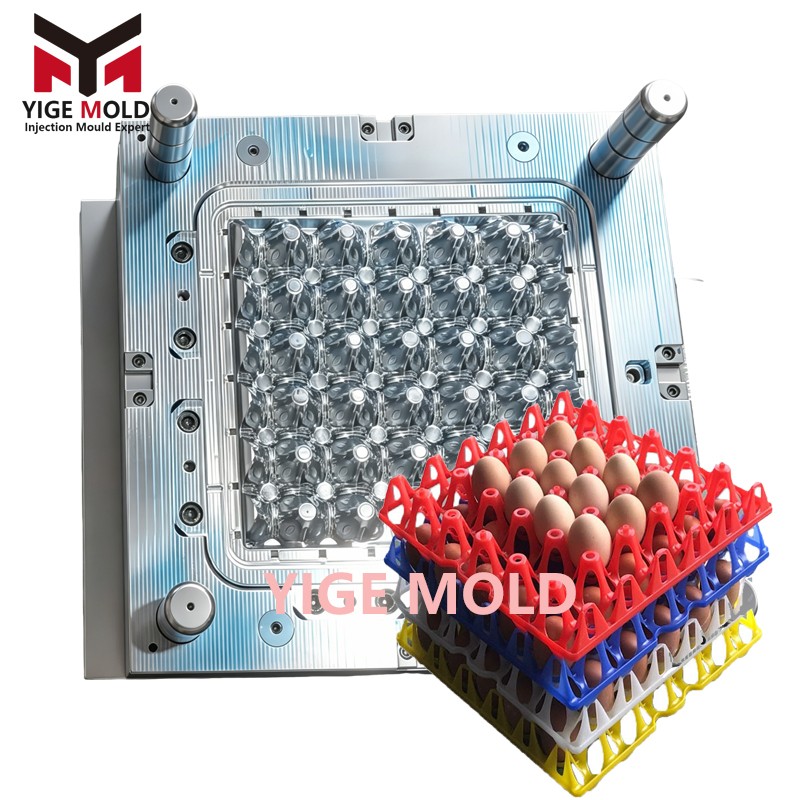
Egg tray injection molds are specialized injection molding tools designed for the mass production of egg trays. Leveraging precise structural design and superior manufacturing craftsmanship, these molds efficiently inject molten plastic raw materials into the mold cavity during the injection process. Once the plastic cools and solidifies, it forms egg trays that meet the required specifications in shape, dimensions, and performance.
Typically, the mold consists of two main sections: the moving half (cavity side) and the fixed half (core side). The moving half connects to the injection molding machine's moving platen, while the fixed half attaches to the stationary platen. The internal structure is complex, comprising key components such as molding parts and the gating system. It serves as foundational equipment for the batch production of egg trays, significantly enhancing product quality and production efficiency.
1.2 Application Fields of Egg Tray Injection Molds
-
Food Packaging: Molds produce trays that provide secure placement for fragile foods like chicken and duck eggs, effectively preventing collision damage during transport and storage, thus ensuring freshness and integrity.
-
Logistics & Transportation: Used as essential周转 (transit) tools, egg trays allow goods to be neatly stacked for handling by forklifts, improving transport efficiency and reducing logistics costs.
-
Agriculture: Widely used in poultry farming for the collection and transportation of eggs, significantly reducing breakage rates compared to manual handling.
-
Commercial Sales: Aesthetically pleasing trays enhance product display effects, attract consumer attention, and boost sales.
II. Structural Composition of Egg Tray Injection Molds
2.1 Molding Components
The molding components are the core of the mold, primarily consisting of the cavity and the core.
-
Cavity: Composed of mold inserts, its internal shape defines the external contour of the egg tray. It requires high precision and excellent surface finish to ensure accurate and aesthetically pleasing tray exteriors.
-
Core: Forms the internal structure of the tray. Its shape, dimensions, and surface treatment directly impact the precision and quality of the tray's interior. During injection, molten plastic is injected under high pressure; the cavity and core fit tightly together to form the finished product upon cooling.
2.2 Gating System
The gating system is the channel through which molten plastic flows into the mold cavity, consisting of the sprue, runners, gate, and cold slug well.
-
Sprue: Connects the machine nozzle to the mold, typically conical to facilitate flow and minimize pressure loss.
-
Runners: Distribute melt from the sprue to the gates; their shape and size are designed to reduce flow resistance.
-
Gate: A narrow channel controlling the speed and direction of melt entry into the cavity, ensuring uniform filling.
-
Cold Slug Well: Collects the cooler leading edge of the melt to prevent cold material from entering the cavity and affecting quality.
2.3 Guiding Mechanism
The guiding mechanism ensures mold alignment, primarily consisting of guide pins (bushings) and guide pillars.
Installed on opposite halves of the mold, these components engage during closure to ensure precise alignment of the cavity and core. This prevents misalignment, guarantees dimensional consistency, and protects the mold from damage due to uneven stress, thereby extending its service life.
2.4 Ejection System
The ejection system removes the finished tray from the mold, consisting of ejector pins and ejector plates.
After injection and cooling, the mold opens, and the machine's ejection mechanism activates the pins to push the tray off the core. The system must distribute force evenly to prevent deformation or damage to the tray during demolding.
2.5 Cooling System
Comprising mainly cooling channels, this system is vital for efficient production. Circulating coolant removes heat from the mold, maintaining an optimal temperature. Proper design ensures uniform cooling, prevents defects like warpage or shrinkage, shortens cycle times, and improves efficiency. Channel layout is planned according to mold structure to balance cooling effects.
2.6 Venting System
The venting system prevents gas entrapment, primarily using vent grooves. During injection, air must escape the cavity; otherwise, compressed gas can cause filling difficulties, burn marks, or short shots. Vents are strategically placed at parting lines or deep pockets to allow air to escape, ensuring complete cavity filling and high-quality成型 (molding).
III. Material Selection for Egg Tray Injection Molds
3.1 Mold Steel Selection
-
Pre-hardened Steels (e.g., 718, 618, 738): Offer good polishability and machinability, suitable for large molds or those with lower wear requirements.
-
Fully Hardened Steels: High hardness and wear resistance, ideal for high-volume production to maintain precision over time.
-
Corrosion-Resistant Steels: Necessary when processing corrosive plastics, ensuring mold longevity in specific chemical environments.
3.2 Other Material Selections
-
Springs: Materials like 65Mn spring steel are chosen for high elastic limits and fatigue resistance to withstand repeated cycling.
-
Seals: Nitrile rubber (NBR) or fluororubber (FKM/Viton) are selected based on oil resistance, temperature, and pressure requirements to prevent leakage.
IV. Processing Technology for Egg Tray Injection Molds
4.1 CNC Machining
CNC machining centers play a crucial role. 5-axis machining centers utilize high-speed milling with small-diameter cutters to process complex 3D surfaces of the cavity. CNC lathes precisely turn cores and other cylindrical parts. CNC technology ensures high dimensional accuracy for guide holes and cooling channels, laying the foundation for mold quality.
4.2 EDM (Electrical Discharge Machining)
EDM excels in processing complex cavities, especially in hardened steel. By eroding material via electrical discharges, it achieves micron-level precision and good surface finish without being limited by material hardness. It is ideal for sharp corners and intricate details that are difficult for cutting tools.
4.3 Wire Cutting (WEDM)
Wire cutting, particularly Slow Wire Cutting, is vital for finishing. It offers micron-level precision for machining small holes, narrow slots, and fine structures. It ensures high dimensional accuracy and surface quality, reducing the need for subsequent polishing, and is used for final trimming of cores and cavities.
V. Design Key Points for Egg Tray Injection Molds
5.1 Product Structure Analysis
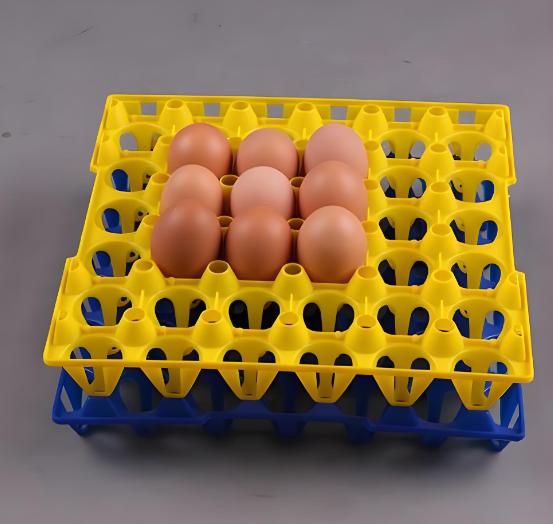
Egg trays feature a grid-like distribution of recesses matching egg dimensions. The bottom must be flat for stability, and edges may include ribs for strength. Design analysis dictates mold cavity structure, surface precision requirements, and the necessity of draft angles for easy demolding. Complexity directly impacts manufacturing cost and process.
5.2 Parting Line Selection
Selecting the optimal parting line is critical. It should simplify mold structure, facilitate ejection (keeping the part on the moving half), minimize side-core pulling, and avoid visible parting lines on aesthetic surfaces. Decisions consider part geometry, wall thickness, and venting.
5.3 Gating System Design
Design follows principles of minimizing flow length to reduce pressure/temperature loss. Gates should feed into thick/thick sections. Dimensions are calculated based on part size, wall thickness, and material properties. Mold flow analysis is often used to optimize filling patterns and efficiency.
5.4 Cooling System Design
Key considerations include uniform temperature distribution to prevent warpage and controlled cooling time to shorten cycles. Standard practice maintains a distance of 15–25mm between cooling channels and the cavity surface, with channel diameters of 8–12mm. Specialized cooling (e.g., bubblers or baffles) is used for thick sections to ensure balanced heat extraction.
VI. Market Analysis of Egg Tray Injection Molds
6.1 Global Market Status
The global market is stable and growing, driven by demand in food packaging and logistics. Developed regions (North America, Europe, Japan) have mature technologies and intense competition, exporting globally. Developing regions show rapid growth potential due to expanding economies and increasing consumption of egg products.
6.2 Domestic Market Overview
The domestic market is expanding rapidly, fueled by the booming food industry and rising egg consumption. While numerous manufacturers exist, technical capabilities vary. Leading enterprises invest in R&D and imported technology to produce high-quality molds, while others face commoditization challenges.
6.3 Market Competition Pattern
Competition is diversified. Large enterprises dominate the high-end market with superior technology and brand power. Small and medium-sized enterprises compete in the mid-to-low-end market through price advantages and localized service flexibility.
6.4 Market Development Trends
Future trends point toward high precision, high efficiency, and automation. Investment in advanced software and processing will increase. Environmental protection and energy saving are becoming priorities, with a shift toward eco-friendly materials and optimized designs. Additionally, customized services tailored to specific client needs are gaining prominence in the market.