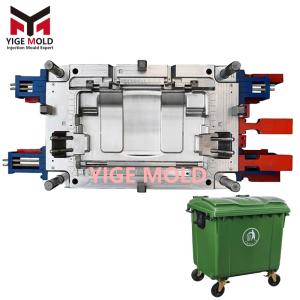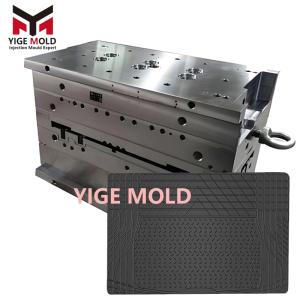
Plastic toy container mold
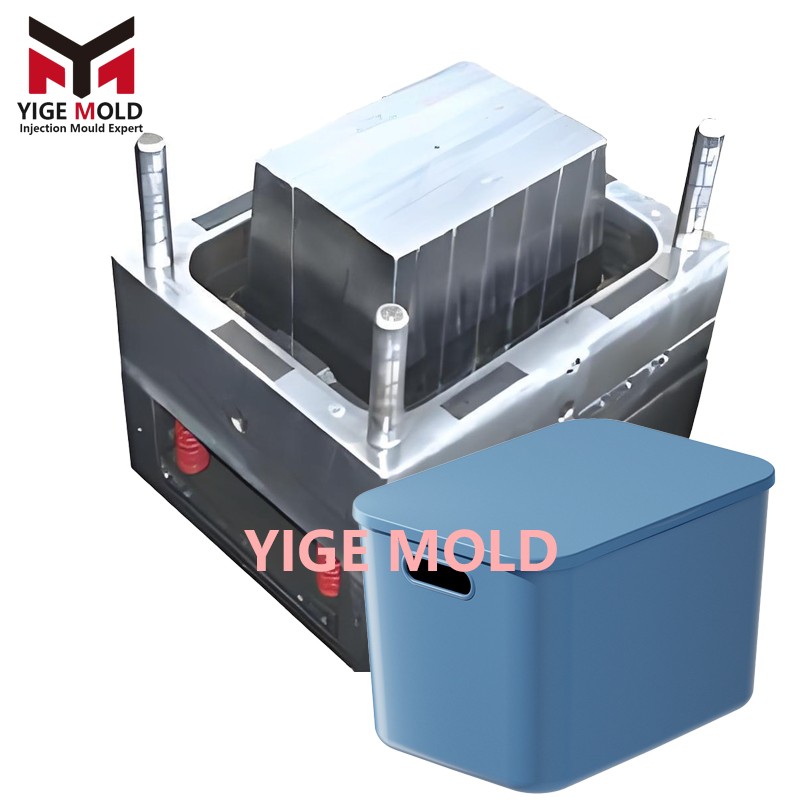
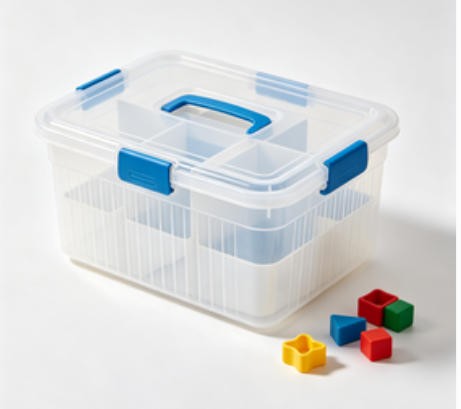
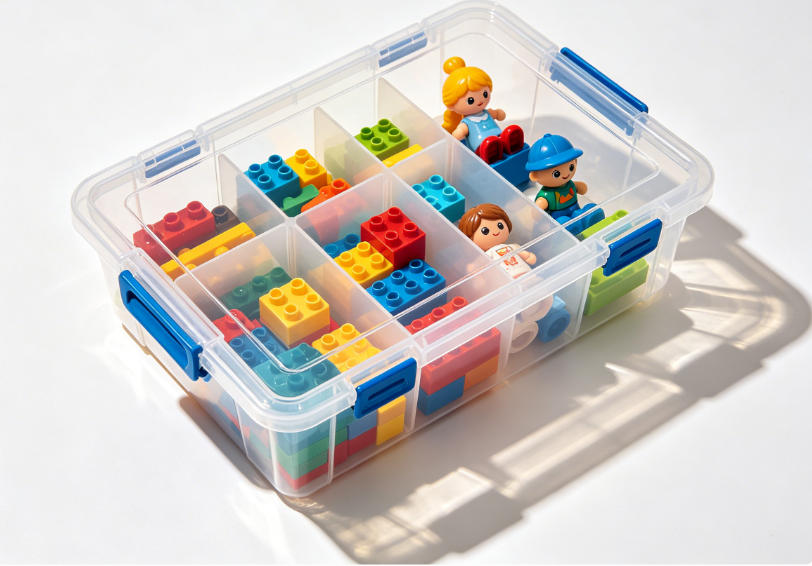 Plastic Toy Storage Box Molds: Precision Empowerment through Design and Manufacturing
Amid the surging wave of the plastic toy storage box industry, molds—acting as the "mother machines" for product forming—serve as the core lifeline that determines the quality, production efficiency, and cost control of storage boxes. The design and manufacturing of plastic toy storage box molds are far more than a simple stack of processes; they are a precision engineering discipline integrating structural mechanics, materials science, and precision machining. Their level directly defines the product competitiveness of storage boxes, laying a solid foundation for the high-quality development of the industry.
I. Mold Design: Building a Precision Framework Guided by Demands
Mold design is the source planning for the quality and functionality of storage boxes. It must precisely anchor three core demands: child safety during use, functional adaptation for storage, and mass production efficiency. A scientific plan is constructed from structural, safety, and functional dimensions, laying a blueprint for subsequent manufacturing.
Precision control of structural design is the core foundation of mold design. Most plastic toy storage boxes feature thin-walled structures. During the design phase, CAE mold flow analysis technology is employed to simulate the flow trajectory of the plastic melt within the mold cavity, accurately predicting potential defects such as uneven wall thickness, sink marks, and stress concentration. This allows for targeted optimization of the runner layout and cooling system. By reasonably designing the position and number of pin-point gates, uniform melt filling is ensured, strictly controlling wall thickness tolerance within ±0.05mm, thus guaranteeing uniform load-bearing capacity and deformation resistance of the box body. Meanwhile, for key connecting components of the storage box, such as buckles and hinges, innovative slider linkage and angular ejection designs are adopted. This not only ensures the forming precision of parts but also enables smooth mold opening and closing, allowing the storage box to withstand over 8,000 opening and closing cycles—far exceeding the industry average—and eliminating issues like breakage and jamming from the design source.
Detailed refinement of safety protection is the core criterion tailored to children's scenarios. During the design process, strict adherence to child toy safety standards is maintained. All edges of the storage box are designed with large rounded transitions, and the special curved surface treatment of the mold cavity ensures that the formed product has no sharp corners, completely eliminating scratch risks. To address hand-pinching hazards, the mold structure is optimized to avoid the formation of gaps during the opening and closing of the storage box, building a safety line from the design end. Additionally, the adaptability to raw materials is fully considered during the design phase, reserving structures compatible with environmentally friendly materials to ensure the mold can accommodate safe materials such as food-grade and halogen-free options, safeguarding product safety from the source.
Modular innovation for functional adaptation is the key path to meeting diverse needs. For different storage scenarios, a modular design concept is adopted. By replacing core mold components, forming solutions for multi-compartment partitions, removable dividers, and folding structures can be quickly switched. For example, for small building block storage, a multi-cavity independent forming module is designed to achieve precise partitioning; for large doll storage, the mold cavity volume and demolding structure are optimized to ensure complete product forming. Meanwhile, by optimizing the surface finish of the mold, the formed storage box is endowed with easy-cleaning properties, meeting the demand for cleaning stains after children's daily use, and expanding product functional boundaries through design innovation.
II. Mold Manufacturing: Implementing Precision Craftsmanship with Accuracy as the Core
Mold manufacturing is the core stage of transforming design blueprints into physical objects. It relies on advanced equipment, exquisite craftsmanship, and strict quality control to translate design precision into actual part precision, ensuring stable mold performance and durability, thus providing reliable support for the mass production of storage boxes.
Equipment empowerment through precision machining is the hardware foundation for ensuring mold accuracy. Throughout the mold manufacturing process, high-precision machining equipment is utilized. High-speed machining centers are employed for rough and finish machining of the cavity, controlling machining accuracy within ±0.01mm to ensure the cavity size is highly consistent with the design drawings. Precision EDM (Electrical Discharge Machining) technology is used to finely form complex surfaces, deep grooves, buckles, and other parts that are difficult to machine mechanically, ensuring precise dimensions of details. Meanwhile, wire-cut EDM equipment is introduced to process high-precision guide parts and positioning components, guaranteeing the accuracy and stability of the mold's opening and closing motion, building a solid foundation for accuracy at the hardware level.
Detail control through process optimization is the core support for improving mold performance. During the mold assembly phase, standardized assembly procedures are strictly implemented. Core components such as sliders, ejector pins, and guide parts are precisely ground and debugged to ensure smooth mold opening and closing and stable ejection, avoiding product defects like jamming and white marks. For the cooling system, precision drilling and sealing processes are adopted to create a uniform and efficient cooling circuit. By precisely controlling the cooling temperature and speed, product forming stress is reduced, and product dimensional stability is improved. Additionally, special polishing treatments are applied to the mold surface. Processes such as mirror polishing and texture treatment are selected according to the requirements of different parts, which not only ensures the surface finish of the product but also enhances the mold's wear resistance and demolding performance.
Quality assurance through full-process quality control is the key line of defense for ensuring mold reliability. A full-process quality control system from raw material arrival to finished product delivery is established. The mold steel is subjected to strict composition testing and performance testing to ensure that its hardness and toughness meet design requirements. During the machining process, dimension inspection is carried out after each procedure is completed, and key parts are fully dimensionally verified using a coordinate measuring machine (CMM) to prevent non-conforming products from proceeding to the next step. After the mold assembly is completed, trial molding is conducted. Through small-batch trial production, product dimensional accuracy, surface quality, and opening and closing life are tested. The mold is fine-tuned and optimized based on the trial results until the product fully meets the design standards, ensuring that the delivered mold can stably support mass production needs.
III. Synergy between Design and Manufacturing: Closing the Loop from Drawings to Mass Production
Mold design and manufacturing are not isolated stages but an organically interconnected whole. The close synergy between the two is the core key to achieving high-performance molds and high-quality products. During the design phase, manufacturing engineers get involved in advance, optimizing the design plan based on the accuracy of machining equipment and process difficulty, ensuring the design drawings are manufacturable and avoiding problems such as unmanufacturability and insufficient accuracy caused by unreasonable design in the manufacturing stage. During the manufacturing process, designers track the entire process, promptly solving technical problems encountered in machining and assembly, and fine-tuning design details based on actual machining conditions, achieving dynamic adaptation between design and manufacturing.
This synergistic model not only significantly shortens the mold R&D cycle but also ensures the unity of mold accuracy and performance. Through seamless integration of design and manufacturing, the innovative concepts from the design stage are precisely transformed into physical products. This enables the mold to not only meet the safety and functional requirements of storage boxes but also guarantee mass production efficiency and stability, truly achieving an efficient closed loop from design blueprints to mass production implementation, providing solid equipment support for the plastic toy storage box industry.
The design and manufacturing of plastic toy storage box molds, with precision as the core and guided by demands, continuously break through the boundaries of quality and efficiency through the deep integration of scientific design and exquisite manufacturing. In the future, with continuous upgrades in machining technology and design concepts, mold design and manufacturing will continue to empower industrial innovation, becoming the core engine driving the high-quality development of the plastic toy storage box industry.