PP plastic chair
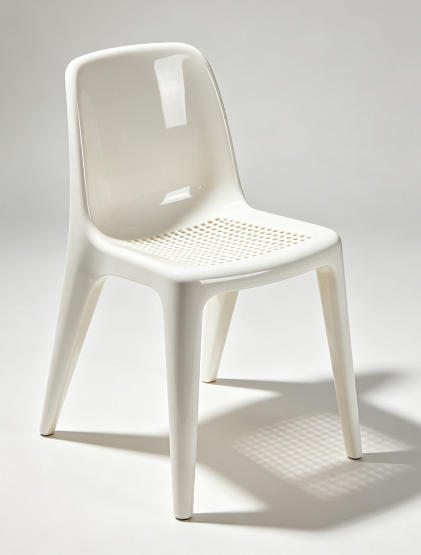
Polypropylene (PP) Plastic Chairs: The Interplay of Industrial Rationality and Living Aesthetics
In the vast genealogy of modern furniture, the polypropylene (PP) plastic chair occupies a unique and irreplaceable ecological niche. It is neither a designer collectible meant for admiration nor a cheap disposable good; rather, it exists as a functional carrier situated between industrial production and living aesthetics. As a mass-produced commodity manufactured via injection molding, the PP plastic chair has permeated every corner of human activity—from dining tables to stadiums, from kindergarten classrooms to outdoor campsites—constructing a vast network of "seating infrastructure" with its exceptional physical properties, minimal production costs, and robust environmental adaptability.
I. Material Genetics: The Physical Superiority of Molecular Structure
At its core, the PP plastic chair represents the terminal manifestation of the petrochemical supply chain. As a thermoplastic resin, polypropylene features a non-polar crystalline molecular structure. This microscopic characteristic confers multiple macroscopic advantages. First is its extremely low density—PP material has a specific gravity of approximately 0.90–0.91 g/cm³, meaning it is lighter than water. Consequently, even a standard-sized adult chair typically weighs only between 2.5 and 4 kilograms. This lightweight nature makes handling, stacking, and warehousing highly efficient, drastically reducing logistics costs and labor burdens.
Second is its outstanding mechanical performance. Despite its lightness, modified polypropylene possesses high flexural modulus and fatigue strength. Unlike polystyrene (PS), which is brittle, PP exhibits excellent toughness upon impact and does not shatter catastrophically. Simultaneously, it demonstrates strong resistance to moisture, most acids, alkalis, and organic solvents. This ensures that PP chairs do not rot like wood or rust like metal in humid environments, such as during the "returning dampness" season in Southern China. Furthermore, food-grade PP is non-toxic and odorless, having passed stringent certifications like FDA or GB food safety standards, making it a frequent choice for infant high chairs or tableware that contacts food directly.
II. Manufacturing Logic: The Technical Code of Injection Molding
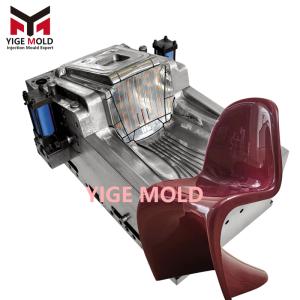
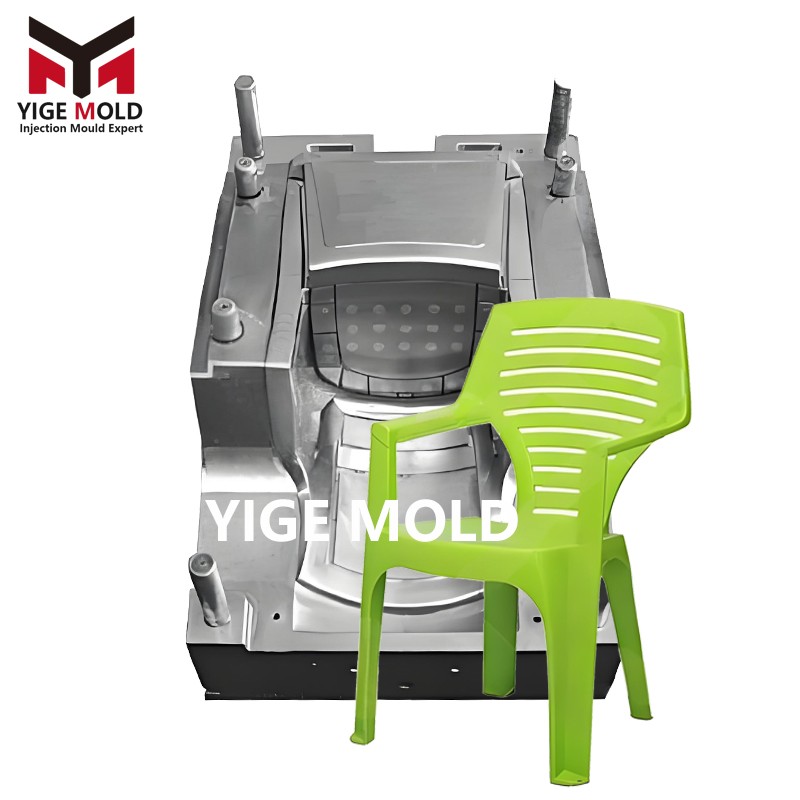
The widespread proliferation of PP plastic chairs relies heavily on the core manufacturing process known as "injection molding." In this procedure, dried polypropylene pellets are fed into an injection machine’s barrel, melted under high temperature and pressure, and then injected at high speed into a precision-engineered steel mold cavity. After the molten material cools and solidifies, the mold opens and closes, and a fully formed chair is born.
This process dictates the product characteristics of the PP chair. Firstly, production efficiency is extremely high; a single molding cycle usually takes only tens of seconds, suitable for orders numbering in the hundreds of thousands. Secondly, there is structural integration: molds can be designed with incredibly complex internal structures. For instance, to reduce weight without sacrificing strength, designers incorporate numerous hollow reinforcing ribs inside the mold. These ribs, invisible externally, constitute an internal mechanical support system analogous to a building’s truss, effectively dispersing stress when the chair bears vertical loads to prevent deformation.
It is precisely based on this technology that PP chairs have broken free from the structural limitations of traditional woodworking mortise-and-tenon joints or metal welding. Designers can realize arbitrary curves, fillets, and textures within a single injection cycle. Whether it is a hollow pattern mimicking rattan weaving or an S-shaped backrest conforming to ergonomic lumbar curves, perfect replication is achievable in one step. This "what you see is what you get" manufacturing logic has vastly expanded the design boundaries of plastic chairs.
III. Morphological Evolution: From Functionalism to Scenario Segmentation
Early PP plastic chairs were constrained by mold technology and aesthetic inertia, often presenting a singular slab-like shape and glaring solid colors. However, with intensifying market competition and the refinement of application scenarios, significant speciation of PP chair forms has occurred.
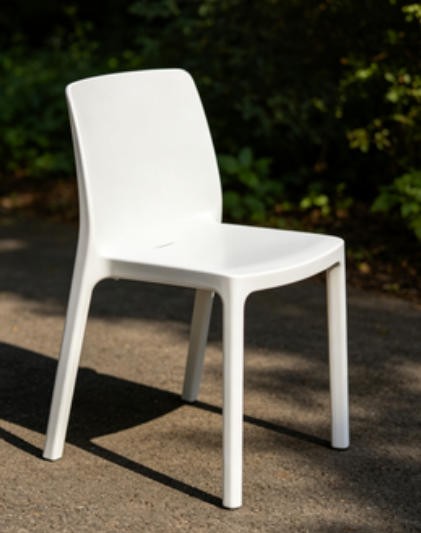
In the home furnishings sector, addressing pain points of small living spaces, ultra-thin stackable chairs have emerged. These chairs optimize the backrest curve to allow multiple units to overlap tightly like a folding fan, compressing storage thickness to within 5 centimeters. For children, PP chairs feature fully rounded corner designs, eliminating sharp edges and pairing them with vibrant macaron color schemes—making them both safe and playful.
In commercial and public domains, durability and maintenance costs dictate design. Chairs used in fast-food chains like KFC or McDonald's are typically injection-molded from high-flow PP, featuring special matte or leather-grain surface treatments that resist dirt and scratches. In outdoor scenarios, UV-modified PP chairs dominate; by adding carbon black or specialized UV absorbers to the raw materials, manufacturers delay the aging and embrittlement caused by sun exposure, allowing the chairs to withstand harsh environments like parks and beaches.
IV. Ergonomics: The Overlooked Science of Comfort
Despite the common stereotype of plastic being "cold" and "rigid," modern PP chairs exhibit considerable sophistication in ergonomic design. Traditional flat seats tend to compress the sciatic nerve, whereas contemporary PP chairs generally adopt a micro-arc surface design. The seat center features a slight concave dip that automatically adapts to the contours of the buttocks, providing a degree of containment.
More subtle is the curvature design of the backrest. Many mid-to-high-end PP chairs no longer employ vertical backrests but instead introduce lumbar support points. Located typically one-third up the height of the backrest, these points protrude slightly forward to align perfectly with the physiological curve of the human spine, alleviating lower back fatigue caused by prolonged sitting. Additionally, to compensate for plastic's low thermal conductivity (which causes a cool touch), some products incorporate elastic modifiers (like TPE) into the compound. This imparts a micro-elastic touch similar to soft padding while maintaining structural rigidity, enhancing comfort the moment one sits down.
V. Market Ecology: Commercial Competition Driven by Extreme Cost-Performance
One of the primary reasons PP plastic chairs are among the best-selling chair categories globally is their unparalleled cost-performance ratio. On the raw material side, polypropylene is a general-purpose plastic, priced far below engineering plastics like ABS or PC, as well as solid wood or metal. On the production side, the high automation of injection molding minimizes labor costs. On the distribution side, the lightweight nature significantly reduces transportation damage and freight fees.
This cost advantage makes PP chairs the preferred choice for school, hospital, and government procurement bids. A qualified PP student desk chair might retail for only 30 to 50 RMB, yet it must withstand the high-frequency use and rough handling of thousands of students. This validation under extreme conditions forces manufacturers to enforce strict controls over mold precision, material formulation, and quality control processes.
VI. Conclusion: The Profound Significance of an Ordinary Seat
The polypropylene plastic chair is a gift from modern industrial civilization to daily life. It lacks the historical gravitas of mahogany furniture or the artistic halo of designer pieces, yet it serves the public in an almost "invisible" manner. It witnesses the transformation of the plastics industry from merely a substitute material to one that defines new lifestyles, embodying the simple truth of industrial design where "form follows function." At every moment requiring a "seat," this seemingly ordinary chair silently sustains the order of human life with its resilient molecular structure and exquisite ergonomics.